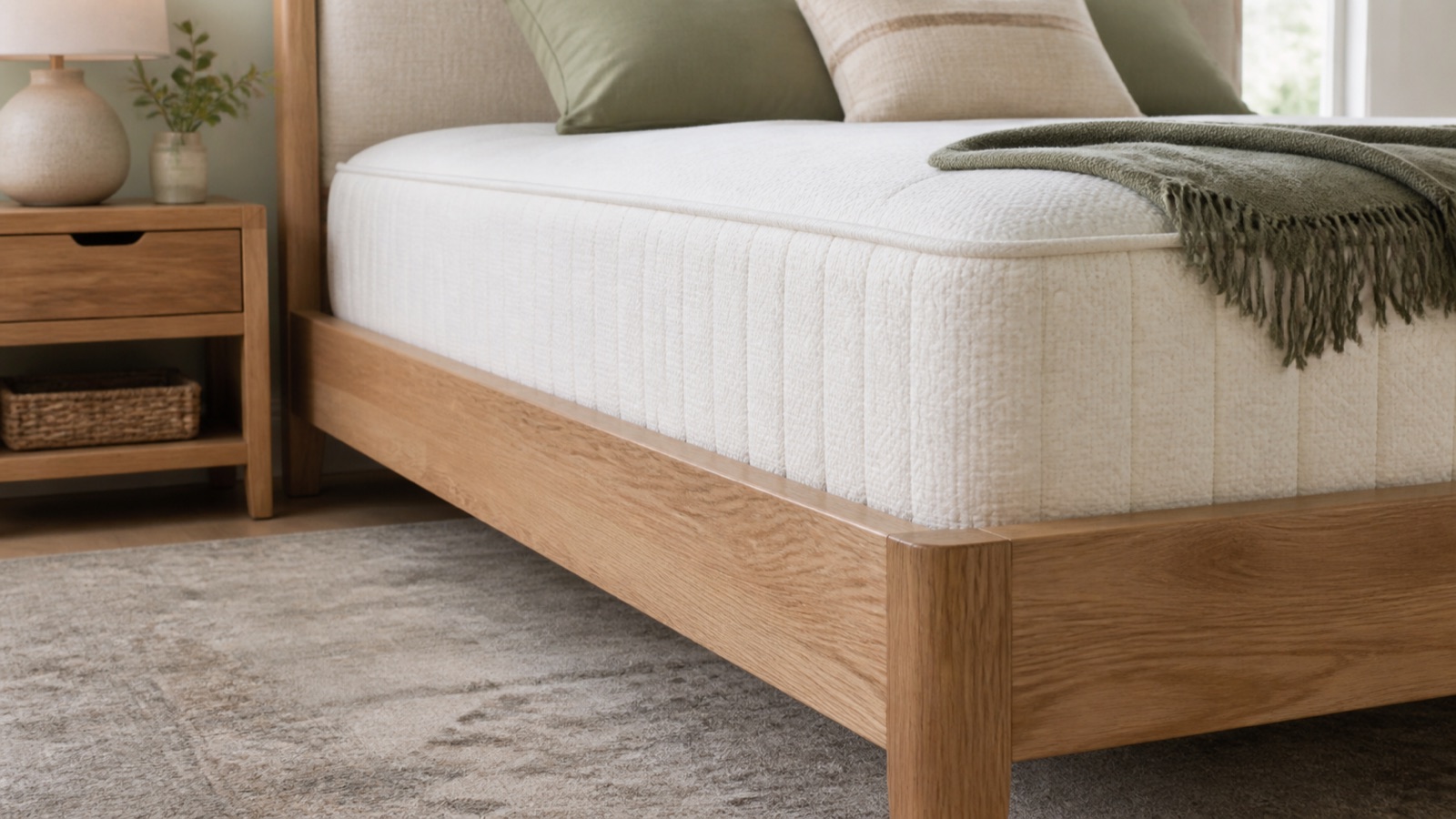
Choose mattress firmness by testing support, pressure relief, sleeping position, body type, partner needs, base compatibility and trial terms.
Firmness labels are not standardised across every mattress brand. One manufacturer’s medium may feel firmer than another’s, and the same mattress can feel different to two people because body weight, sleeping position and the base change how deeply each person sinks.
Treat the label as a starting point. The useful question is whether the mattress keeps you supported while relieving pressure in your normal sleeping position, without forcing you to tense or repeatedly change position.
Quick answer: Shortlist by your usual sleeping position and preferred feel, then test each mattress for at least several minutes in that position. Look for even support, comfortable pressure at shoulders and hips, easy movement and a stable edge. Confirm the compatible base and written trial or return terms.
Separate firmness from support
Firmness is the immediate soft-to-hard sensation. Support is how the mattress and base manage your body’s weight and alignment. A softer surface can still be supportive, while a hard surface is not automatically better for a sore back.
Avoid medical promises from a generic firmness label. Persistent pain, numbness or a diagnosed condition deserves advice from a qualified health professional who understands your circumstances.
Start with your normal sleep position
Side sleepers often notice pressure first at the shoulder and hip; back sleepers tend to notice whether the pelvis sinks or the lower back feels unsupported; stomach sleepers may notice excessive sink around the midsection. These are tendencies, not prescriptions, because body shape and preference matter.
When comparing options, lie in your normal position with your usual pillow height. Browse the mattress collection to make a shortlist, then test rather than choosing from a specification alone.
Test for long enough to notice tension
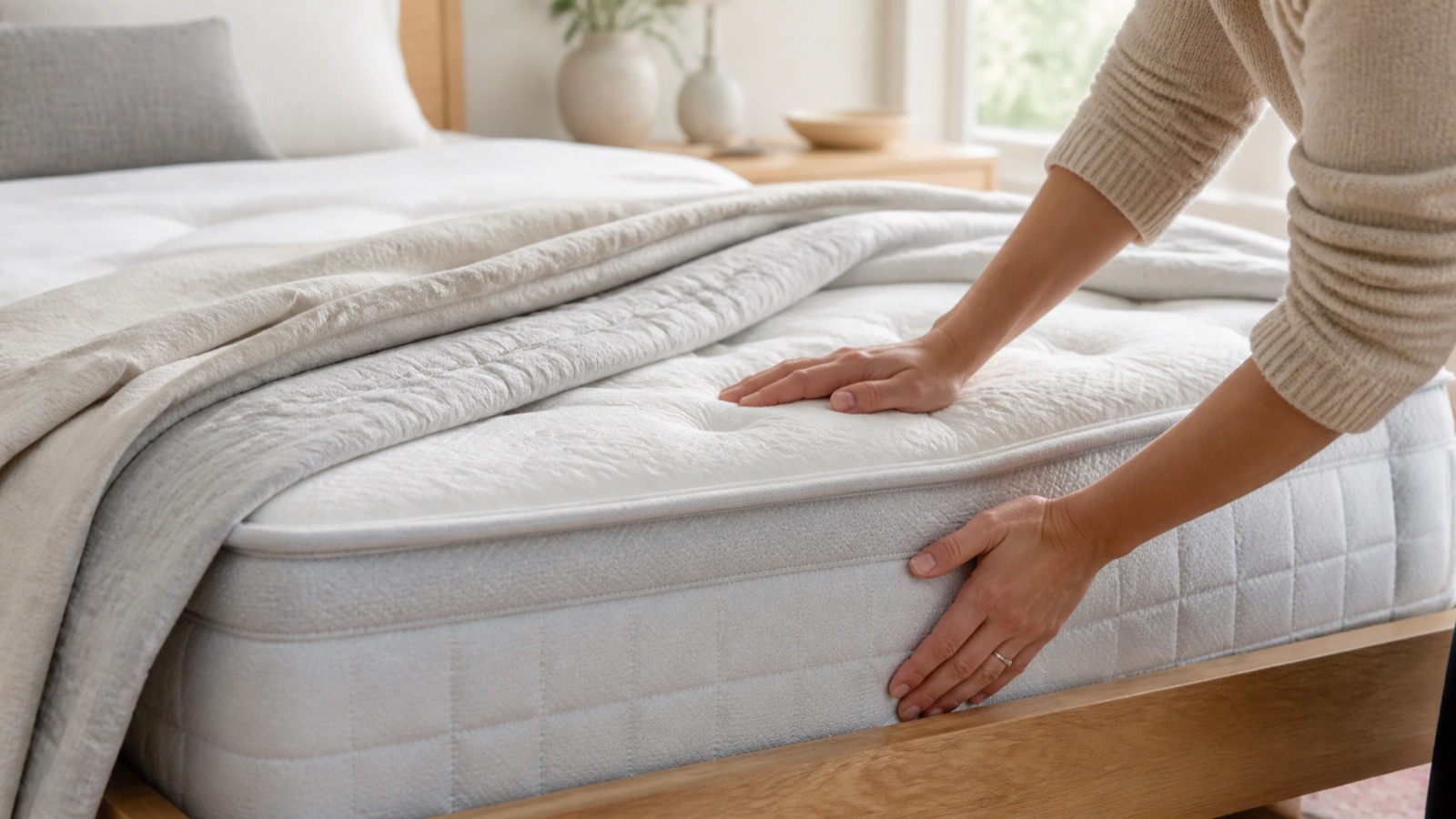
Sit on the edge, lie down, roll over and get up as you would at home. Check whether your shoulder can settle, whether your hips feel held rather than pushed up, and whether you can change position without effort. A brief hand press does not replicate a night of body weight.
Couples should test together. Movement, combined weight and different preferences can change the result. Ask what split-feel, zoning or other options actually mean for the model rather than assuming they solve every difference.
The base changes the result
A mattress is part of a system. Flexible slats, rigid platforms, ensemble bases and adjustable bases can alter feel and support. Confirm the manufacturer’s requirements for slat spacing, centre support, ventilation and compatible frame type before purchase.
If you are changing the frame as well, read the storage bed guide and verify mattress weight limits for any lifting mechanism.
Read the trial, return and warranty terms
A comfort trial may have a minimum use period, protector requirement, exchange limit or collection fee. A warranty generally addresses defects, not a change of preference. Ask for the current terms in writing and keep the receipt, model label and care instructions.
Australian consumer guarantees are separate from extra warranties or trials. They do not turn a comfort preference into a defect, but products sold to consumers must meet the automatic guarantees described by the ACCC.
Before you buy: practical checklist
- List your usual sleep position and current comfort problem.
- Test shortlisted mattresses in your normal position, not just seated.
- Test with your partner when the bed will be shared.
- Confirm the required base, slat spacing and centre support.
- Read trial, exchange, collection and protector conditions.
- Seek qualified health advice for persistent pain or medical needs.
Frequently asked questions
Is a firm mattress always better for back pain?
No single firmness suits everyone or every cause of pain. Support, pressure relief, body type and sleep position matter. Seek clinical advice for persistent or significant symptoms.
Why does a showroom mattress feel different at home?
The base, room temperature, bedding, break-in, model age and the length of time you lie on it can all affect perceived feel. Confirm you tested the same model and specification.
Can a mattress topper fix the wrong firmness?
A topper can change surface feel but cannot reliably correct an unsuitable or failing support system. Check the mattress and base first.
Sources and further reading
Use these references alongside the care, assembly and safety instructions supplied with your specific product.
- CHOICE — how to choose the right mattress
- Sleep Foundation — how to choose a mattress
- ACCC — consumer rights and guarantees
See the options in person
Make a shortlist online, then test options at Queen Style Furniture in Thomastown. Bring details of your current base, preferred sleep position and any access limits so the comparison stays practical.