
Shop luxury furniture in Melbourne with confidence using a showroom checklist for room measurements, comfort, materials, stock, delivery, access, warranties and product records.
Bring room and access measurements, photos, flooring and colour references. Sit, open and operate the exact type of furniture, inspect upholstery and finish in real light, confirm the model and configuration, and record current stock, delivery, assembly, care and warranty details. A confident purchase connects the product to the room and delivery path before payment.
Prepare the room before visiting a showroom
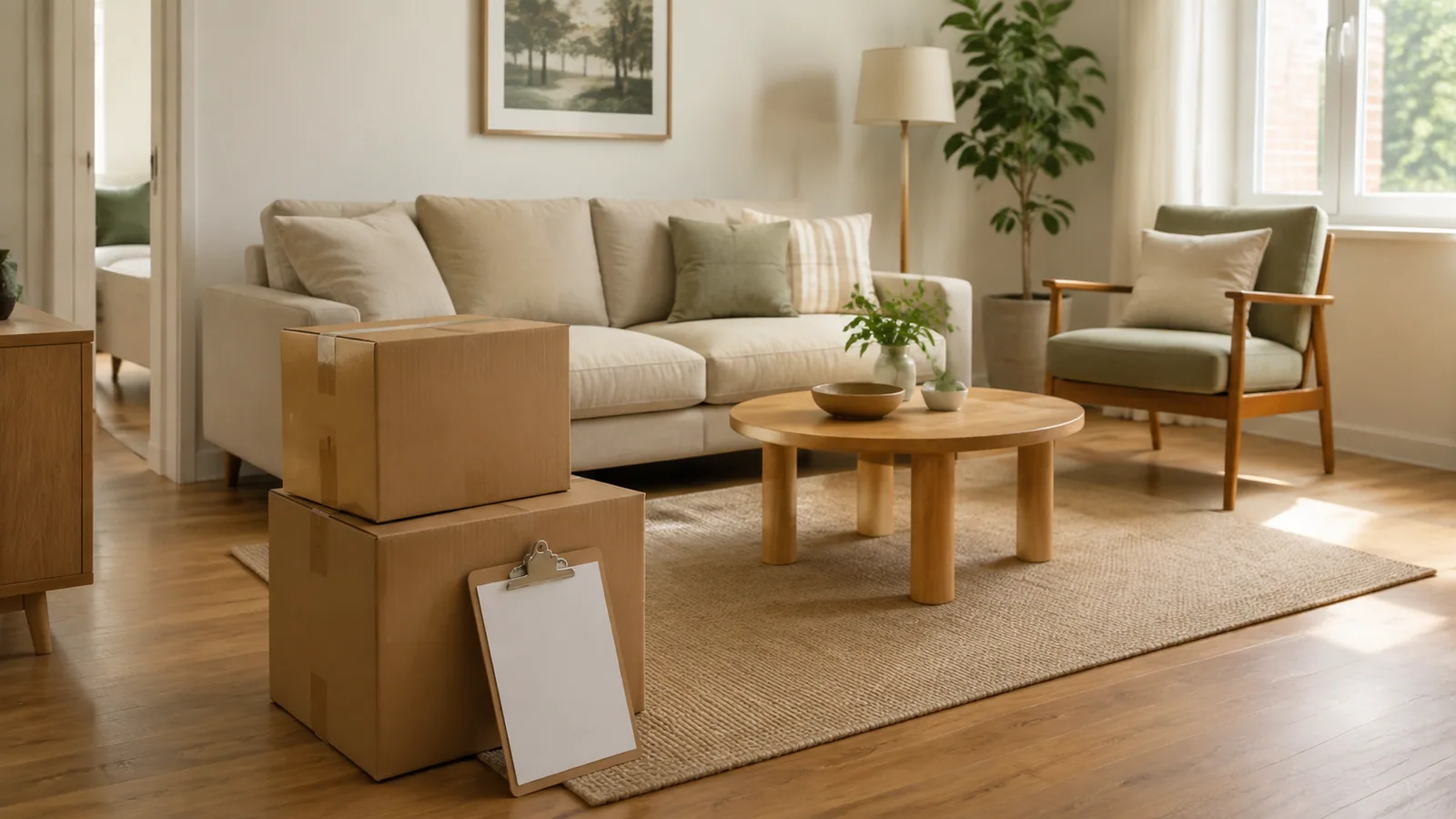
Measure the usable furniture zone, not only the longest wall. Include windows, doors, vents, power points, curtains, drawers and the main walking routes. For dining furniture, mark chair pull-out space. For a sofa, include chaise depth and recliner movement. For a bed, include the external upholstered frame and wardrobe opening. A simple hand-drawn plan with dimensions is enough to improve the conversation dramatically.
Take wide photographs from each corner and close photographs of existing finishes you want to keep. Bring a cushion, flooring sample or paint reference if colour matching matters. Phone screens and showroom lighting can change undertones, so a physical reference is more useful. Rank needs—comfort, storage, seat count, material, delivery date and budget—before listing style preferences.
Record the maximum usable width, depth and height, plus a room overview, the delivery route and the finishes that will remain. That is enough to eliminate many unsuitable options quickly.
Shortlist online by function and live availability
Use the website to compare categories, current product descriptions, dimensions, images and stock signals before travelling. Save two or three options for the same job rather than one favourite. A comparison makes it easier to see what you value: a sofa’s seat function, a table’s base, a bed’s storage or a chair’s compact width.
Do not rely on a search-result price or old screenshot. Open the live product page for current details, and ask the showroom to confirm the exact finish and configuration attached to the item. Product availability can change quickly, especially for low-stock statement pieces. If timing matters, make it part of the first conversation rather than the final question.
Start a room-by-room shortlist
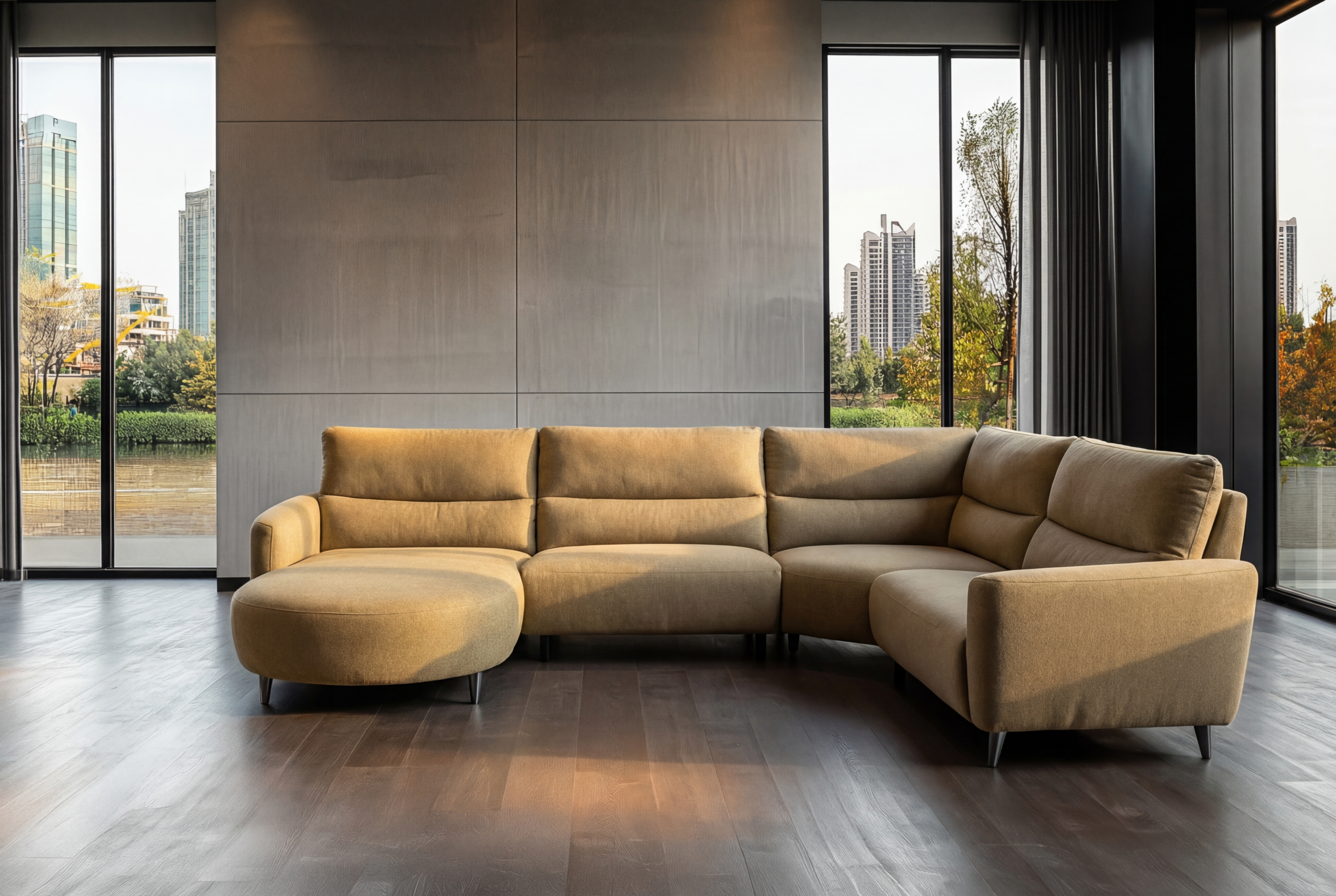
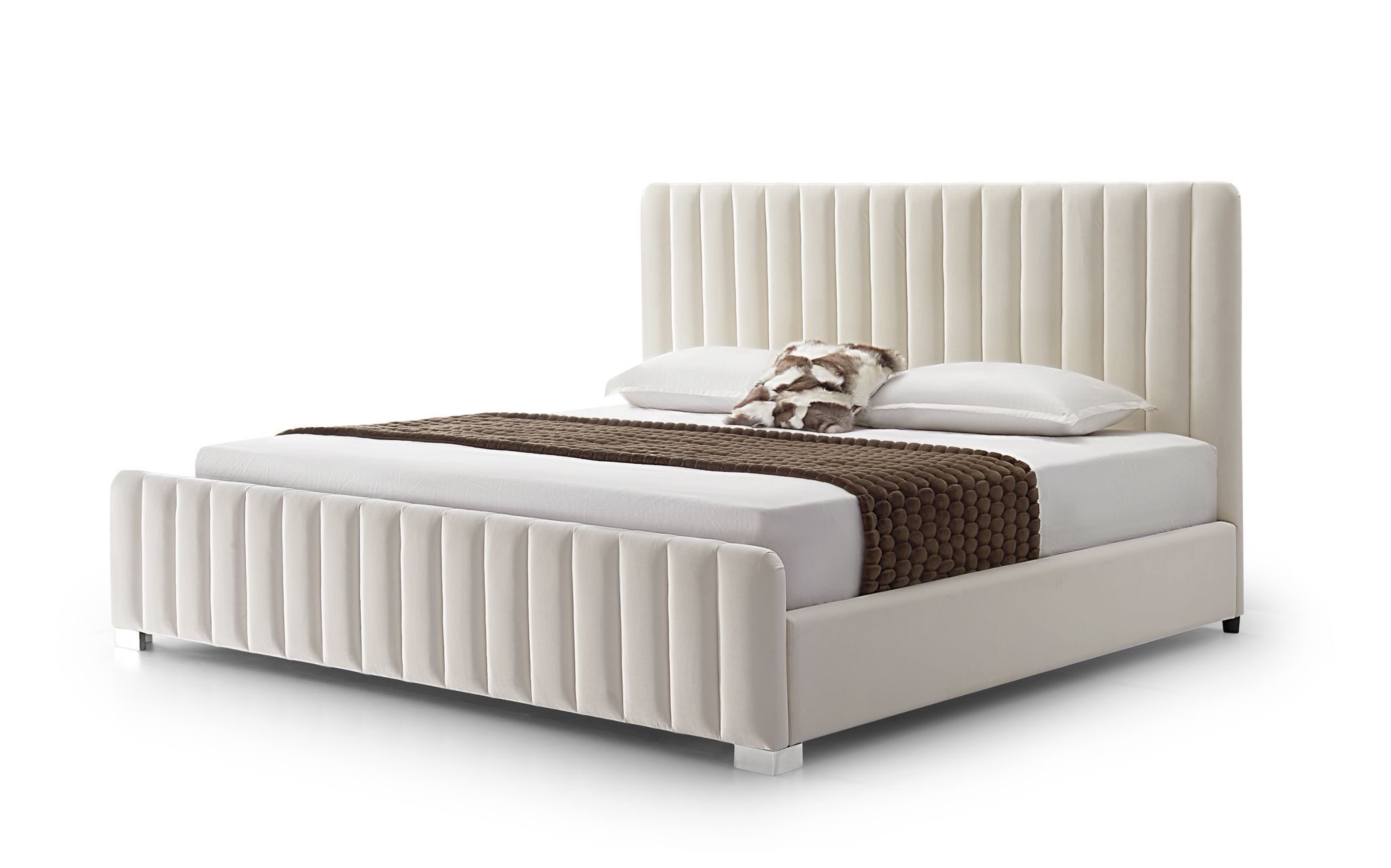
These examples represent three high-consideration purchases—a modular sofa, statement dining table and storage bed. Open the live pages, save the measurements and bring questions to the showroom.

Inspect materials and construction in real light
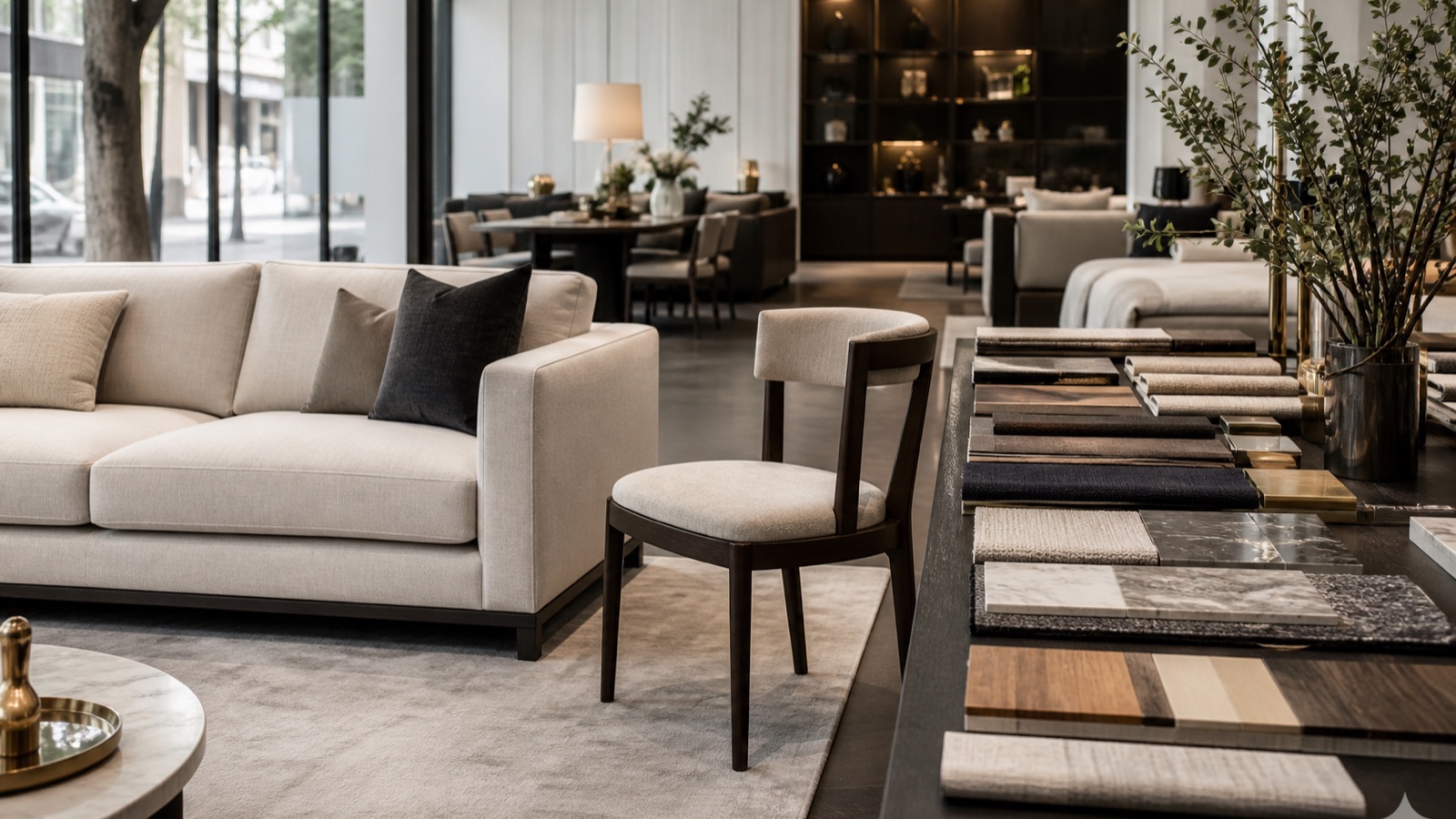
Move around the piece. View upholstery with and against the nap, look at seams and joins, and compare the finish from standing and seated height. Stone and stone-look tops can contain strong movement that is difficult to judge from one crop. Metallic frames change with surrounding colour. Ask what the named material actually is and which care products are approved.
Open drawers, storage beds, consoles and reclining mechanisms more than once. Look beneath tables and chairs to understand the base and clearance. On seating, compare cushion recovery and support across several positions. A showroom visit is not only for seeing colour; it is the best time to test movement, sound, weight, touch and the relationship between components.
Test comfort and scale for the actual user
Every regular user should test high-cost seating when practical. Sit long enough to notice seat depth, foot contact, back support and how easy it is to stand. Recline fully and adjust headrests. At a dining chair, reproduce the intended table height and check arms. At a bed, consider the finished mattress height rather than the empty display frame alone.
Stand several metres away to understand visual weight. A piece can look moderate in a large showroom and feel substantial in a compact home. Compare the product dimensions with your taped room outline while you are beside it. The goal is to translate showroom scale back to the house, not to recreate the showroom’s open floor.
Confirm the exact model, modules, orientation and finish
Long product names and modular configurations can create avoidable mistakes. Write down the product name, SKU where available, module order, chaise side, upholstery colour, table size, bed size and any powered options. Ask whether the showroom sample matches the item being ordered or demonstrates only the general design.
Review the order confirmation before paying. A left-facing and right-facing chaise are not interchangeable once delivered. A queen and king headboard can have different external widths. A sofa configuration may include fixed and powered seats that look similar. Clear product records protect both the customer and the retailer when delivery is arranged later.
| Category | Record before payment | Test in showroom |
|---|---|---|
| Sofa | Module order, orientation, fabric, powered seats | Seat support, full movement and controls |
| Dining table | Top size, material, base and finish | Knee space, chair positions and surface care |
| Dining chair | Quantity, seat height, width and fabric | Back support, arm clearance and movement |
| Bed frame | Size, external dimensions, storage mechanism | Finished height and safe lift operation |
| Coffee table | Top, base, dimensions and packed pieces | Height, stability and visual weight |
Treat delivery access as part of the product
Measure the narrowest door, hallway, stair turn, lift and landing from the street or loading bay to the final room. Note floor level, parking restrictions and apartment booking requirements. Share photos of difficult corners. Ask for the largest packed component, not only the assembled dimensions, and whether feet, backs, tops or modules are removed for transport.
Confirm whether delivery includes placement, unpacking and assembly, and who removes packaging. Protect vulnerable floors and clear the route before the team arrives. Heavy tables, mirrors and powered sectionals should be handled by people with the right equipment. Do not plan to “make it fit” on the day by forcing a turn or carrying a stone top without the recommended support.
Confirm stock, timing and payment terms in writing
Ask whether the item is physically available, allocated to your order or subject to a lead time. Clarify whether a quoted date is dispatch, arrival at the store or delivery to your home. If the purchase depends on an event or move, discuss that deadline before payment. Current stock information on the website is useful, but the final order should record the agreed product and timing.
Review deposit, cancellation, change-of-mind, custom-order and delivery terms. Ask about current payment or lay-by options rather than relying on an old promotion. Keep the invoice, order confirmation and written product specification. Under Australian Consumer Law, consumer guarantees apply in addition to any voluntary warranty, but remedies depend on the circumstances; the ACCC guidance linked below explains the official framework.
Separate warranty questions from care questions
Ask for coverage periods that apply to the frame, upholstery, cushioning, mechanisms, motors and electrical features. Find out who handles service and what evidence is needed. Photograph the furniture after delivery and report transport damage or faults promptly through the stated process. Keep the product label and electrical documentation where relevant.
Care determines how the piece ages even when no fault exists. Request the exact instructions for fabric, stone, ceramic, timber, glass or metal. Record approved cleaning methods and sun or heat cautions. The most expensive cleaner is not automatically the safest. A simple routine—vacuuming, blotting spills, using soft cloths and protecting surfaces—should follow the supplier’s material guidance.
Your Melbourne furniture showroom checklist
- Room plan includes usable width, depth, doors and circulation.
- Delivery plan includes doorways, stairs, lift and building rules.
- Two or three live product pages are saved for comparison.
- Every regular user tests the relevant seating or mechanism.
- Exact model, SKU, size, orientation, modules and finish are recorded.
- Current stock, lead time, delivery, assembly and payment terms are written down.
- Material care and separate warranty periods are understood.
- Invoice, product specification and delivery records will be retained.
Frequently asked questions
Why should I visit a furniture showroom if I can buy online?
A showroom lets you test comfort, movement, weight, texture, finish and scale. Use the live website for research and availability, then verify the high-consideration details a screen cannot show.
What measurements should I take before buying furniture?
Measure the usable room zone, doors and moving parts, then the complete delivery route including the narrowest doorway, hall, stair turn and lift. Use external furniture dimensions, not only mattress or seat size.
What should I bring to a furniture showroom?
Bring a floor plan with dimensions, room and access photos, flooring or colour references, a list of regular users and the live links to two or three shortlisted products.
Where is the Queen Style Furniture showroom?
Queen Style Furniture is at 267 Settlement Rd, Thomastown VIC 3074. The showroom is open Mon–Sat 10am–5pm and Sun 11am–5pm; check the contact page before a special trip in case hours change.
Sources and further reading
This guide combines Queen Style showroom experience with the following current and practical references:
- ACCC: consumer rights and guarantees
- Queen Style Furniture: Thomastown showroom and contact details
- Queen Style Furniture: live product collection
Explore furniture online, then inspect your shortlist at 267 Settlement Rd, Thomastown VIC. We are open seven days: Mon–Sat 10am–5pm and Sun 11am–5pm, for product, sizing and delivery guidance.
Plan your showroom visit