Choose a TV unit by measuring the television, base, viewing height, storage, ventilation and cables, then follow Australian anchoring guidance.
Television size is advertised by diagonal screen measurement, while a TV unit must support the television’s real width, stand or feet and weight. Two screens with the same diagonal can have different outer dimensions and base positions.
The unit also manages devices, ventilation and cables. Because entertainment units and televisions can topple, stability and anchoring are essential purchasing and installation checks—not styling extras.
Quick answer: Measure the television’s full width, height, depth, weight and base footprint. Choose a purpose-designed unit that safely supports those values, provides ventilation and cable access, and looks wider than the screen. Anchor the television and unit as instructed.
Measure the television itself
Record full outer width, not only diagonal screen size. Measure the depth and position of feet or centre stand, and note whether the unit will sit on furniture or the TV will be wall-mounted. Confirm the weight in the manufacturer’s specification.
If a soundbar sits on the unit, add its width, depth and sensor clearance. Do not cover the television’s receiver, ventilation openings or controls.
Give the screen a stable visual base
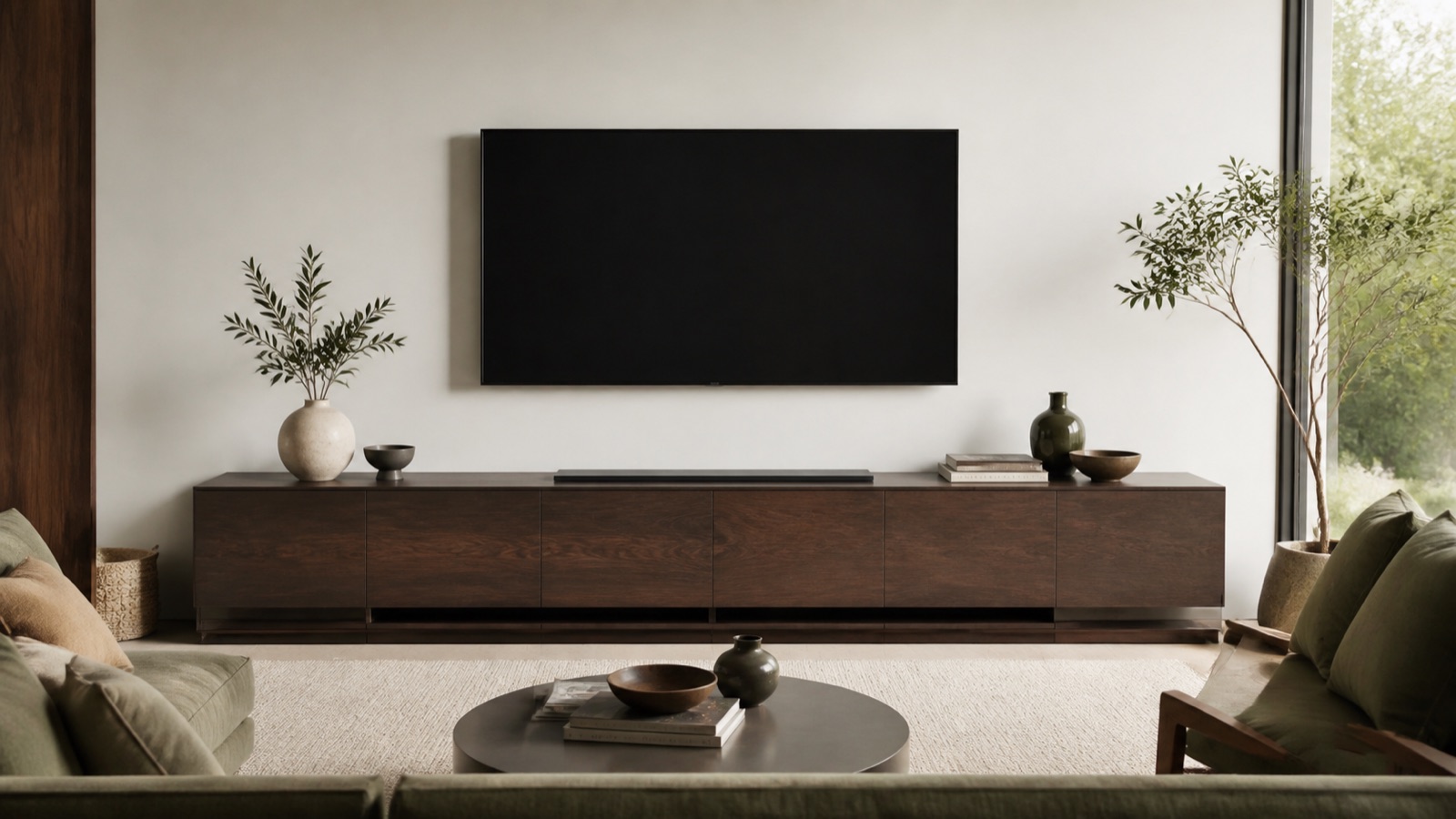
A TV unit that is wider than the television generally looks more balanced and leaves space at each side, but aesthetics never replace the load and base requirements. The feet must be fully supported on a flat, stable surface.
Compare current entertainment and living pieces through the living room collection using the exact centimetres from your television specification.
Set height from the viewing position
Sit in the normal seat and test the screen position. The goal is a comfortable, sustainable view without repeatedly lifting or dropping the head. Sofa seat height, distance, screen size and wall mounting all affect the result.
Mark the screen outline on the wall with removable tape. Check glare in daylight and evening lighting, then confirm a wall mount and its installation are appropriate for the wall and television.
Work through the height with your actual screen
For a television standing on furniture, add the unit's supporting-surface height to the distance from that surface to the screen centre. Measure to the visible screen centre, including the actual stand arrangement below it. The cabinet height alone does not determine where the picture will sit.
In this hypothetical example, a unit surface is 450 mm above the floor, and the television's screen centre sits 550 mm above that surface. The screen centre is therefore 450 + 550 = 1000 mm above the floor. Changing only the unit to 650 mm raises the screen centre to 1200 mm. Those numbers illustrate the calculation; they are not recommended viewing heights.
Mark the resulting screen outline and test it from your normal seats, including a reclined position if relevant. Record the height that feels comfortable in your actual arrangement. A wall-mounted television has its own mounting position; do not use the supporting-unit formula for that installation.
| Television and device check | Your measurement or confirmation |
|---|---|
| Exact television model and stand configuration | __________ |
| Television outer width × height × depth with stand | __________ mm |
| Full feet or base footprint, including spacing | __________ mm |
| Television weight from manufacturer information | __________ kg |
| Unit supporting-surface height | __________ mm |
| Supporting surface to visible screen centre | __________ mm |
| Calculated floor-to-screen-centre height | __________ mm |
| Seated viewing test and glare result | __________ |
| Soundbar and each device width × depth × height | __________ mm |
| Device ventilation and cable space required by instructions | __________ |
| Full base support, unit load rating and anchoring confirmed | __________ |
Use the completed card when comparing TV units. Keep load, ventilation and full-base support as separate checks even when the viewing-height test succeeds.
Plan storage, ventilation and cables
Measure consoles, game systems, routers and remotes. Leave ventilation specified by each device, and avoid sealed clutter around heat-producing equipment. Check shelf openings as well as the unit’s exterior.
Route power and signal cables away from doors, feet, sharp edges and moving furniture. If the seating also uses power or charging, coordinate the outlet plan with the smart sofa buying guide. Electrical work and wall mounting should be completed by suitably qualified people where required.
Anchor furniture and televisions
The ACCC identifies entertainment units of any height within Australia’s mandatory toppling-furniture information standard. Follow all supplied warnings and anchoring instructions. A heavy television raises risk; do not place one on furniture not intended to support it.
Read the ACCC toppling furniture and televisions guide, select fixings for the wall construction and ask a tradesperson when unsure.
Before you buy: practical checklist
- Television width, height, depth, weight and base measured.
- Unit is purpose-designed and rated for the load.
- Screen and soundbar fit with a margin on the surface.
- Viewing height and glare tested from normal seats.
- Devices have ventilation and usable cable routes.
- Television and furniture anchoring instructions followed.
Frequently asked questions
Should a TV unit be wider than the TV?
A wider unit often looks balanced and provides safer visual margin, but the essential checks are full support for the base, adequate load rating and compliance with product instructions.
Does a wall-mounted TV still need anchoring considerations?
Yes. Use a mount and fixings suitable for the exact television and wall, installed according to instructions. Any entertainment unit below should also be anchored when required.
Can I place a TV on a sideboard?
Use furniture intended and rated for the television. The ACCC advises against putting TVs on furniture not designed for that purpose, such as a chest of drawers.
Sources and further reading
Use these references alongside the care, assembly and safety instructions supplied with your specific product.
- ACCC Product Safety — toppling furniture and televisions guide
- ACCC Product Safety — mandatory toppling furniture standard
See the options in person
Bring your television and device dimensions when comparing Queen Style living-room furniture. Confirm load, anchoring information, shelf openings and cable access for the exact piece.