Choose an armchair by checking seat comfort, overall dimensions, conversation distance, side-table reach, rotation space and delivery access.
An armchair is often chosen as an accent, but its outer dimensions and seat geometry determine whether it becomes a favourite or an obstacle. Rolled arms, wings, swivel bases and recliner mechanisms can add much more space than the seat itself suggests.
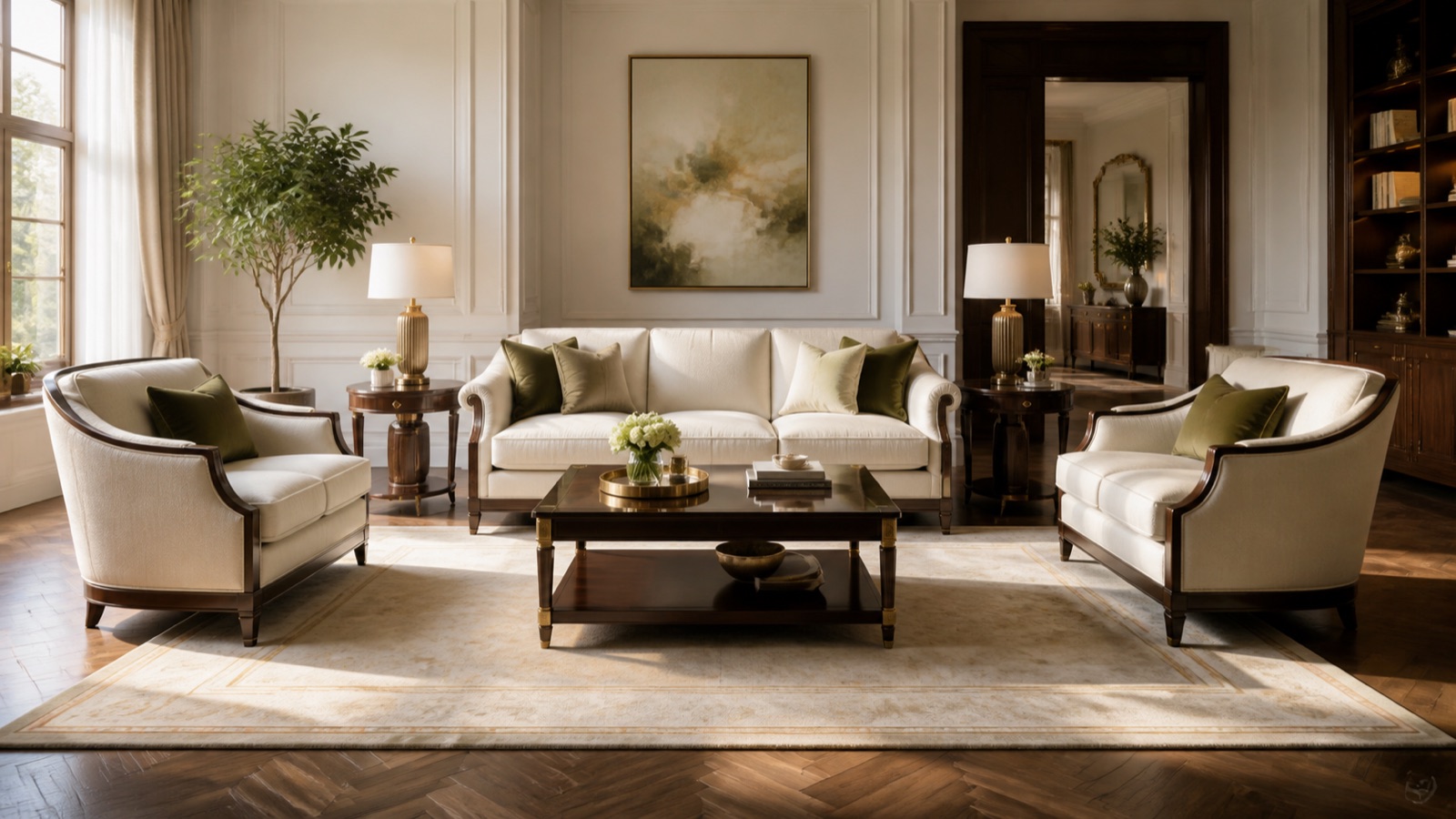
Plan the chair as part of a conversation group. It should have a clear relationship to the sofa, table, light and focal point while preserving the route through the room.
Quick answer: Measure the chair’s full width, depth and height, then test seat height, depth, back angle and arms. Mark its footprint with the sofa and side table, angle it for conversation and keep the main path clear. Add swivel or recliner operating space where relevant.
Distinguish seat dimensions from outer dimensions
Seat width and depth affect comfort. Overall width and depth affect the room. A generous wing or padded arm may add visual presence without adding usable seat space, while a narrow arm can create more seating within the same footprint.
Check both sets of measurements for pieces in the armchair collection. Product width should include the widest permanent point.
Compare the usable seat and the complete footprint
Create a measurement card for each chair instead of comparing a single advertised width. Seat measurements describe the space you occupy; outside measurements describe the space the chair occupies. For a curved or heavily cushioned seat, ask how the measurement was taken and confirm the usable space in person.
Consider two hypothetical chairs, both 850 mm wide overall. Chair A has 500 mm of usable seat width, while Chair B has 600 mm. The same outside width gives a 100 mm difference in usable seat width in this example. That does not establish which is more comfortable: seat depth, height, cushioning, back angle and your preferred sitting position still matter.
| Measurement or test | Chair A | Chair B |
|---|---|---|
| Exact model and configuration | __________ | __________ |
| Usable seat width | __________ mm | __________ mm |
| Usable seat depth with back cushion in place | __________ mm | __________ mm |
| Seat height, with measurement method noted | __________ mm | __________ mm |
| Overall width × depth × height | __________ mm | __________ mm |
| Arm height and comfortable hand position | __________ | __________ |
| Swivel sweep, or full reclined operating dimensions | __________ | __________ |
| Clear space with table, lamp and route included | __________ | __________ |
| Primary user's sitting and standing test | __________ | __________ |
Write “not supplied” if a product listing omits a seat measurement, then ask for it. Do not estimate the seat from an overall width or a photograph. For moving chairs, use the manufacturer's operating dimensions and demonstrate the movement; a rectangular outline of the closed chair may not include its full sweep.
Test how you sit and stand
Sit with your back supported and feet in a comfortable position. Notice whether the seat edge presses behind the knees, arms support a natural shoulder position and the chair allows you to stand without pulling on nearby furniture.
Different users may prefer different seats. If the chair is for reading, feeding a baby or a person with mobility needs, test that use specifically and seek appropriate professional advice where needed.
Build a conversation group
Angle the chair towards the sofa or another seat so people can talk without twisting. Avoid placing every piece in a straight line facing only the television. A rug or coffee table can visually connect the group, but leave comfortable knee and walking space.
Use the floor-plan process in the sofa buying guide to draw all seating together rather than adding the chair after the sofa fills the room.
Plan the supporting pieces
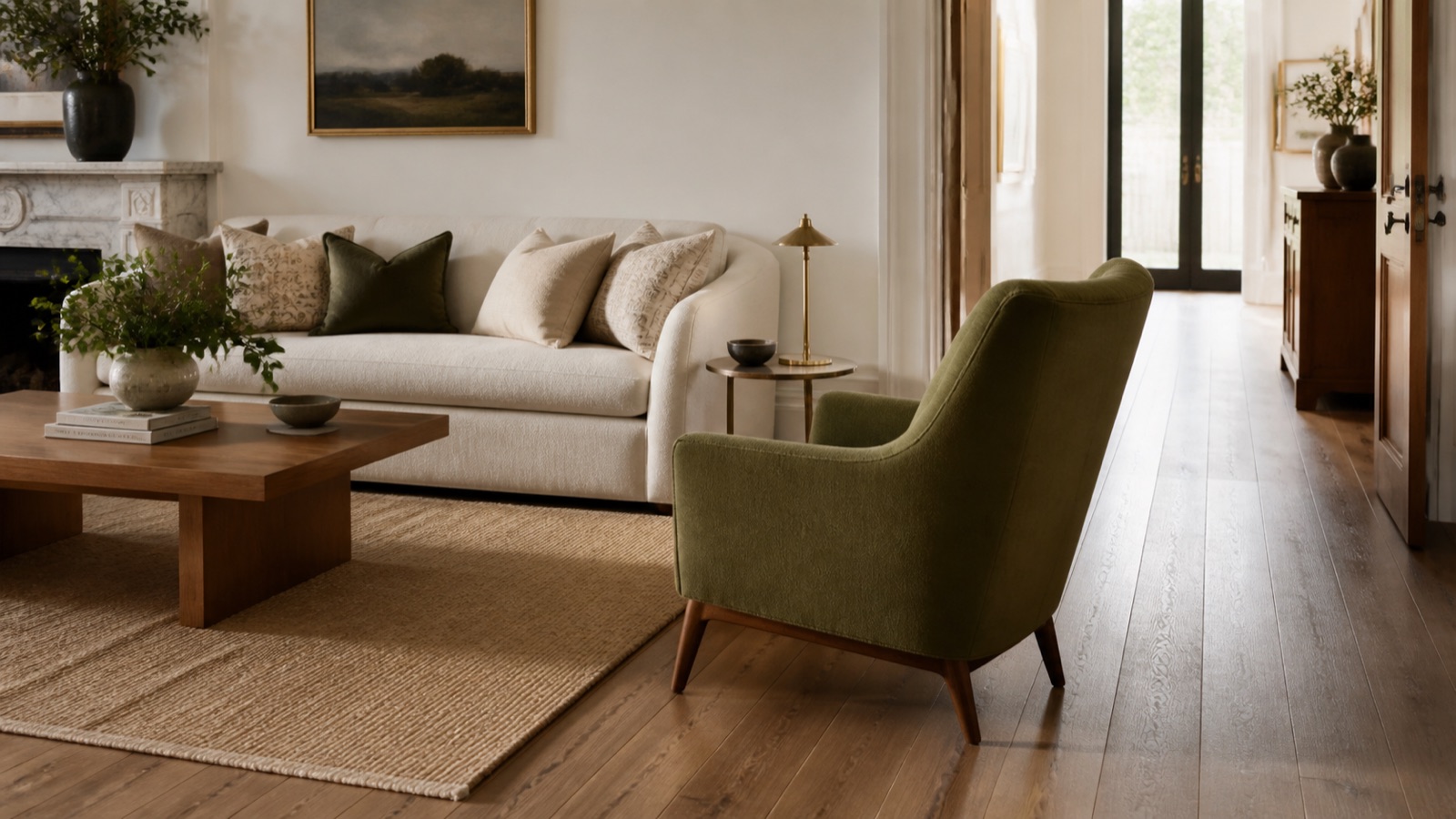
A reading chair needs light and a surface within easy reach. Mark the side table and floor lamp, including their bases and cables. A dramatic chair can pair with a quiet table; repeating one colour or material keeps the arrangement connected.
If the chair swivels, draw the rotation circle and keep cords, curtains and fragile objects outside it. If it reclines, use maximum open dimensions.
Measure the delivery route
Armchairs can be surprisingly difficult at turns because arms and backs may not be removable. Ask for packed dimensions, weight and approved removable parts. Measure the narrowest doorway and space on both sides.
Follow the delivery access checklist for stairs, lifts and corridors. Never plan to force or structurally dismantle a chair on delivery day.
Before you buy: practical checklist
- Seat and overall dimensions both recorded.
- Primary users tested comfort and ease of standing.
- Conversation angle and focal-point view checked.
- Side table, lamp base and cable route marked.
- Swivel or recliner operating space included.
- Largest delivery dimensions fit every access point.
Products to compare
Use these live product pages to compare current dimensions, materials and features with the guidance above. Confirm stock, finish and delivery details before ordering.


Frequently asked questions
Should an armchair match the sofa?
It does not need to match. Connect it through one or two elements—colour, material, curve, leg finish or visual weight—while allowing it to provide contrast.
Can a large armchair work in a small room?
Yes, when its footprint preserves circulation and it replaces rather than adds redundant seating. Mark the full outer dimensions and supporting table before deciding.
How should an armchair face the sofa?
A slight angle often supports conversation and keeps a shared focal point visible. Test the actual sightline and walkway instead of following a fixed angle.
See the options in person
Sit in current Queen Style armchairs at the Thomastown showroom and compare outer dimensions as well as comfort. Bring a plan showing the sofa, table, lamp and main path.