Choose a left- or right-facing chaise by confirming the naming convention, marking the room, protecting walkways and checking fixed or reversible designs.
Left- and right-chaise descriptions cause costly mistakes because people picture the sofa from different positions. Many retailers describe the side while you stand facing the sofa, but terminology can vary. The product diagram and written configuration are more reliable than the words alone.
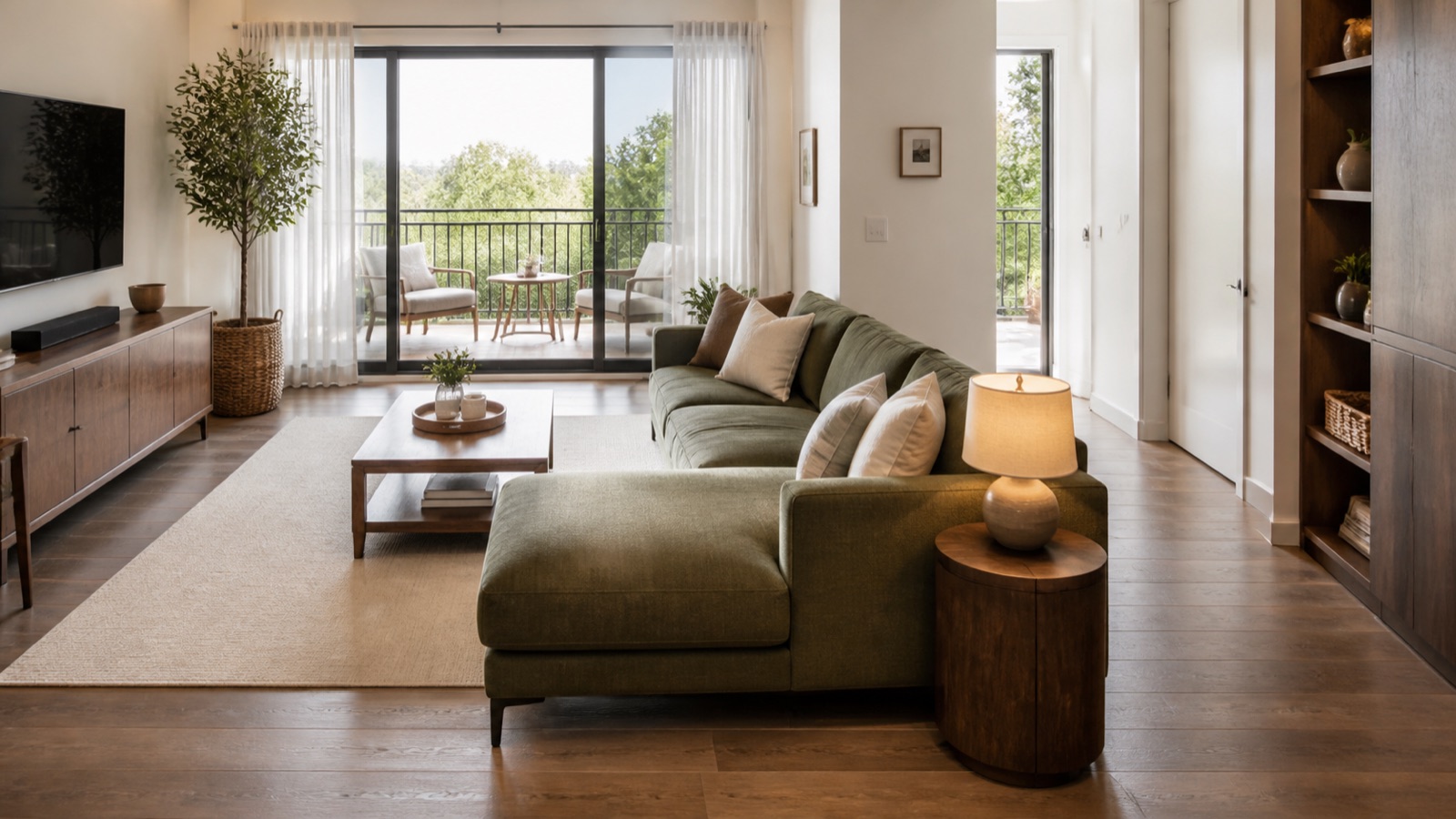
Orientation should protect the room’s main path and open towards the useful part of the space. Mark the full outline before choosing, including recliner travel and any side table.
Quick answer: Ask the retailer to mark the chaise on a front-facing product diagram and write the exact model or module codes on the order. In your room, place the chaise where it will not block the entrance, balcony, dining route or access to storage and power.
Confirm whose left and right
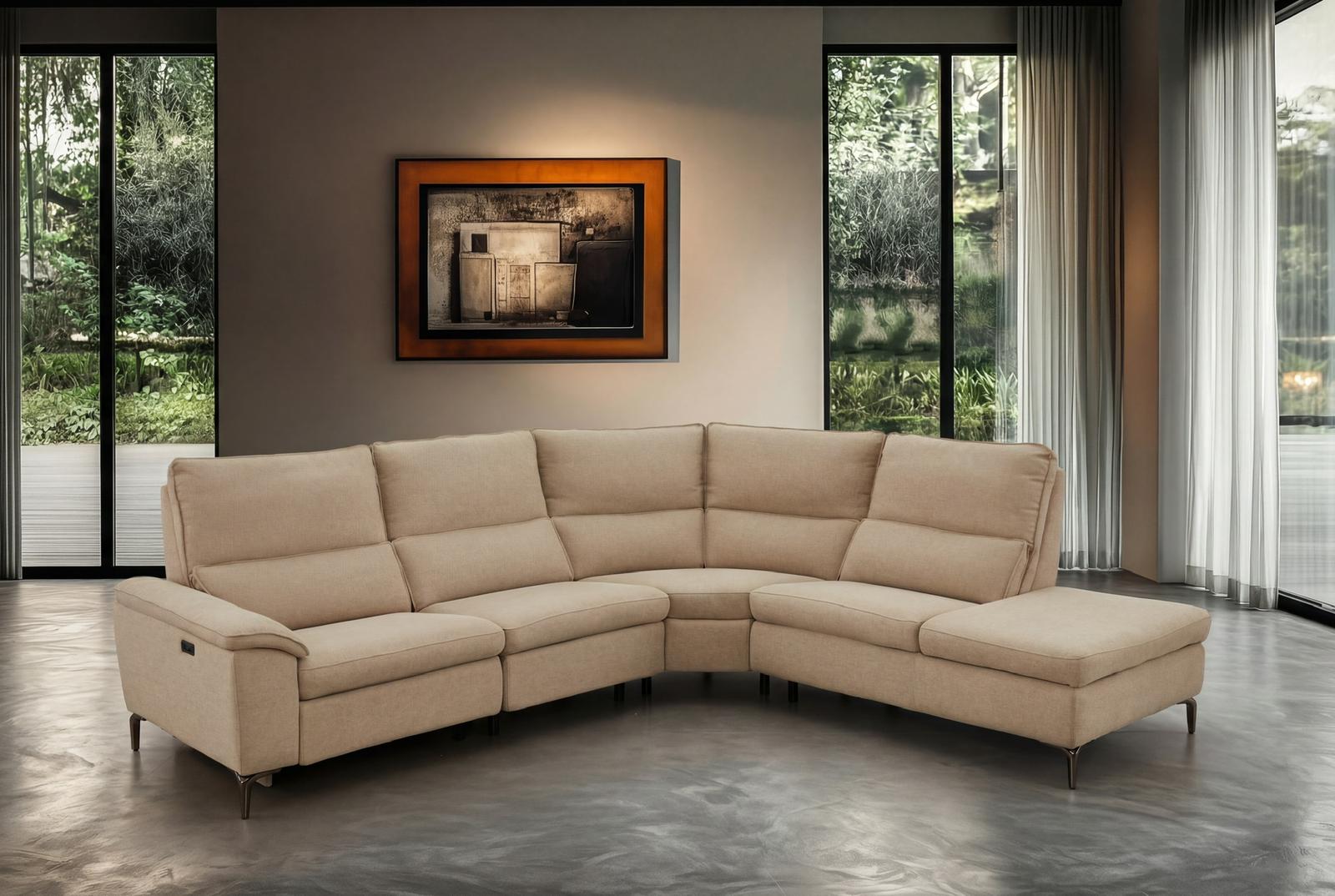
A common convention names the chaise from the viewpoint of a person standing in front of and looking at the sofa. Under that convention, left-hand facing means the chaise appears on your left. Some manufacturers use arm-side language instead, so never rely on memory.
Save the product image, configuration code and module list. Point to the chaise on the diagram and ask for confirmation in writing before the order is finalised.
Map the room’s desire lines
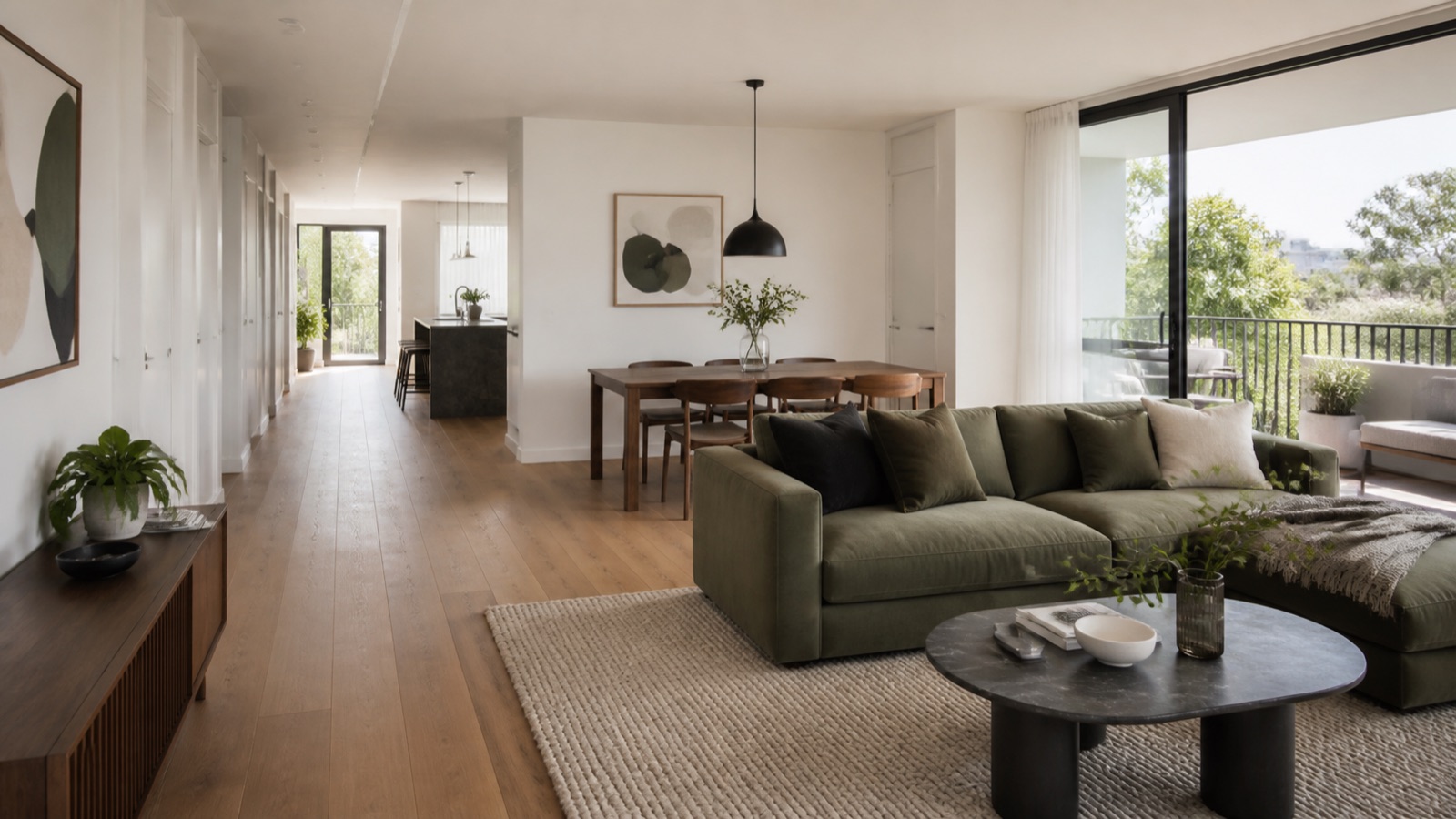
Watch how people move from the entry to the kitchen, balcony, hallway and other seating. The chaise should not become a barrier that everyone walks around. In an open-plan room it often works best as the softer edge of the living zone rather than a fence across the busiest route.
Use the small living room guide to protect circulation, even in a large room where open paths make the layout feel calmer.
Check the focal point and daylight
Confirm the view from every seat towards the television, fireplace, window or conversation area. A chaise beside a window can feel inviting, but it may also block a door, floor vent or curtain. Check screen glare at the time of day you watch most.
Mark the sofa with tape and add boxes for the chaise end and side table. Sit at the proposed seat height if possible and photograph the sightlines.
Fixed, reversible and modular are different
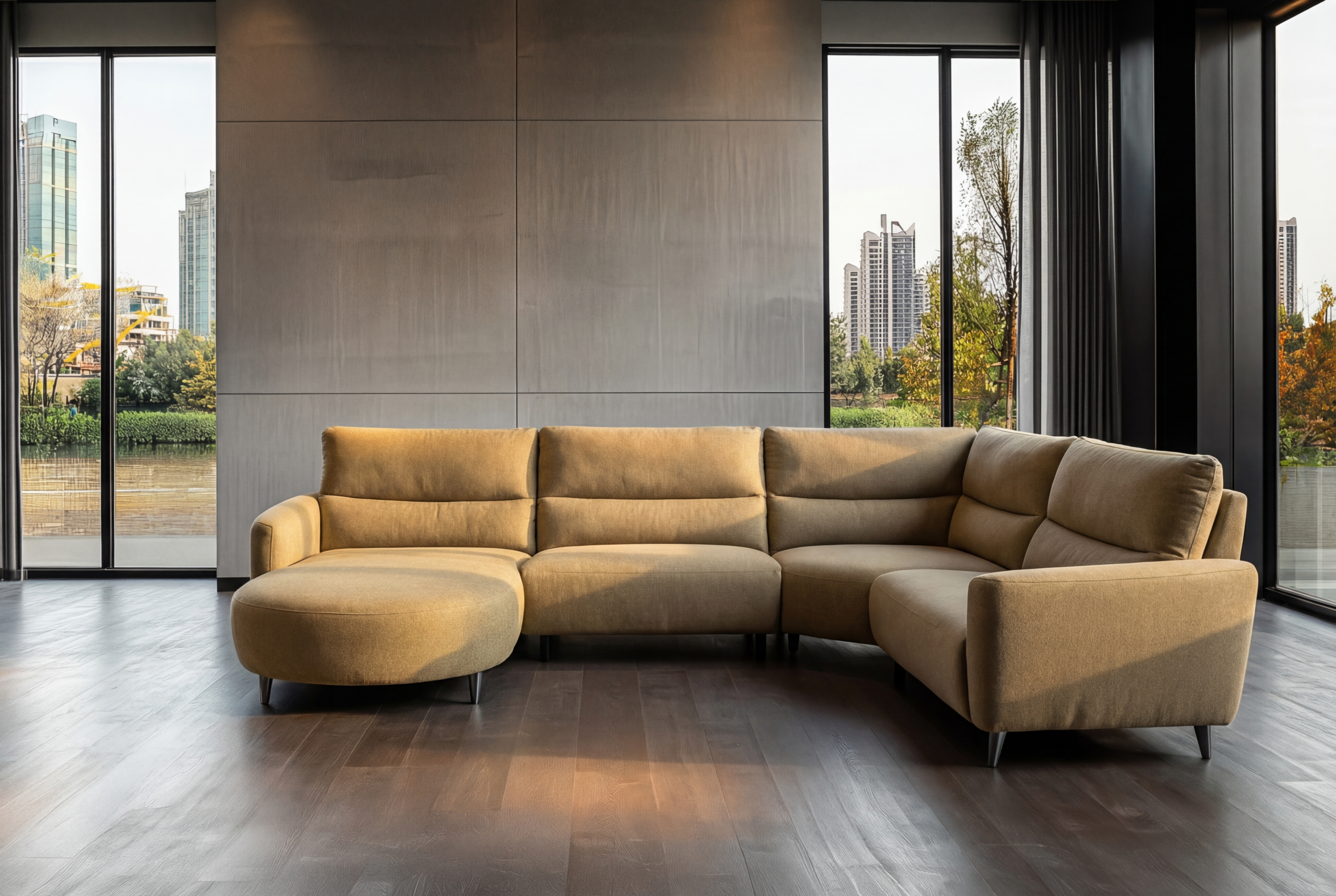
A fixed chaise is built for one side. A reversible design may move a cushion or ottoman, while a modular range may use dedicated left and right units. Ask what physically changes and whether both sides are fully finished.
Compare the exact products in the sofa and modular collection. If powered recliners or storage are included, orientation may also determine cable and control positions.
Measure the complete working footprint
Record overall width, maximum chaise depth and any open recliner or headrest position. Include the route around the end and clearance from the coffee table. A compact body can still need substantial operating room.
Finally, check the largest transport component with the delivery access guide. Orientation may affect the way a fixed section can turn through a doorway.
Before you buy: practical checklist
- Front-facing orientation diagram saved.
- Exact model, module and chaise side written on the order.
- Entrance, balcony and dining paths remain open.
- TV, window and conversation sightlines tested.
- Full recliner, headrest and chaise footprint marked.
- Largest component and turn direction fit the access route.
Products to compare
Use these live product pages to compare current dimensions, materials and features with the guidance above. Confirm stock, finish and delivery details before ordering.

Frequently asked questions
What does left-hand facing chaise mean?
Many sellers mean the chaise is on your left while you stand facing the sofa. Because conventions vary, confirm with the exact product diagram and configuration code.
Can I move a chaise to the other side later?
Only if the specific design is reversible or the modular range supports the alternative combination. Fixed upholstery and connectors cannot be assumed to swap.
Should the chaise go against the wall?
It can, but it does not have to. Choose the side that preserves circulation, doors, views and functional clearances rather than following a wall rule.
Sources and further reading
Use these references alongside the care, assembly and safety instructions supplied with your specific product.
See the options in person
Bring a room photo and floor plan to Queen Style Furniture, Thomastown. The team can compare the selected sofa diagram with your planned orientation; confirm the final side and module list in writing.