Compare modular sofas and coordinated sofa sets for layout flexibility, room zoning, comfort, access, moving, maintenance and long-term use.
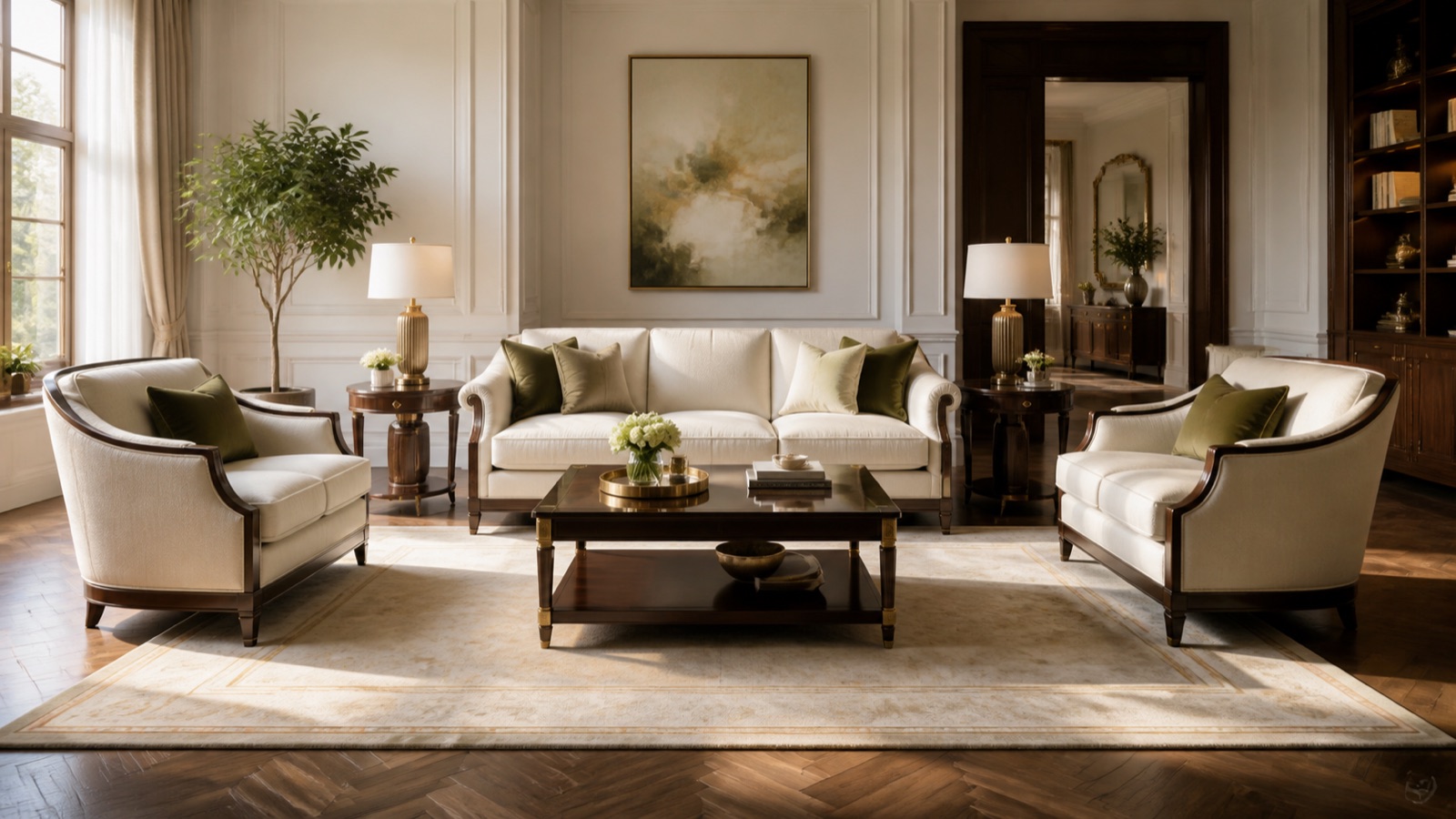
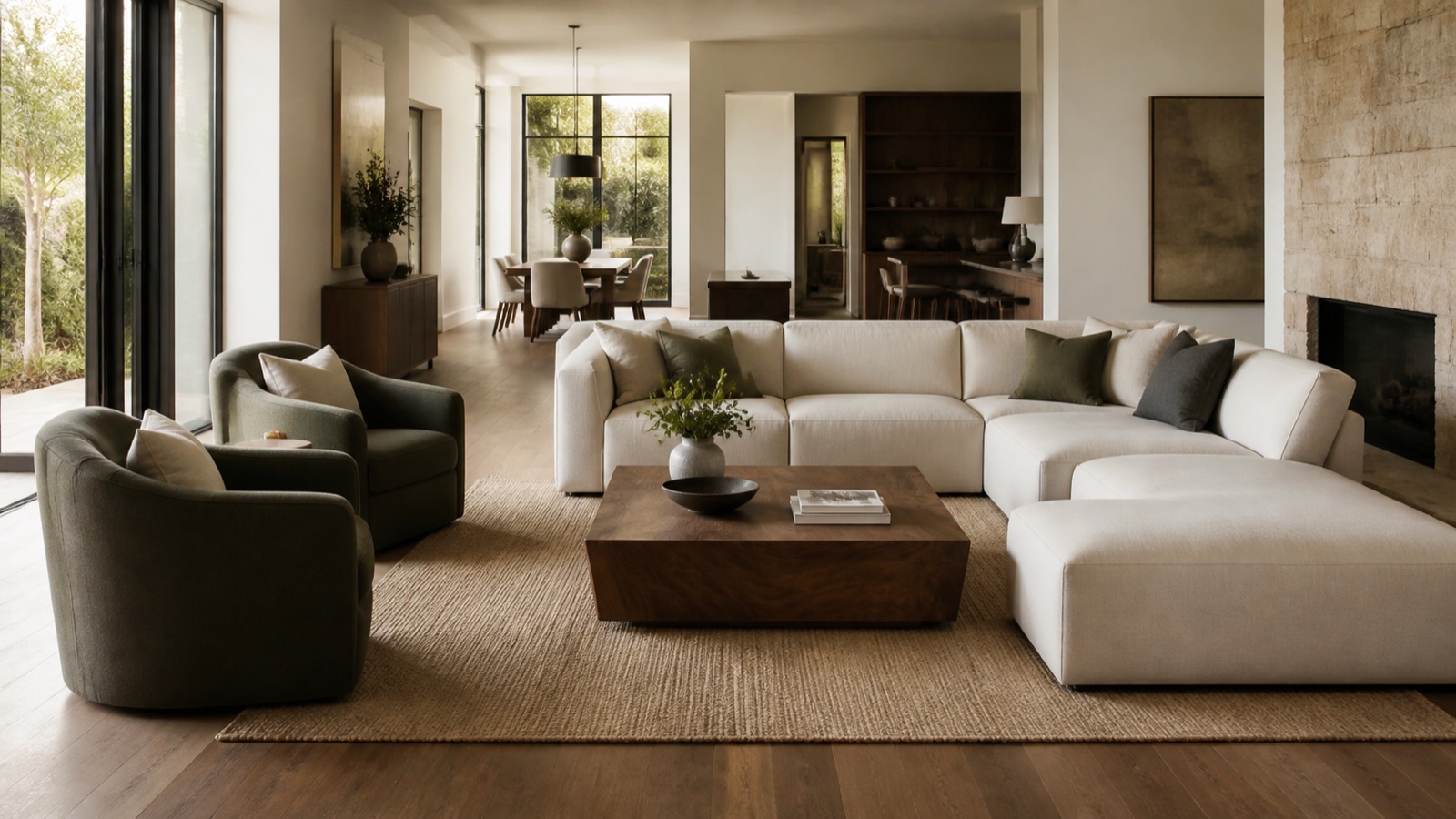
A modular sofa combines sections into one larger seating plan. A sofa set distributes seating across separate pieces, often a sofa plus chairs or another sofa. Both can seat the same number of people but shape conversation, circulation and room zoning differently.
The best comparison begins with a dimensioned room and the way people actually use it—not a preference for one product label. Access, module connections and future moves matter as much as the finished look.
Quick answer: Choose modular seating when you want a strong zone, generous lounging or the ability to configure compatible sections. Choose a sofa set when separate pieces improve conversation, flexible circulation or visual formality. Verify every component, connector and footprint.
Compare the footprints on one plan
Draw the room to scale with doors, windows, fireplace, TV, power points and main paths. Mark a modular configuration as one complete outline. Then mark the sofa set piece by piece, including the space between them. Separate seating can require more total floor area even when individual items look smaller.
Use the measurement method in how to choose a sofa, then compare current shapes in the sofa collection.
Think about conversation and sightlines
A sectional naturally gathers people in one zone and can face a screen or view. Separate sofas and armchairs can face one another, which often supports conversation and lets each person choose a different seat. Check that high backs and chaises do not cut across an important view.
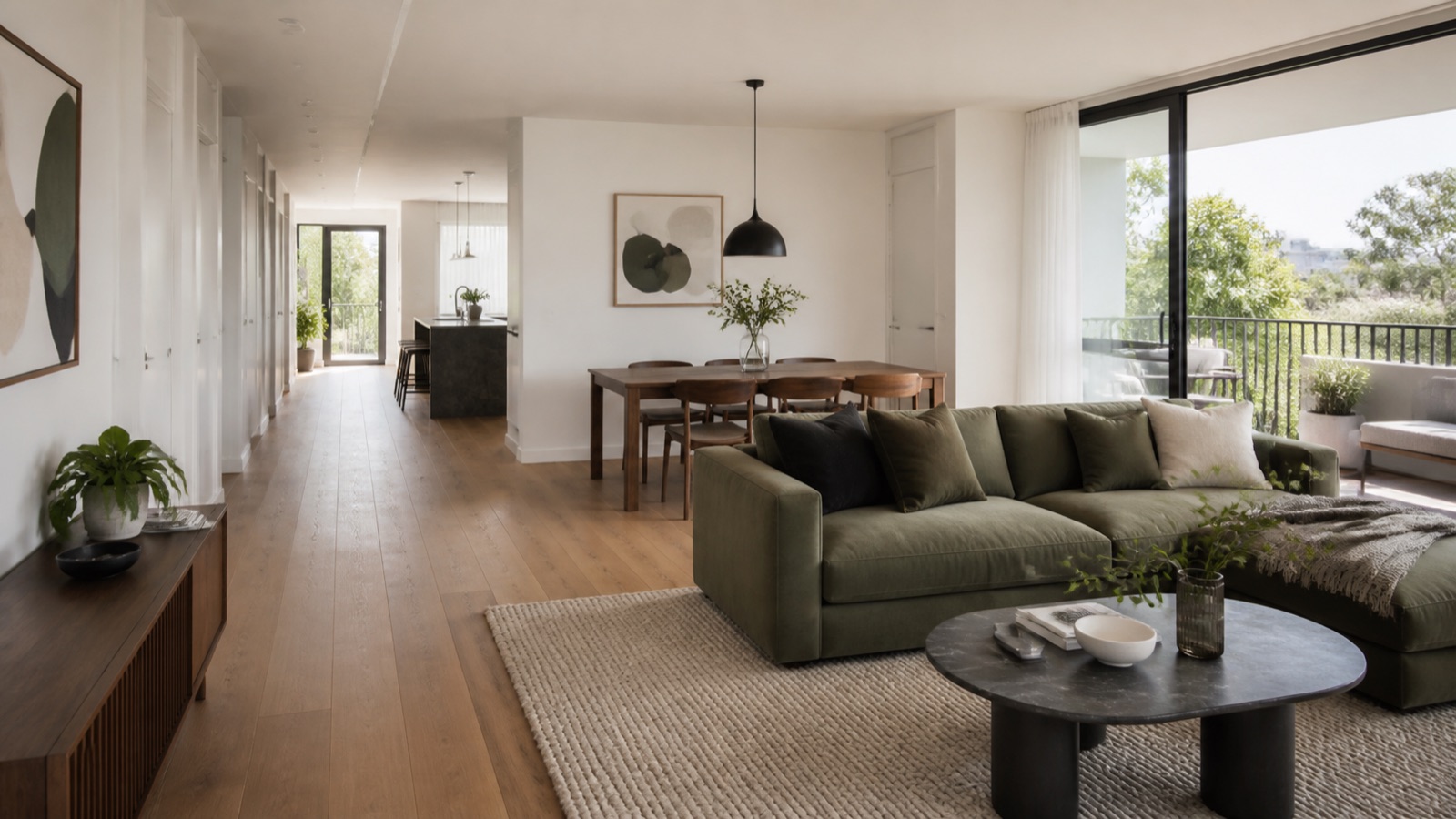
In open-plan homes, the back of a modular sofa can act as a boundary. Make sure that boundary does not narrow the path from entry to kitchen or make dining chairs difficult to pull out.
Understand what “modular” permits
Some ranges allow sections to be rearranged; others use dedicated left, right, corner and armless units that only connect in approved combinations. Confirm the exact module list, connector locations, finished sides and whether an alternative configuration requires extra pieces.
Do not assume a chaise can change sides. Ask whether orientation is fixed, reversible or created by moving a separate ottoman. Keep the assembly diagram with the order.
Plan access and future moves
Modules can make delivery easier because the largest transport component is smaller than the assembled sofa, but each piece must still negotiate the route. Follow the delivery measurement guide and record connector or orientation restrictions.
A sofa set offers independent pieces that can move between rooms, yet large fixed sofas may be harder to turn. If you rent or expect to move, compare the largest component—not only the assembled footprint.
Compare maintenance and everyday behaviour
Module joins can collect debris or shift if they are not connected and level. Separate pieces create more exposed sides and floor gaps to clean. Ask how cushions, covers, power components and connectors are maintained for the exact design.
Test every seat, including corners and armless sections. A beautiful plan fails if the seats people use most do not support their preferred posture or if powered controls are difficult to reach.
Before you buy: practical checklist
- Both layouts drawn with real product dimensions.
- Doors, windows, TV sightlines and main paths preserved.
- Exact modules, finished sides and connectors confirmed.
- Chaise and recliner orientation recorded in writing.
- Largest component fits doors, turns, stairs or lift.
- Every seat and control tested in the showroom.
Products to compare
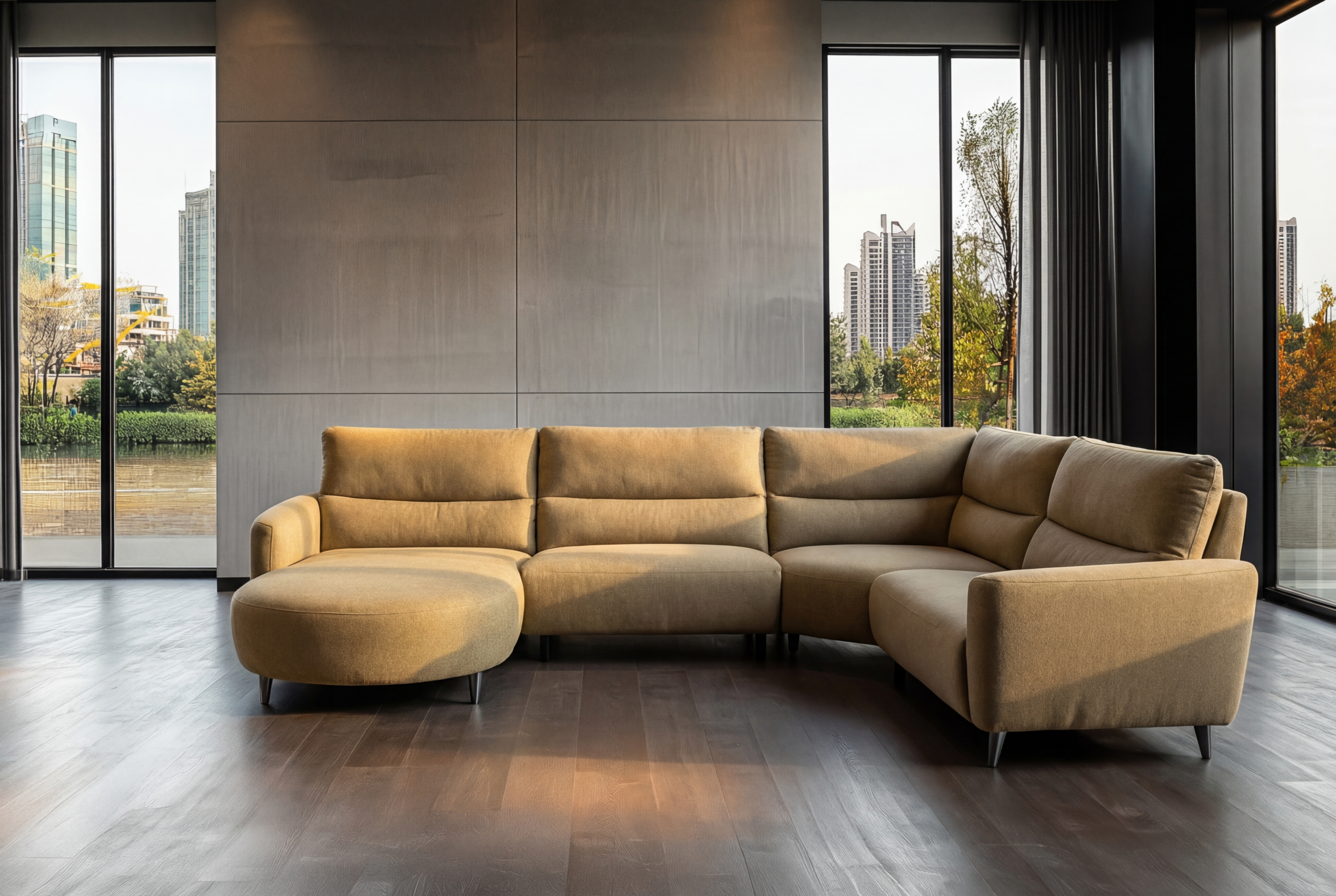
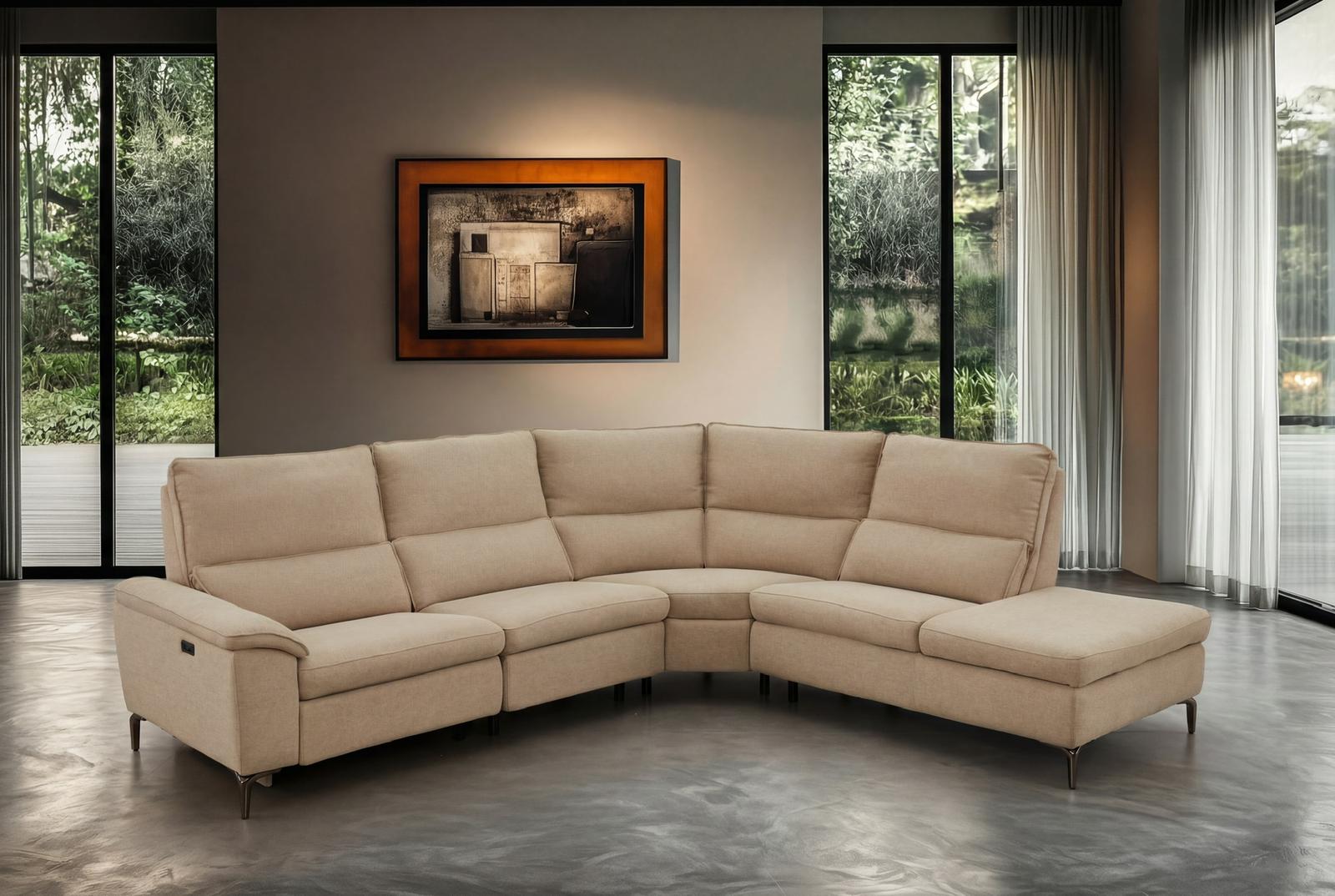
Use these live product pages to compare current dimensions, materials and features with the guidance above. Confirm stock, finish and delivery details before ordering.

Frequently asked questions
Can every modular sofa be rearranged?
No. Compatibility depends on the range, connectors, arm placement and finished sides. Confirm approved configurations for the exact modules before ordering.
Is a modular sofa better for a small room?
Sometimes, but not automatically. A carefully sized fixed sofa and armchair may preserve better paths. Compare scaled footprints and working clearances.
What is the difference between a sectional and a modular sofa?
The terms overlap. Sectional describes multi-part seating arranged as a section; modular usually emphasises compatible units. The product’s actual connection and configuration rules matter more than the label.
See the options in person
Test modular configurations and coordinated seating in the Queen Style Thomastown showroom. Bring a floor plan, access measurements and photos showing doors, windows, TV and the main walkway.