Care for upholstered dining chairs with label checks, gentle vacuuming, prompt blotting, hidden-area tests and product-specific stain advice.
Dining-chair upholstery faces crumbs, food oils, drink spills and repeated hand contact. Fast action helps, but the wrong cleaner or too much water can create a larger mark than the original spill.
Start with the care label and supplier instructions for the exact fabric. Codes and fibre descriptions guide whether water, solvent or professional cleaning is appropriate; internet remedies cannot replace them.
Quick answer: Vacuum gently with a clean upholstery tool, blot fresh spills with a white absorbent cloth and avoid rubbing or soaking. Check the care code, patch-test any permitted method and contact a qualified upholstery cleaner for large, oily, strongly coloured or uncertain stains.
Record the upholstery and care code
Photograph the label, fabric name and order specification. Removable-looking covers are not necessarily washable, and decorative trims or padding may impose additional limits.
When choosing from upholstered dining chairs, ask for care information before selecting a pale or textured fabric for heavy family use.
Remove dry soil gently
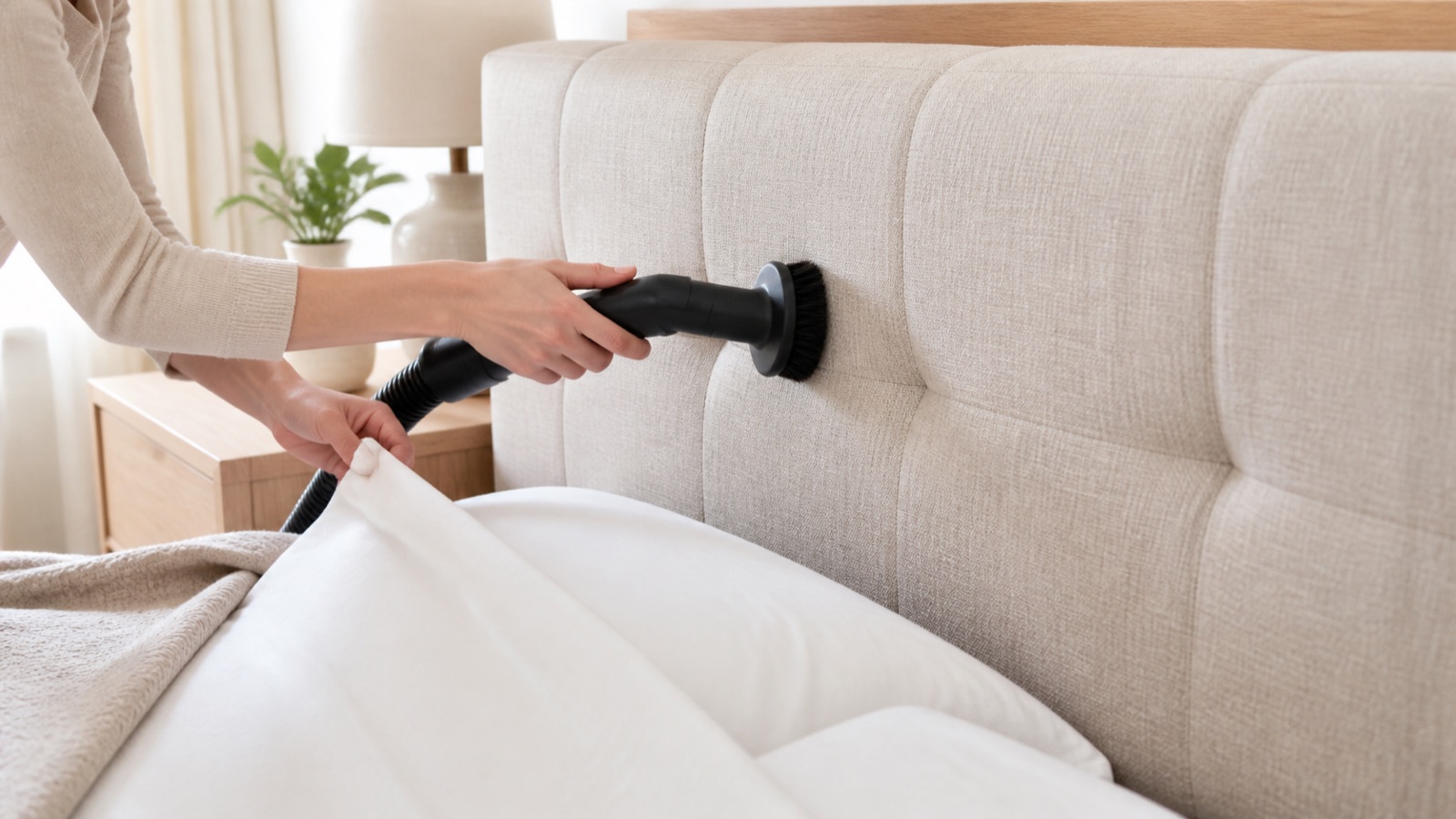
Use a clean, soft upholstery attachment at low suction, working over the seat, back, piping and creases. Check the nozzle for sharp edges and grit. Lift crumbs before applying moisture so they do not become a paste.
Avoid hard brushes on pile or loose weave. Clean the frame separately using the method approved for timber, metal or coated surfaces.
Blot spills immediately
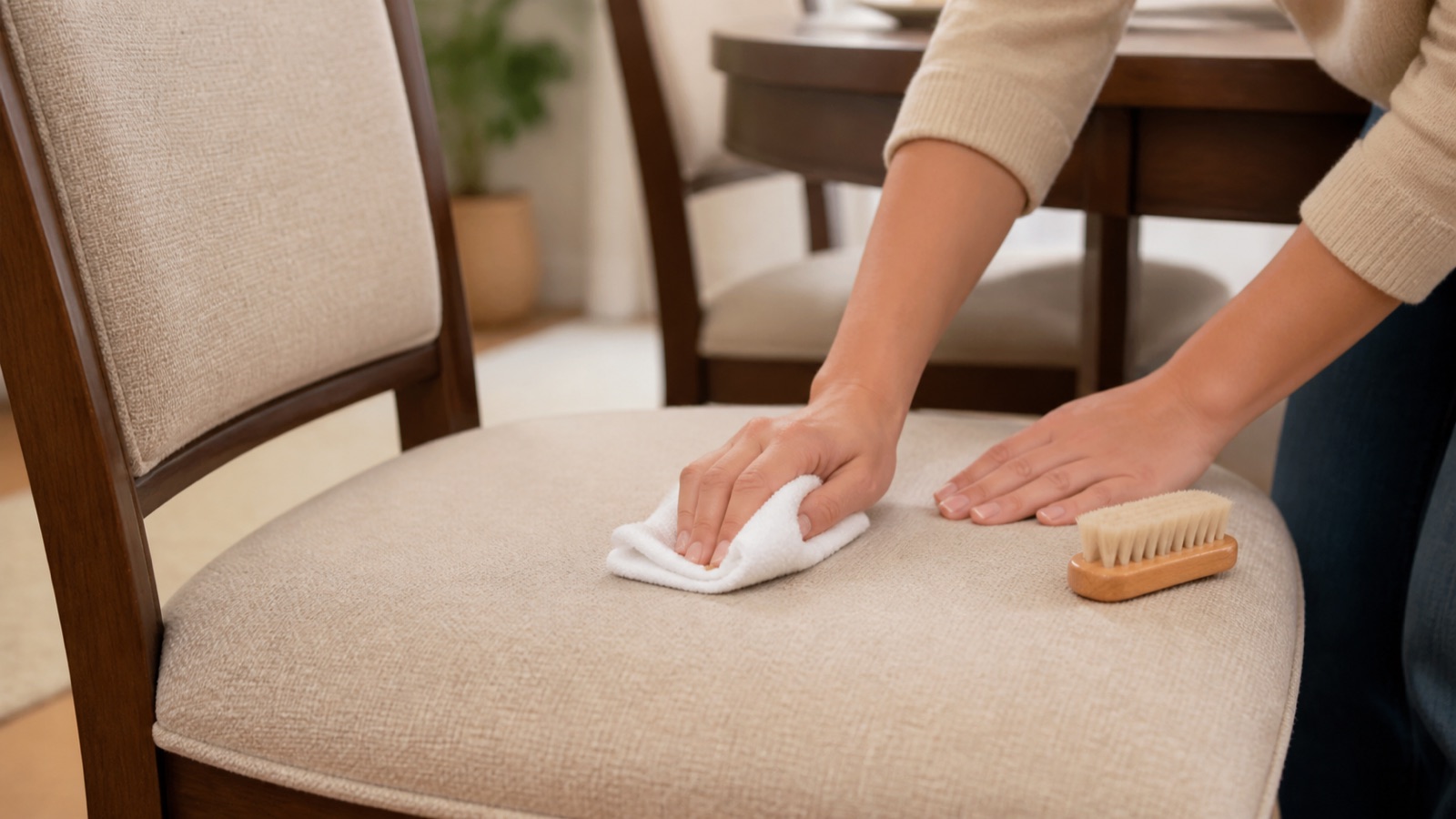
Use a white absorbent cloth and press rather than scrub. Work from the outside towards the centre. Replace the cloth as colour or liquid transfers and avoid pushing moisture into the foam.
Do not mix cleaning chemicals or apply heat. For solids, lift material carefully without grinding it into the weave, then follow the care instructions.
Test any approved cleaner
If the care guide permits a product, test it on a hidden area and allow it to dry completely. Check colour, texture, water rings and sheen in daylight. Treat the whole affected panel only when the instructions require it.
Professional cleaning is the safer choice when the fabric is unknown, the stain is oily or dyed, or previous products have already been applied.
Reduce future contact marks
Wipe hands after food or cosmetics, rotate chairs so the same seat does not receive every meal and use table linens without abrasive undersides. Keep chairs out of prolonged direct sun where practical.
Follow the selection guidance in how to choose dining chairs; a care routine works best when the fabric already suits the household.
Before you buy: practical checklist
- Fabric name and care code photographed.
- Vacuum tool clean and suitable for upholstery.
- White absorbent cloth ready for spills.
- Permitted cleaner tested and dried in a hidden area.
- Frame and upholstery treated as separate materials.
- Professional help used for uncertain or difficult stains.
Products to compare
Use these live product pages to compare current dimensions, materials and features with the guidance above. Confirm stock, finish and delivery details before ordering.


Frequently asked questions
Can upholstered dining chairs be steam-cleaned?
Only when the care instructions explicitly permit it. Heat and moisture may affect dye, fibre, adhesive, foam and the frame.
Should I rub a stain to remove it quickly?
No. Rubbing can spread the spill, distort the surface or drive material deeper. Blot gently from the outside inward.
Are removable dining-chair covers machine washable?
Not automatically. Check the care label for the exact cover; removal alone does not mean the fabric or construction is washable.
See the options in person
Ask for the upholstery and care specification when viewing Queen Style dining chairs. Keep it with your receipt and address spills using the product-approved method.