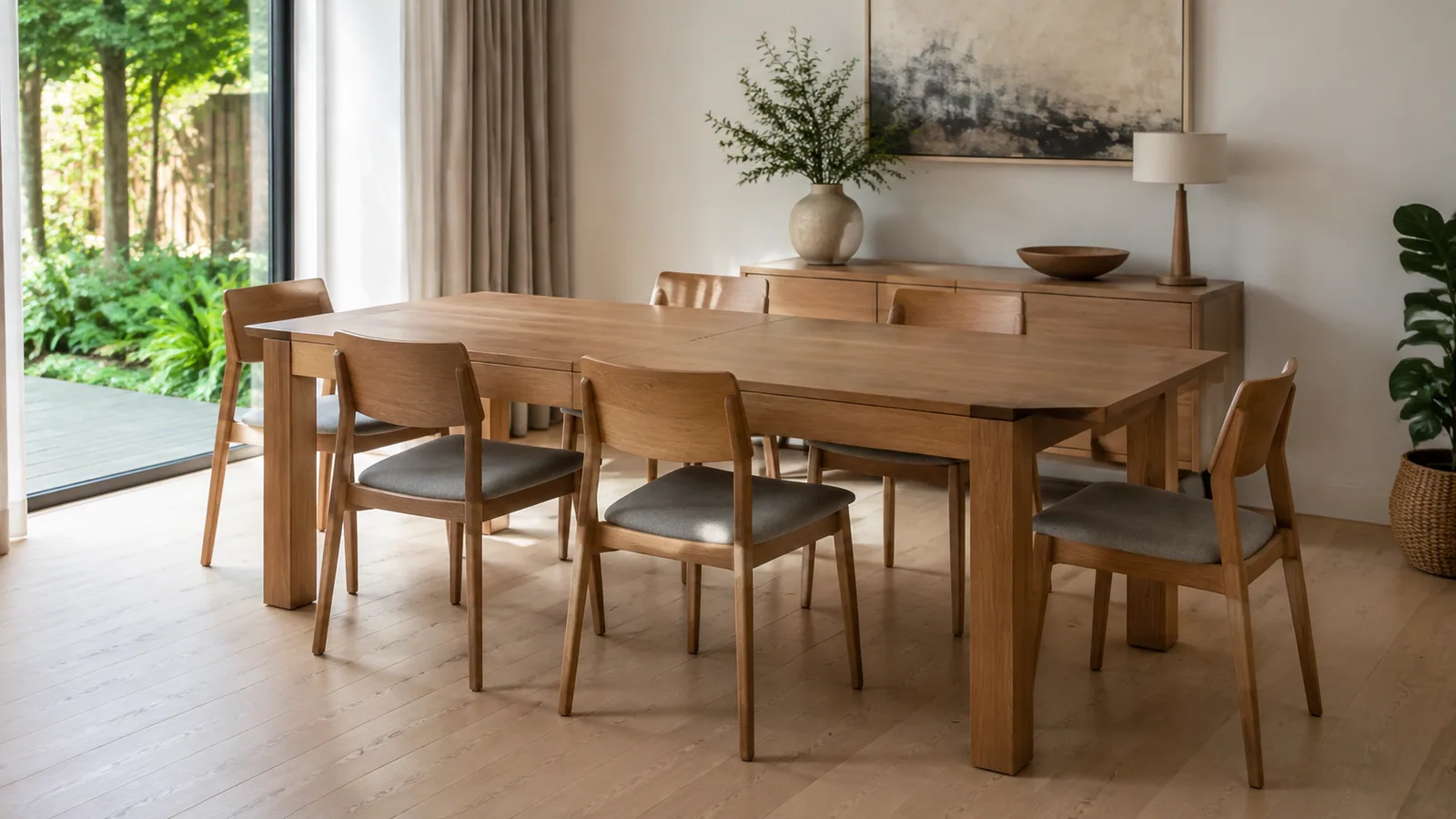
Choose dining chairs that fit your table and room with clear guidance on seat height, width, spacing, arms, comfort, upholstery, frames, mixing styles and care.
Most dining setups feel comfortable when seat height is roughly 43–50 cm and there is about 25–30 cm between seat and tabletop, but the exact table apron, chair cushioning and user matter. Allow around 60 cm of table edge per person, check arm clearance and test whether the chair supports a full meal without crowding the room.
Measure the dining table first
Record the height from floor to the top, then measure the lowest obstruction beneath it—usually the apron, support rail or underside of a thick top. That lower measurement determines leg and arm clearance. Photograph the base and note where legs or pedestals meet the floor because these can remove otherwise usable chair positions.
If you are choosing both pieces together, start with our dining table size and shape guide. The table sets the maximum dining footprint and the chair determines how that footprint behaves when people sit, stand and pass. A slim table with oversized chairs can require more room than a visually larger table paired with compact seating.
Get dining chair seat height right
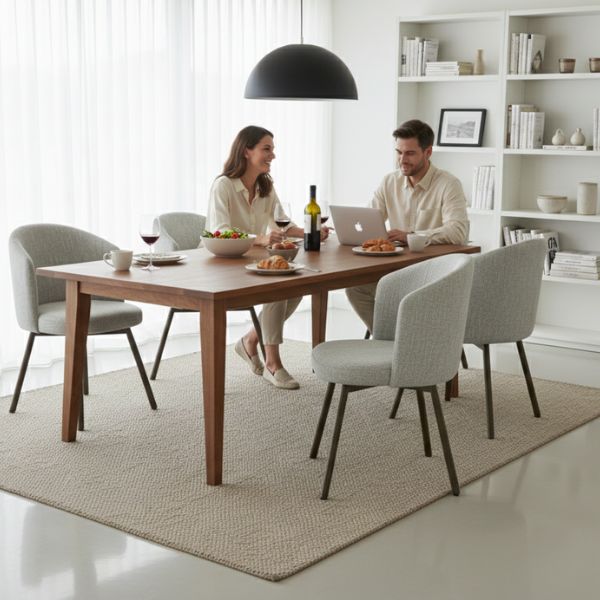
A common dining-chair seat height is around 43 to 50 cm, with many designs sitting near 45 to 48 cm. Standard dining tables are often around 74 to 76 cm high. That generally leaves approximately 25 to 30 cm between the seat and tabletop, enough for comfortable thighs and a natural eating position.
Numbers are a starting point because upholstered seats compress. A thick soft cushion may feel lower once occupied, while a firm seat keeps its measured height. Taller users may prefer a little more space; smaller users may value secure foot contact. Sit at the actual table or reproduce its height in the showroom instead of buying from the chair measurement alone.
| Measurement | Useful starting range | What to verify |
|---|---|---|
| Seat height | About 43–50 cm | Cushion compression and foot contact |
| Seat-to-table gap | About 25–30 cm | Lowest apron or rail, not only top surface |
| Table edge per diner | About 60 cm baseline | Actual chair width, arms and desired comfort |
| Chair depth | Varies by design | Pulled-out footprint and walking clearance |
Use actual chair width to calculate spacing
Measure the widest point of the chair, which may be the arms or curved back rather than the seat. Multiply by the number of chairs on one side, then add breathing room between them. Around 60 cm of table edge per person is a practical baseline, but broad statement chairs benefit from more. Avoid placing a sitter directly over a table leg or forcing the outer chair beyond the usable edge.
Check what happens when all chairs are pulled out. Deep chairs may project substantially into the room even if they tuck neatly under the table. In a narrow dining space, an armless design or a compact back can preserve circulation. Use wider chairs at the ends only if the table and room can support a deliberate host-chair arrangement.
Check arm height and table-apron clearance
Dining chairs with arms can be supportive and formal, but the arms need to clear the apron if you expect the chair to tuck in. If they stop outside the table, measure the room with them in that position. Also check whether the arms make it easy to enter from the side when another chair is close.
A practical mix is to use armless chairs along the sides and larger armed chairs at the ends, provided seat heights and visual language remain connected. This gives the table a sense of hierarchy without sacrificing too much side spacing. Keep enough distance from the nearest wall for the end chair to pull back comfortably.
Test comfort for a full meal, not ten seconds
Sit with your back against the chair and feet supported. The seat edge should not press sharply behind the knees, and the backrest should meet the body without forcing the shoulders forward. A curved back can feel embracing, while a taller straighter back may suit upright formal dining. Neither is universally better.
Move the chair in and out as you would at home. Check its weight and the grip of the feet on your flooring. A very heavy chair may feel luxurious but frustrate a child or older user; a light chair needs a stable base. Listen for frame movement and inspect joins, upholstery tension and the transition between the seat and back.
Compare three distinct dining-chair profiles
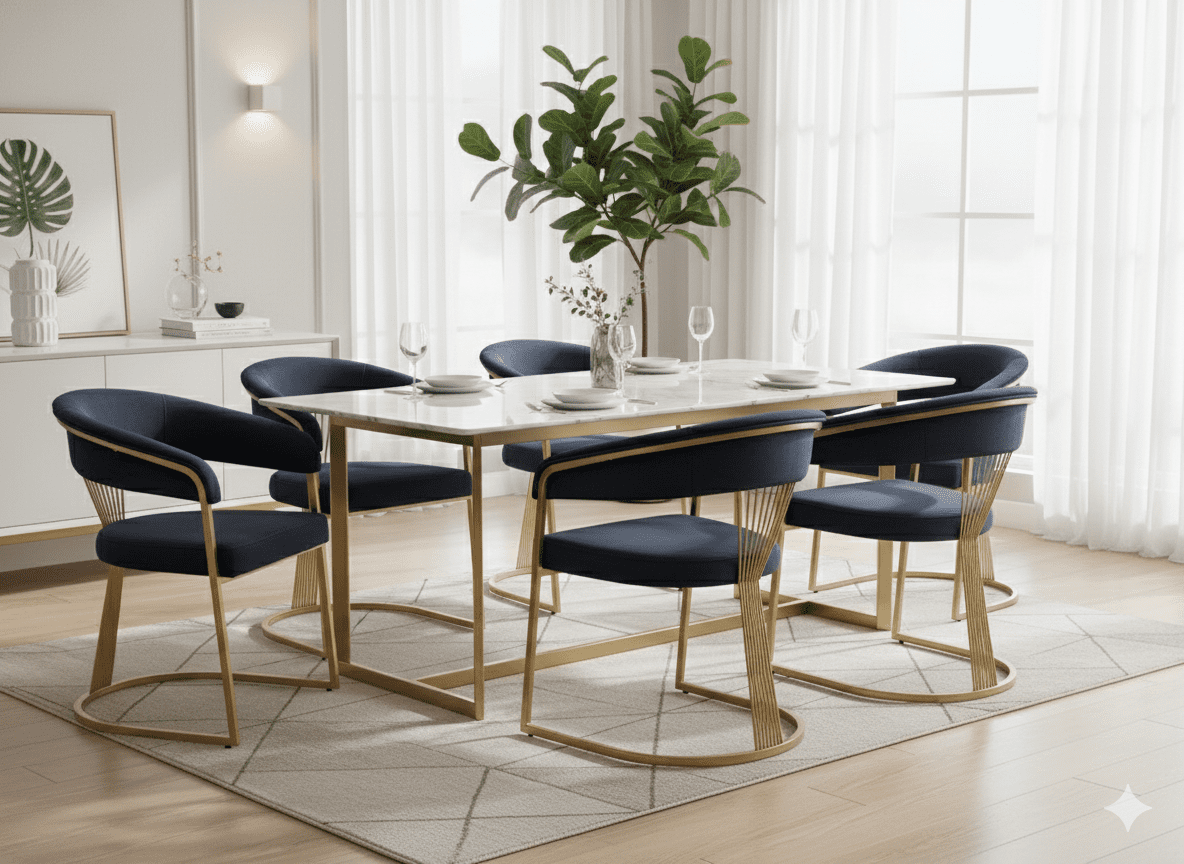
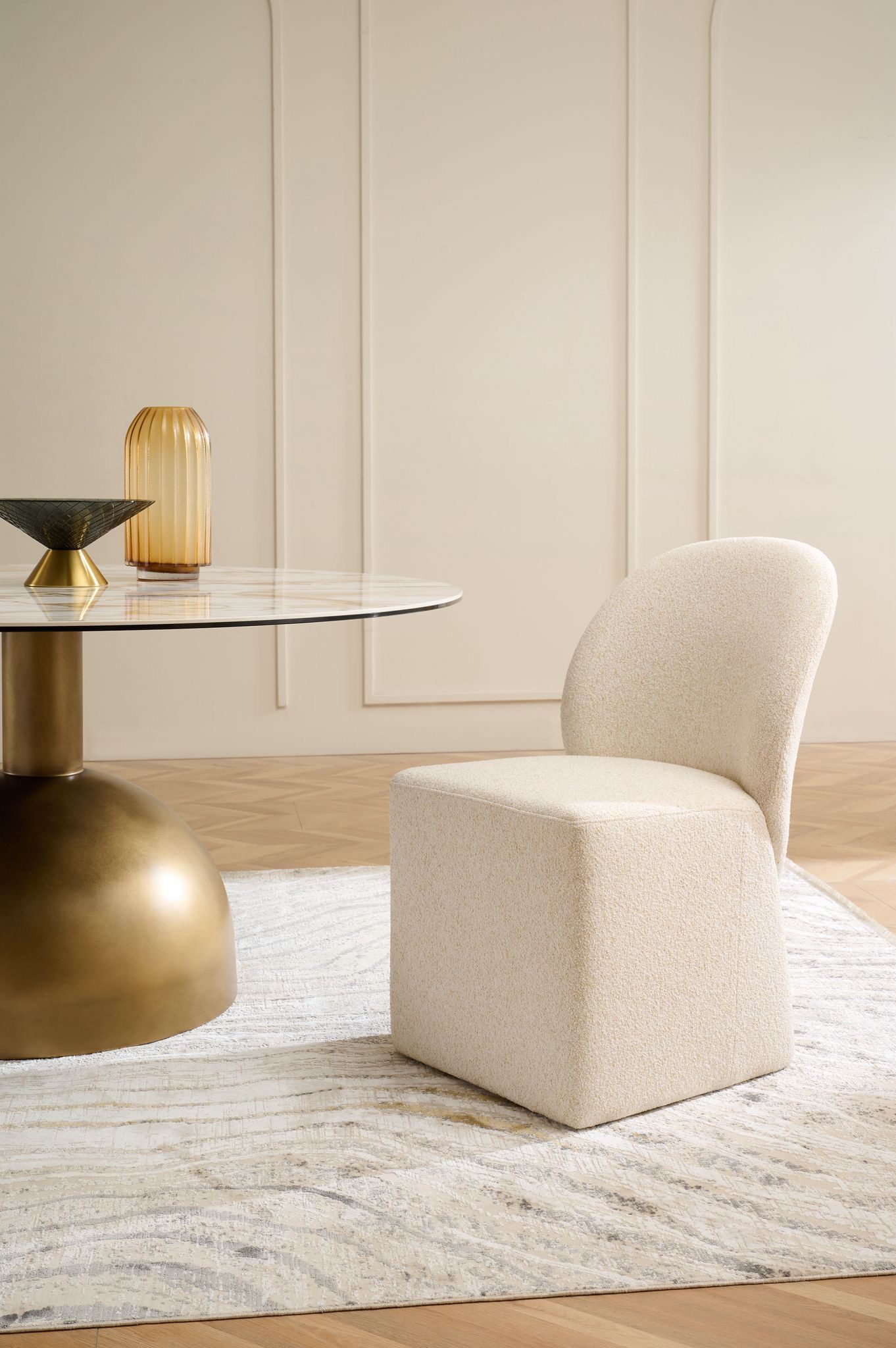
Maxxi offers a wider upholstered silhouette and gold-brushed frame, Cheers has a more compact footprint, and Crown uses a sculptural curved boucle form. Check live dimensions and current availability before planning a full set.
Upholstered vs hard dining chairs
Upholstery adds softness, acoustic absorption and visual warmth—useful in a room with stone, glass or metal. It generally supports longer conversations around the table, but requires a realistic spill and cleaning routine. Ask for the exact fabric-care guidance and consider how colour and texture will respond to children, pets and direct sun.
Timber, metal or moulded hard seats can be easier to wipe and visually lighter. Comfort then depends more on seat shaping and back support. You can also mix materials: upholstered chairs can soften a hard-edged table while a slim exposed frame prevents the set from feeling too heavy. Avoid treating “easy clean” as permission to use harsh products; follow the material instructions.
Match the room without buying a rigid set
Dining chairs do not need to copy the table finish exactly. A more collected room often connects one or two elements: metal temperature, seat colour, curve, leg shape or overall formality. A bronzed table base can work with muted gold-brushed chair frames when the finishes share warmth. A dramatic stone top can be balanced by a quieter neutral fabric.
If mixing two chair designs, keep seat height close and use a clear pattern, such as one host chair at each end and a consistent side chair. Random alternation is harder to control. Lay product images together and compare their visual weight as well as colour; a very broad curved chair can dominate a slim neighbour even when the upholstery matches.
Care and final checks before ordering a set
Vacuum upholstered chairs gently with a suitable attachment and blot spills promptly with a clean absorbent cloth. Work from the outside of a mark inward and avoid soaking the fabric. Use only a cleaner approved for the exact upholstery, testing an inconspicuous area first. Tighten accessible fixings only as instructed and lift rather than drag chairs across vulnerable floors.
- Seat height works with the table top and lowest apron.
- Chair width plus gaps fits each usable table edge.
- Arms tuck under the table or their extra footprint is planned.
- Every regular diner can enter, sit and stand comfortably.
- Frame, joins, feet and upholstery are inspected in person where possible.
- Fabric care suits the household and direct-sun exposure.
- The complete quantity and finish are currently available or have a clear lead time.
Frequently asked questions
What is the standard height of a dining chair?
Many dining chairs have a seat around 43 to 50 cm high, with 45 to 48 cm common. Pair the actual occupied seat height with the table and apron, aiming for a comfortable gap rather than a number alone.
How much space should be between dining chairs?
Allow about 60 cm of usable table edge per person as a baseline, then increase it for broad chairs, arms or a more generous setting. Leave a visible gap so diners are not shoulder to shoulder.
Do dining chair arms need to fit under the table?
Not always, but a chair that cannot tuck under the apron takes more room. Measure and tape that pulled-out resting position so it does not compromise circulation.
Are upholstered dining chairs practical for families?
They can be if the fabric care, colour and household spill routine are realistic. Ask for the exact upholstery instructions, blot spills quickly and avoid unapproved cleaners or over-wetting.
Sources and further reading
This guide combines Queen Style showroom experience with the following current and practical references:
- Schots Australia: dining chair size and dimensions
- Provincial Home Living: choosing the right dining chair height
- Furniture upholstery product care guidance
Visit Queen Style in Thomastown to compare dining-chair height, back support, frame finish and pull-out space. Bring your table measurements if you are matching an existing piece.
Shop dining chairs