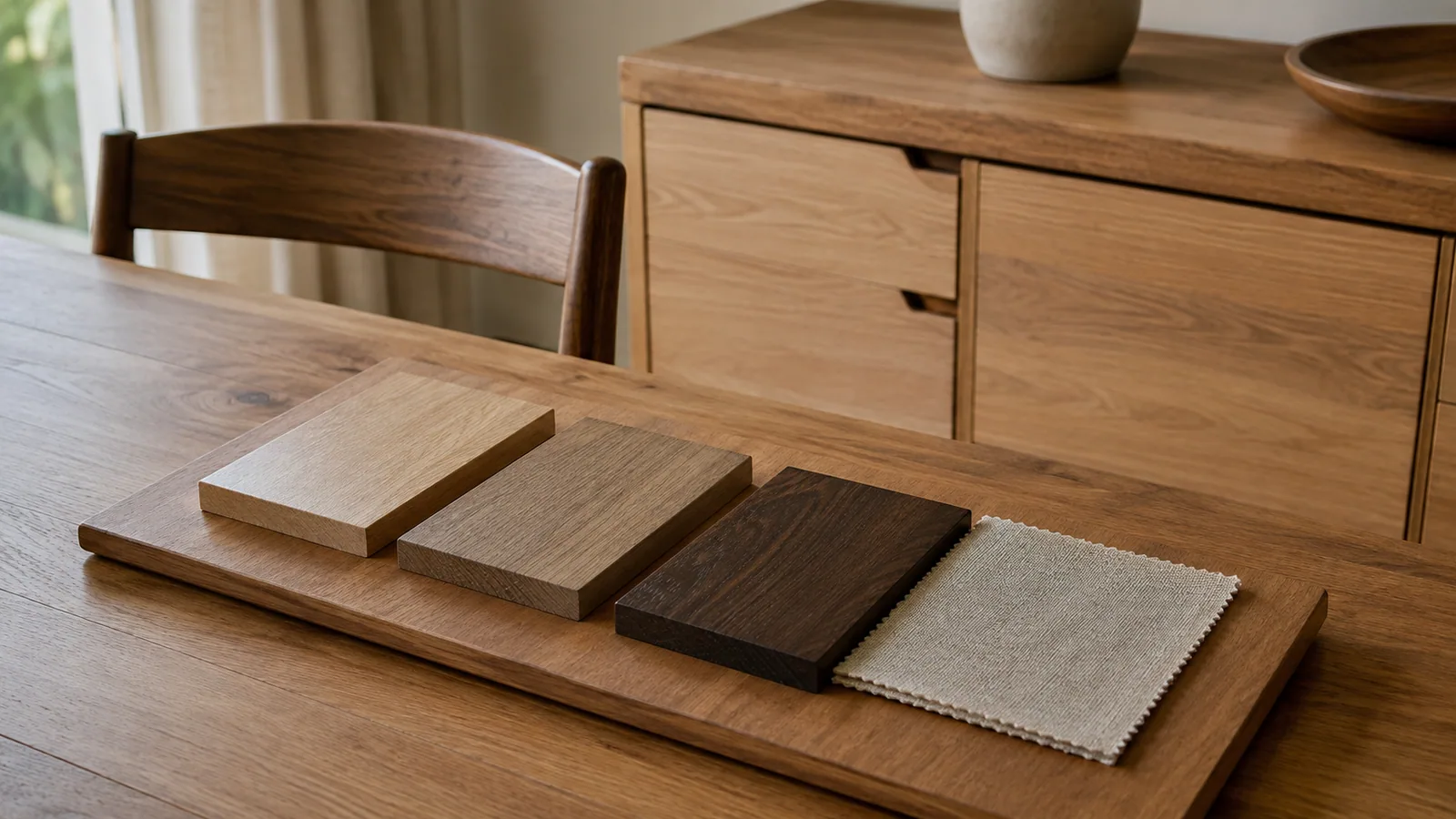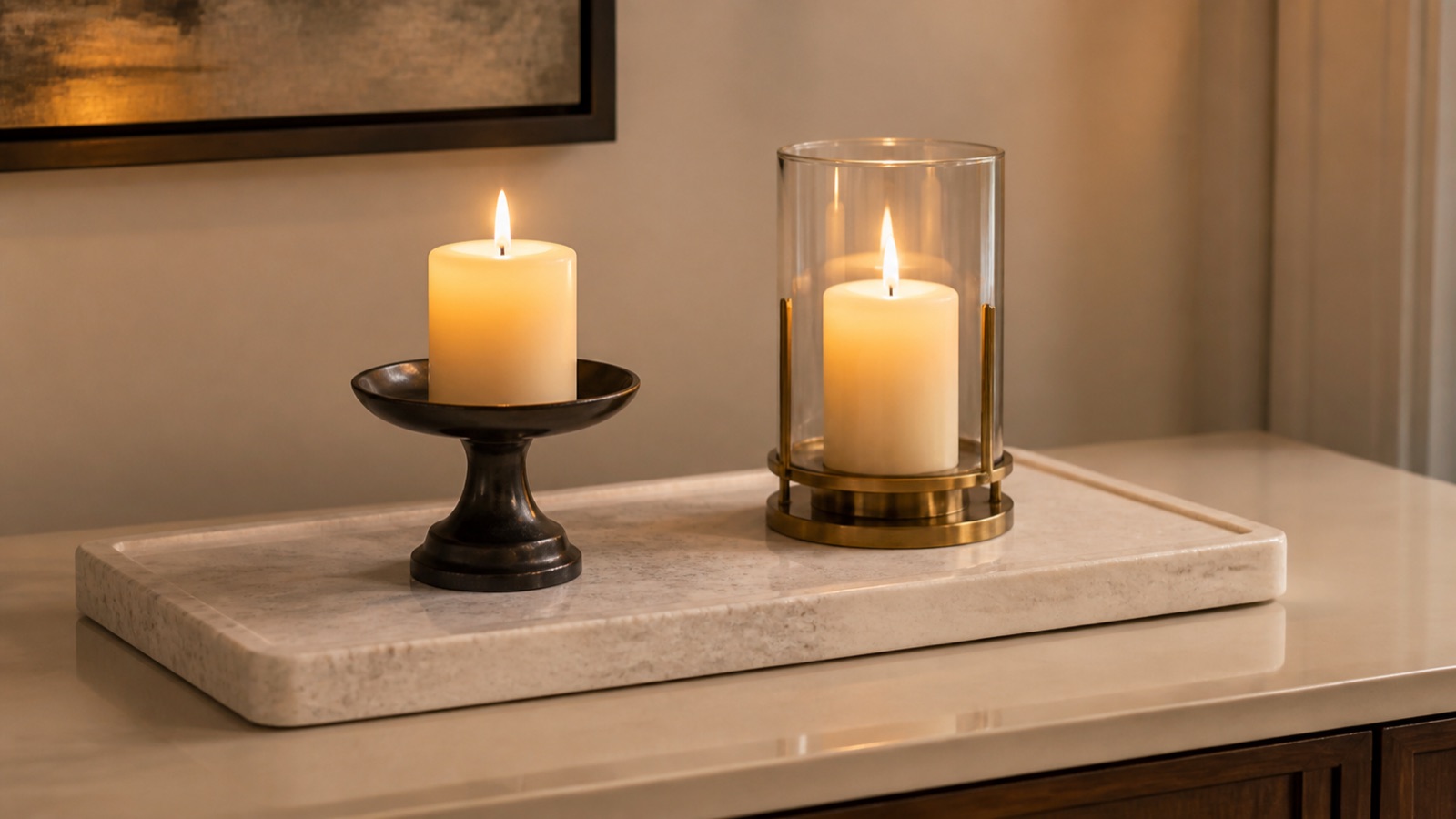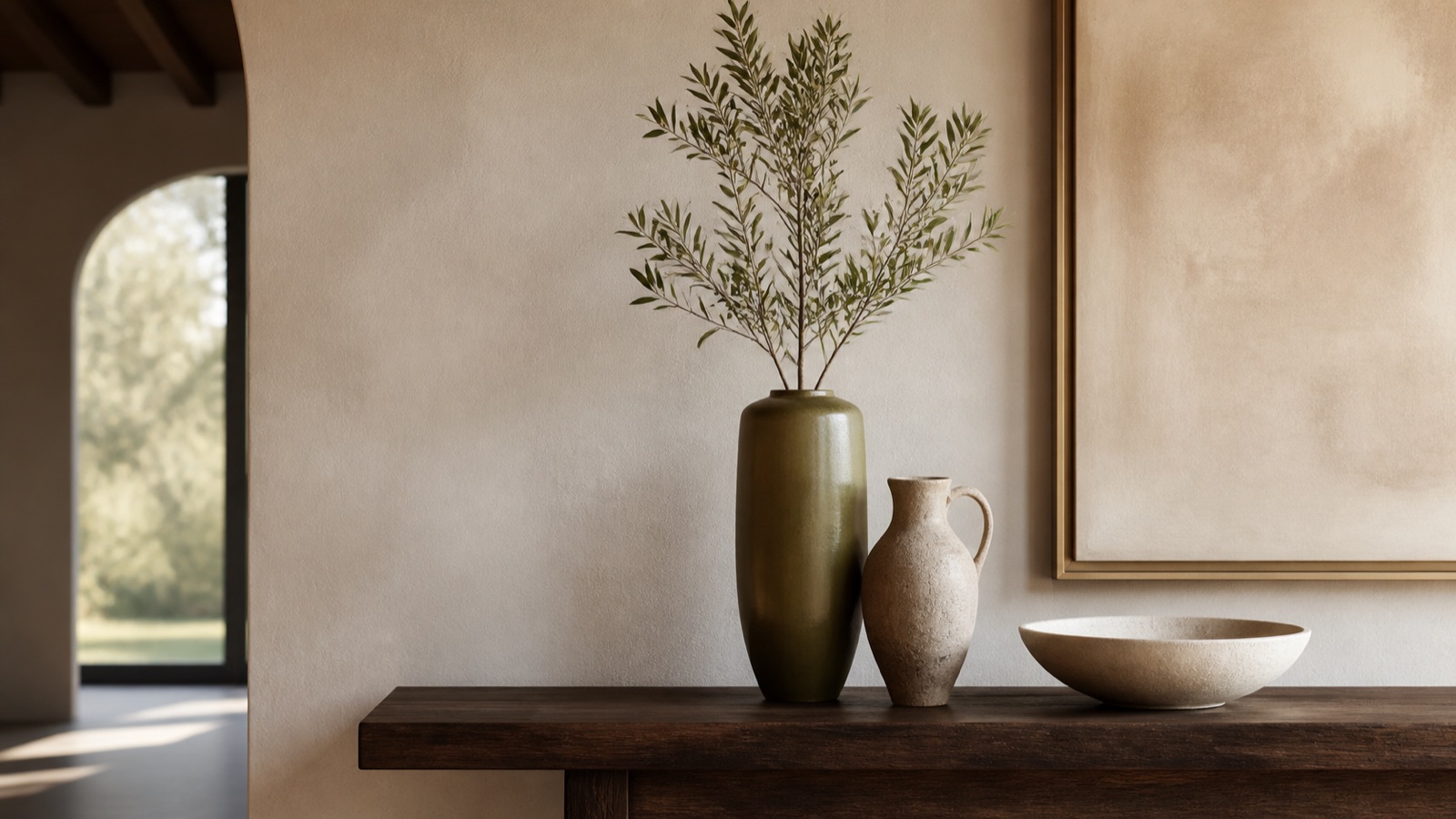

Make artificial flowers look realistic with the right stem detail, scale, colour, vase, bending, arrangement, room placement and dust-care routine.
Choose stems with believable leaf and petal detail, natural colour variation and a size suited to the vase and furniture. Bend stems at different angles, vary bloom height, hide the internal structure, and leave some negative space. Dust regularly with a soft cloth or cool gentle air so the arrangement keeps its natural texture and colour.
Why artificial flowers work in a considered room
Artificial flowers provide shape and colour in places where fresh stems are difficult to maintain: dim hallways, guest rooms, high shelves, home-staging projects and dining tables that need a reliable centrepiece. They can be adjusted for a specific vessel and kept consistent across seasons, which makes them useful when furniture and artwork already carry the main visual investment.
The goal is not to convince someone inspecting a petal from two centimetres away. It is to create a believable botanical layer at normal room distance. That depends less on the label and more on how the stem relates to the vase, furniture, light and other materials. One carefully shaped branch can look more convincing than a crowded bunch of identical blooms.
Choose stems by detail, variation and movement
Look at the transition from stem to leaf and leaf to flower. Real plants contain variation: new and mature leaves, petals that are not perfectly identical, and colour that changes toward an edge or centre. Extremely glossy leaves, repeated mould lines and one flat colour can appear artificial under direct light. Softer surfaces and subtle tonal differences usually read more naturally.
Handle the stem if possible. A bendable internal wire lets you create natural arcs and turn blooms toward the room. Leaves should be positionable rather than locked into a symmetrical star. For greenery, compare front and back surfaces because both may be visible. For branches, check whether the length and branching pattern suit the proposed vase rather than trimming the arrangement mentally.
Start with three different botanical roles
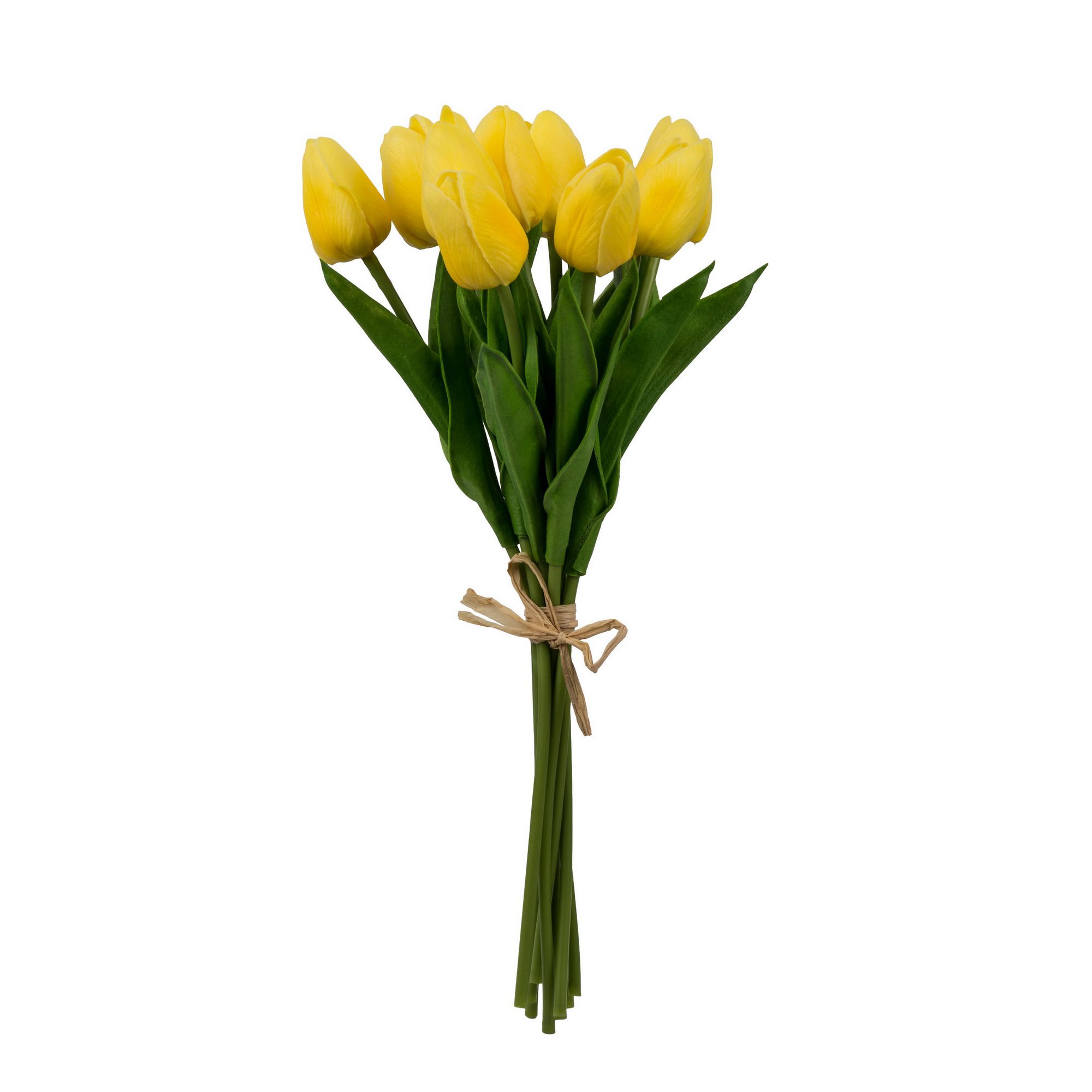
A magnolia creates a clear focal bloom, a fern adds layered green texture and a tulip bundle provides compact colour. Each works differently, so choose according to the surface and viewing distance.

Match the arrangement scale to the vase and furniture
A dining-table arrangement must remain low or open enough for conversation. A console can support more height because people are not looking across it. A bedside arrangement should leave room for lighting, books and a glass. Measure the vase opening, internal depth and the available height beneath artwork or a mirror before choosing stem length.
The vase needs enough visual and physical weight to support the arrangement. Tall branches in a tiny lightweight vessel look unstable even when they do not fall. A wide opening may require more stems or a discreet internal support; a narrow neck can hold a minimal arrangement beautifully. Avoid stuffing the opening until every stem stands rigidly upright.
| Location | Useful arrangement | Keep clear |
|---|---|---|
| Dining table | Low bowl, compact tulips or airy branches | Conversation sightline and serving space |
| Console | Tall branches, magnolia or layered greenery | Mirror, artwork and nearby switches |
| Coffee table | Low grouped stems or one sculptural bloom | Drinks, remotes and seated sightline |
| Bedside | Small soft arrangement | Lamp, book and everyday reach |
| Empty corner | Tall olive tree or substantial greenery | Door swing, heater and walking path |
Shape every stem before placing it
Artificial stems often arrive straight for packing. Hold a real branch shape in mind and add gentle bends rather than one hard angle. Turn leaves in several directions, raise one bloom, lower another and let some foliage cross the vase edge. Rotate the vessel as you work so the arrangement has a strong front and remains convincing from nearby angles.
If a stem is too long, first try a deeper bend inside an opaque vase so it can be reused later. Cut only with a tool suitable for the internal wire and protect the cut end. Group identical bundles into uneven heights rather than aligning every flower. Natural rhythm comes from controlled asymmetry, not random tangling.
Three or five focal stems often create an easier rhythm than a rigid pair. Turning one bloom or branch slightly away keeps the arrangement from looking manufactured for a front-on photograph.
Three simple artificial-flower arrangement recipes
The single-species arrangement
Use one flower in one or two close colours, varying stem height and direction. Tulips suit a compact rounded vessel; magnolia suits a taller narrow opening. This is the easiest approach in a room that already contains pattern because the arrangement creates one clear shape.
The branch-and-foliage arrangement
Begin with one or two taller branches, then add fern or softer greenery lower around the opening. Keep a visible gap between some leaves. This works on an entry console or dining sideboard where height can connect the furniture with a mirror or artwork above.
The permanent tree layer
Use a potted artificial tree as furniture-scale greenery in an empty corner. Place it in a decorative outer planter with enough weight, then turn the branches toward the room and light. The tree should fill unused vertical space without hiding a curtain, doorway or artwork.
Choose a focal bloom, texture or room-scale green layer
Use the olive tree for vertical presence, magnolia for a defined floral moment and fern for texture around other stems or a low arrangement.

Connect flowers to furniture without colour matching everything
Repeat an undertone rather than the exact upholstery colour. White magnolia can lift a pearl sofa, green foliage can cool a warm metallic table and yellow tulips can introduce a controlled accent to timber and cream. If the room already has a bold sofa or artwork, keep the botanical palette quieter and focus on shape.
Use the vessel to bridge materials. A dark vase can connect a black mirror frame, a reflective vessel can echo a table base and a textured ceramic can soften stone or glass. Avoid adding flowers, vessel, tray and decorative objects in equal visual weight. Decide which is the focal point and let the other pieces support it.
Clean artificial flowers before dust changes the colour
Light dust regularly with a clean soft microfibre cloth, makeup brush or gentle cool air. Support delicate petals while cleaning and work from the upper surfaces downward. Avoid high heat, aggressive compressed air at close range and soaking unless the product instructions specifically allow washing. Test a hidden area before using any damp method.
Keep flowers away from open flame, hot lamps, heaters and prolonged intense sun. Rotate arrangements if one side receives more light. Remove the stems from the vase occasionally so dust does not collect around the opening. Store seasonal arrangements loosely in a dry box where petals are not crushed or colour transferred from other objects.
Realistic artificial-flower checklist
- Petals and leaves have believable colour variation and surface texture.
- Stems can be shaped and viewed naturally from more than one angle.
- Arrangement height suits the furniture, artwork and conversation line.
- The vase opening and weight support the final composition.
- Bloom heights and directions vary instead of forming a perfect row.
- One botanical role—focal flower, filler texture or tall greenery—is clear.
- The arrangement can be dusted easily and sits away from heat and strong sun.
Frequently asked questions
How do you make artificial flowers look less fake?
Shape every stem, vary bloom height and direction, use fewer identical flowers, match the scale to the vase and furniture, and remove dust before it dulls the surface.
What are the most realistic artificial flowers?
Look for believable petal and leaf texture, tonal variation, detailed joins and bendable stems. Realism depends on the exact product and arrangement more than one flower species.
How many artificial stems should I use in a vase?
There is no fixed number. Start with the vase opening and desired silhouette. Odd-numbered focal stems with separate foliage often create a natural rhythm without overcrowding.
How should I clean artificial flowers?
Dust them regularly with a soft cloth, clean brush or gentle cool air while supporting delicate petals. Avoid heat, harsh chemicals and soaking unless the product care instructions permit it.
Sources and further reading
This guide combines Queen Style showroom experience with the following current and practical references:
- Queen Style: live artificial flower collection
- Google image SEO guidance used for descriptive product-image presentation
Bring a photo of the table, console or corner to our Thomastown showroom. Compare stem scale, colour and texture with vessels and furniture in real light.
Shop artificial flowers