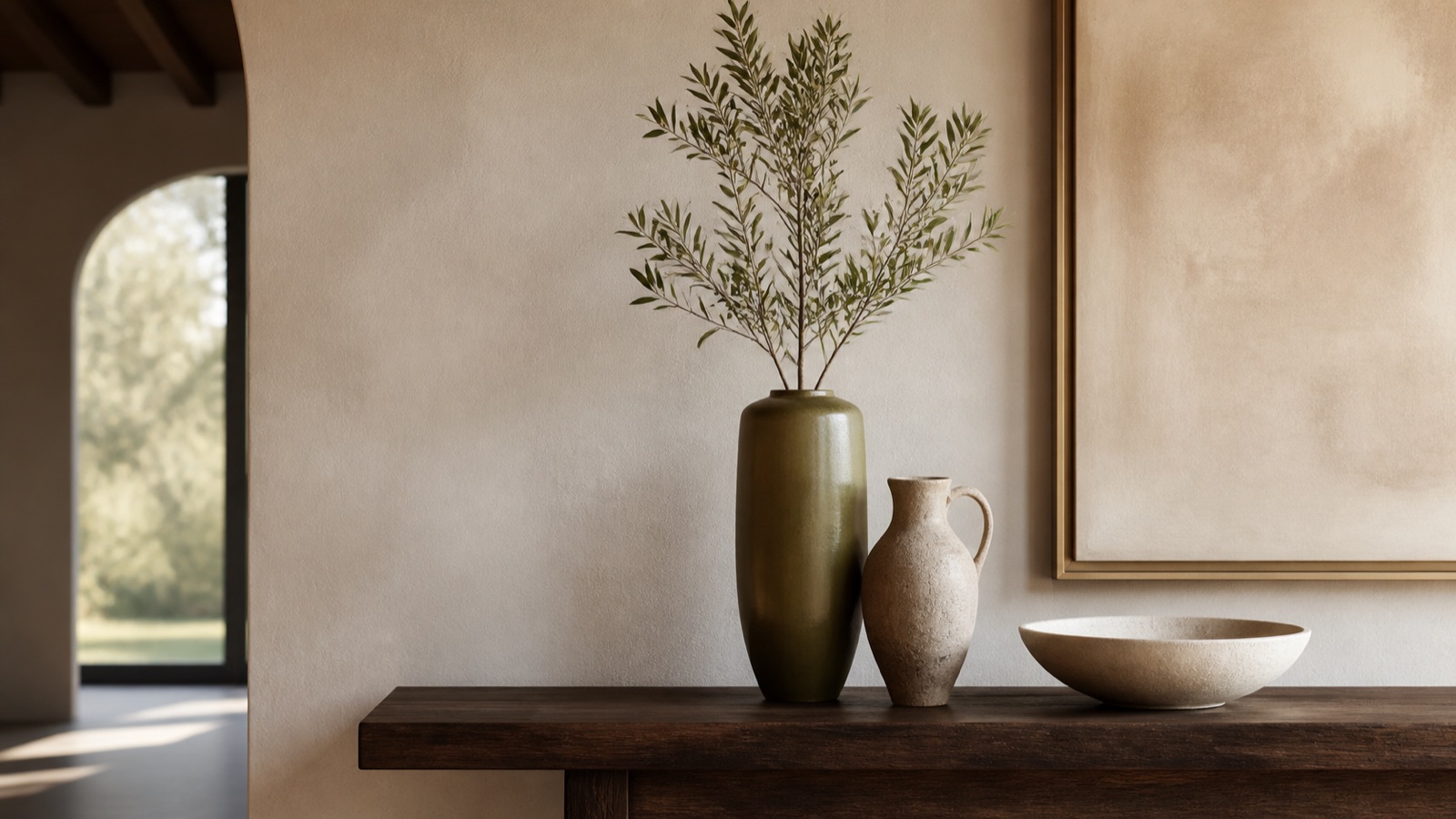
Style vases, decorative jugs and bowls by balancing scale, height, colour, negative space, surface protection and safe placement.
Decorative vessels work when they clarify a surface rather than simply fill it. A vase supplies height, a jug adds a handle and directional shape, and a bowl creates a low visual anchor. Together they can form a balanced group with only a few pieces.
Start with the furniture and viewing distance. A small object disappears on a long console, while a tall arrangement can block conversation across a dining table.
Quick answer: Build a group with one dominant height, one lower companion and visible empty surface. Repeat a colour or finish, vary the silhouettes, protect the furniture top and keep heavy or breakable pieces away from unstable edges and children’s reach.
Choose the surface’s job
A dining table must still serve food, an entry console must hold daily items and a coffee table needs reach space. Define the usable zone first, then style the remainder. Decoration should not require constant shifting for ordinary use.
Compare object scale with homewares and the real dimensions of the table or console beneath.
Create a simple height structure
Begin with the tallest piece slightly off centre. Add a lower, wider object and, if needed, a small connector. Keep enough difference in height for each silhouette to be visible. Repeating three items at the same height can look like stock on a shelf.
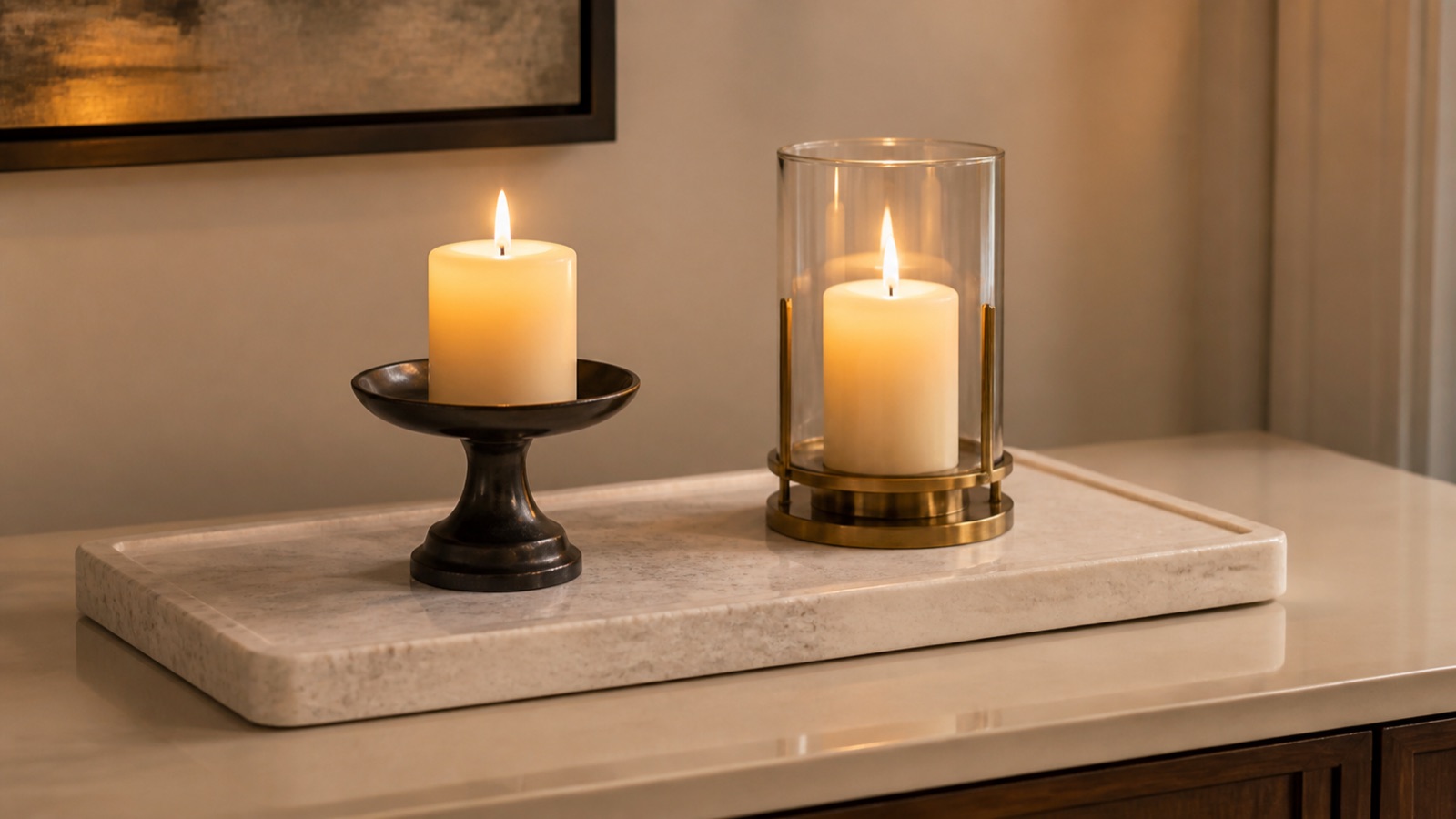
For a pair of strong symmetrical lamps, keep the objects between them lower and simpler so the lamps remain the frame.
Use flowers in proportion
The arrangement and vessel should read as one shape. Wide flowers need a stable opening and base; long stems may need bending or trimming only when the product permits it. Turn the composition and check it from more than one side.
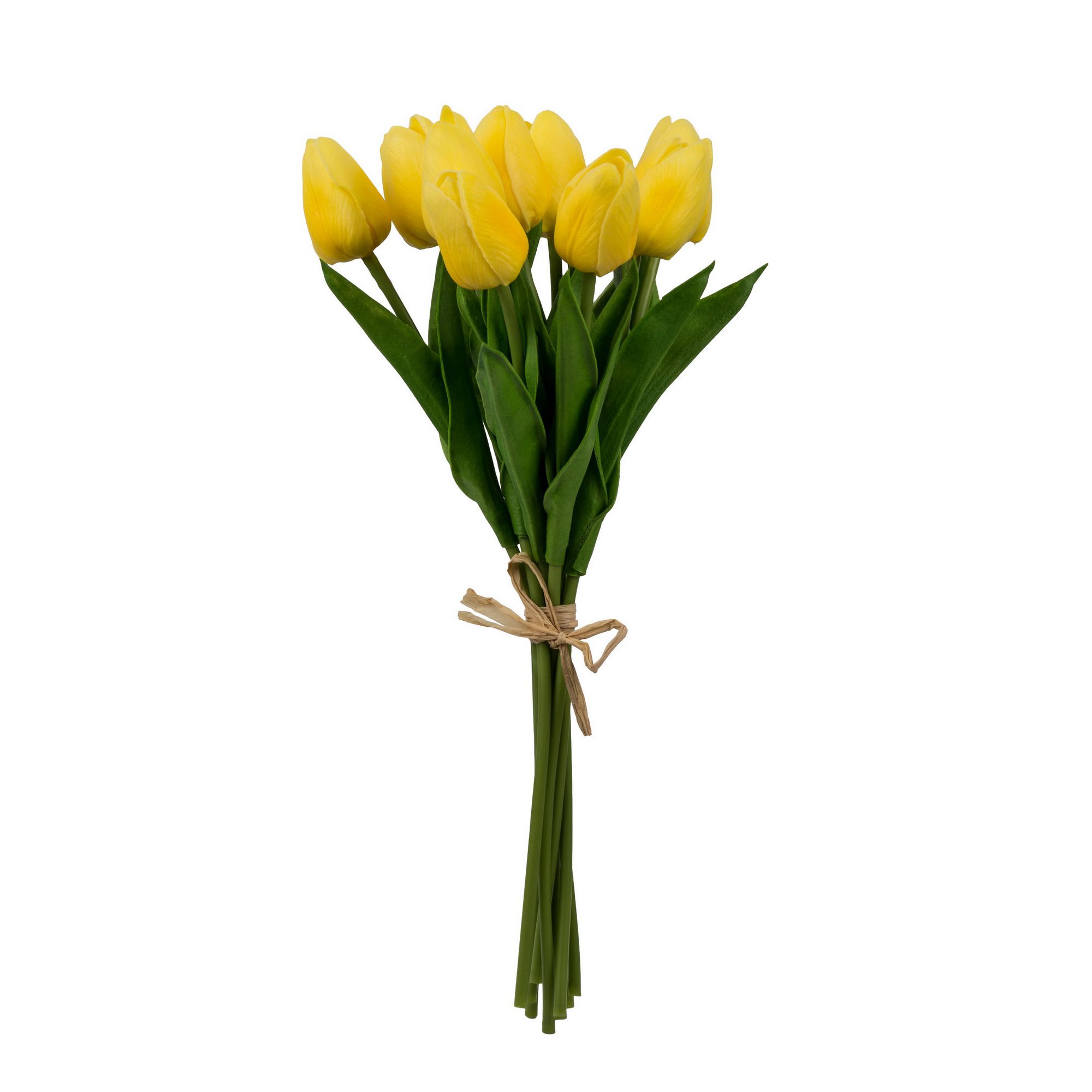
Use the techniques in the artificial flower styling guide and browse current stems by length.
Let bowls stay visually low
A decorative bowl anchors a coffee or dining table without blocking sightlines. It can remain empty when its form is strong, or hold a controlled group of objects suited to its finish. Do not place food in a decorative vessel unless it is explicitly food-safe.
Large planter bowls and sculptural forms can stand alone. Compare decorative objects and bowls by diameter and weight.
Protect the surface and people
Use pads or trays compatible with both object and furniture finish. Lift rather than drag pieces, keep water away from vulnerable surfaces and inspect felt pads for grit. A narrow or tall object needs a stable base.
Keep heavy, sharp or fragile décor away from edges and outside the reach of children or pets. Do not overload a shelf or table beyond its stated capacity.
Before you buy: practical checklist
- Surface function and clear usable area defined.
- One dominant height and lower companion chosen.
- Colour or finish repeated without exact matching.
- Flowers and vessel proportion checked together.
- Food used only in confirmed food-safe vessels.
- Pads, stability and safe placement reviewed.
Products to compare
Use these live product pages to compare current dimensions, materials and features with the guidance above. Confirm stock, finish and delivery details before ordering.


Frequently asked questions
Should decorative bowls be filled?
No. A sculptural bowl can work empty. If filled, choose a small, deliberate group and confirm whether the vessel is food-safe before using edible items.
How many objects should go on a console?
There is no fixed number. One tall element, one lower group and useful empty space is a reliable structure; adjust for the console width and wall feature.
Can a decorative jug be used as a vase?
Only if its material and finish are suitable for water. Use a liner or artificial stems when the product is decorative-only or the care guidance is unclear.
See the options in person
Build a measured arrangement from Queen Style decorative objects, bowls and flowers. Bring the surface dimensions and a photo to compare scale.