Size and place wall art above a sofa, bed or console using furniture width, frame dimensions, viewing height, grouped spacing and safe hanging.
Wall art often looks smaller after it is hung because a large wall and substantial furniture change its scale. Plan the complete outer frame against the sofa, bed or console below before drilling.
Proportion rules are starting points. Architecture, ceiling height, frame weight, viewing position and the artist’s intended orientation still matter.
Quick answer: For art above furniture, start by testing a total artwork width around two-thirds of the furniture below and a modest gap that visually connects them. Make full-size paper templates, inspect from the room entrance and use hanging hardware suited to the wall and artwork weight.
Measure the furniture below
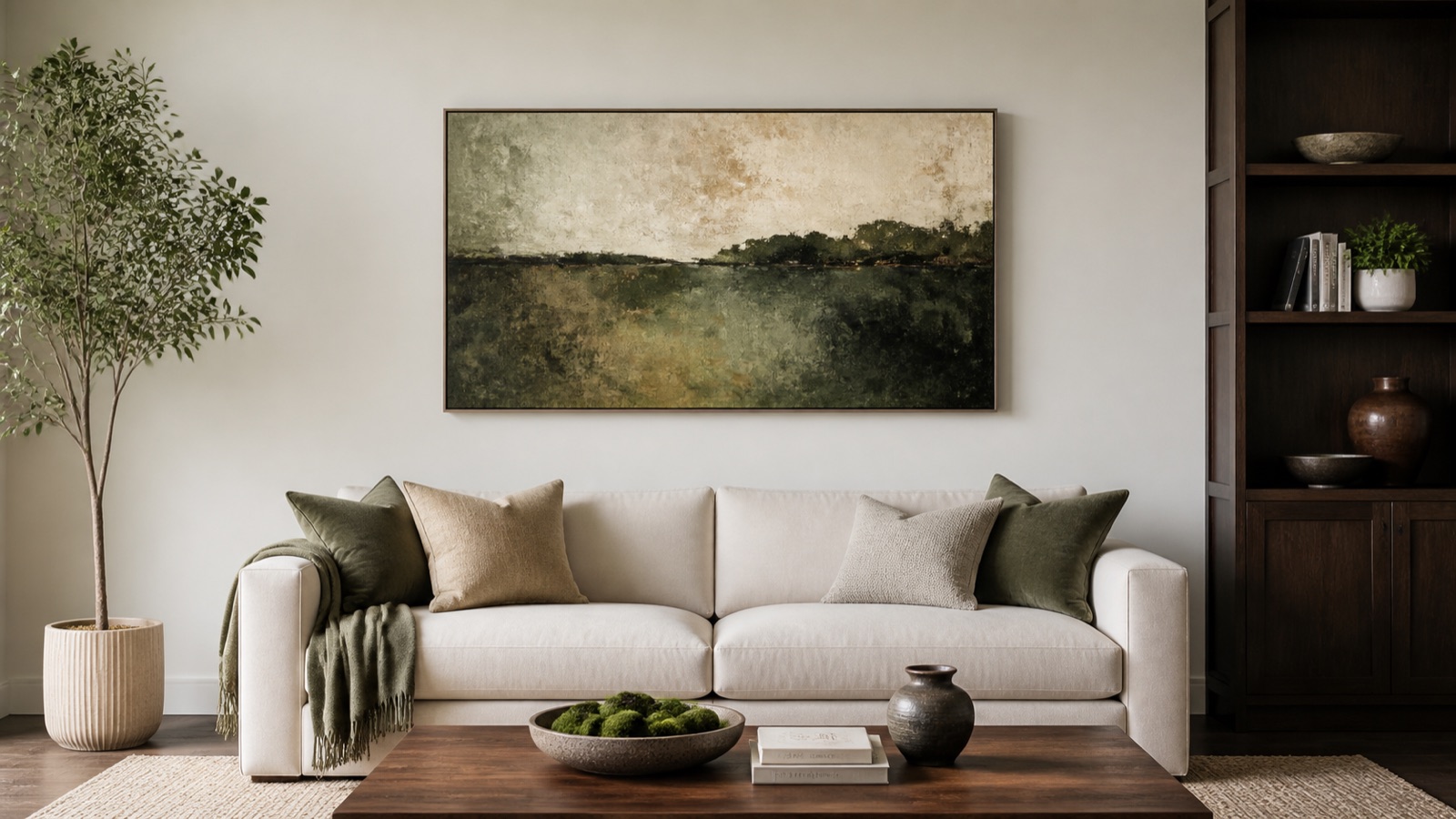
Record the full visible width of the sofa, bedhead or console. A single piece or grouped arrangement should feel related to that width rather than floating independently. Roughly 60–75% is a common visual range to test, not a requirement.
Browse the wall-art collection using outer frame dimensions. Matting and frames can add substantial size beyond the printed image.
Connect art to the furniture
A gap of roughly 15–25 cm above a sofa is a useful starting range often cited by art and interiors advisers, but tall backs, loose cushions and frame depth can change it. Step back and make sure the art reads with the sofa, not with the ceiling.
Above a bed, account for headboard height and people sitting up. Above a console, leave room for a lamp or objects without creating a cramped overlap.
Plan groups as one rectangle
For a diptych, triptych or gallery group, include the gaps when measuring total width and height. Keep spacing deliberate and align a clear edge or centre line. Lay the group on the floor first.
Cut paper templates for every frame and tape them to the wall. Live with the arrangement through daylight and evening before making holes.
Use viewing height intelligently
Gallery-style advice often places the artwork centre near average eye level, but art above furniture should first connect to the furniture. In dining rooms, seated views matter; in entries, standing views lead.
Avoid hanging every piece at the same top edge across unrelated walls. Use a consistent centre logic or relationship to nearby architecture.
Hang safely
Weigh the artwork and identify the wall construction, hanging points and manufacturer instructions. Use appropriately rated hardware, check for services and engage a professional for large, heavy or complex installations.
Keep art away from moving recliners, doors and unstable furniture. Review room scale with the sofa guide before treating wall decoration as separate from the floor plan.
Before you buy: practical checklist
- Furniture and full frame widths measured.
- Single piece or group templated at full size.
- Gap above sofa, bed or console tested visually.
- Group spacing included in total dimensions.
- Day, evening, seated and standing views checked.
- Wall type, artwork weight and rated hardware confirmed.
Frequently asked questions
How wide should art be above a sofa?
Testing about 60–75% of the sofa width is a useful starting range. Adjust for frame shape, architecture and whether the art is a single piece or group.
How high should art hang above a sofa?
A modest gap around 15–25 cm is a common starting point, but relate the bottom of the frame to the actual sofa back and inspect from normal viewing positions.
Do gallery-wall frames need to match?
No. Consistent spacing, palette, subject or frame finish can create cohesion. Plan the complete group as one measured shape.
Sources and further reading
Use these references alongside the care, assembly and safety instructions supplied with your specific product.
- Canvas Art Prints Australia — wall art size above a sofa
- Livingetc — expert guidance on hanging art above furniture
See the options in person
Measure your sofa, bed or console before viewing Queen Style wall art. Use the outer frame size to make templates and arrange suitable installation for the artwork and wall.