
Create a contemporary living room with a clear focal point, edited shapes, repeated materials, layered texture and furniture scaled to the room.
Contemporary living rooms are defined by present-day choices rather than one historical formula. The most durable versions use clean visual hierarchy, comfortable proportions and a controlled mix of curves, straight lines, texture and reflective detail.
Avoid buying every trending shape at once. Choose one lead piece, repeat a few materials and leave enough space for each silhouette to read.
Quick answer: Start with a sofa that suits the room and daily comfort. Add a coffee table with a complementary shape, one contrasting chair, a large rug or visual anchor and a limited group of accessories. Repeat two or three finishes and protect circulation.
Choose the visual anchor
The anchor may be the sofa, a view, fireplace, artwork or television wall. Decide which element should attract attention first. Orient seating to acknowledge it without making conversation awkward.
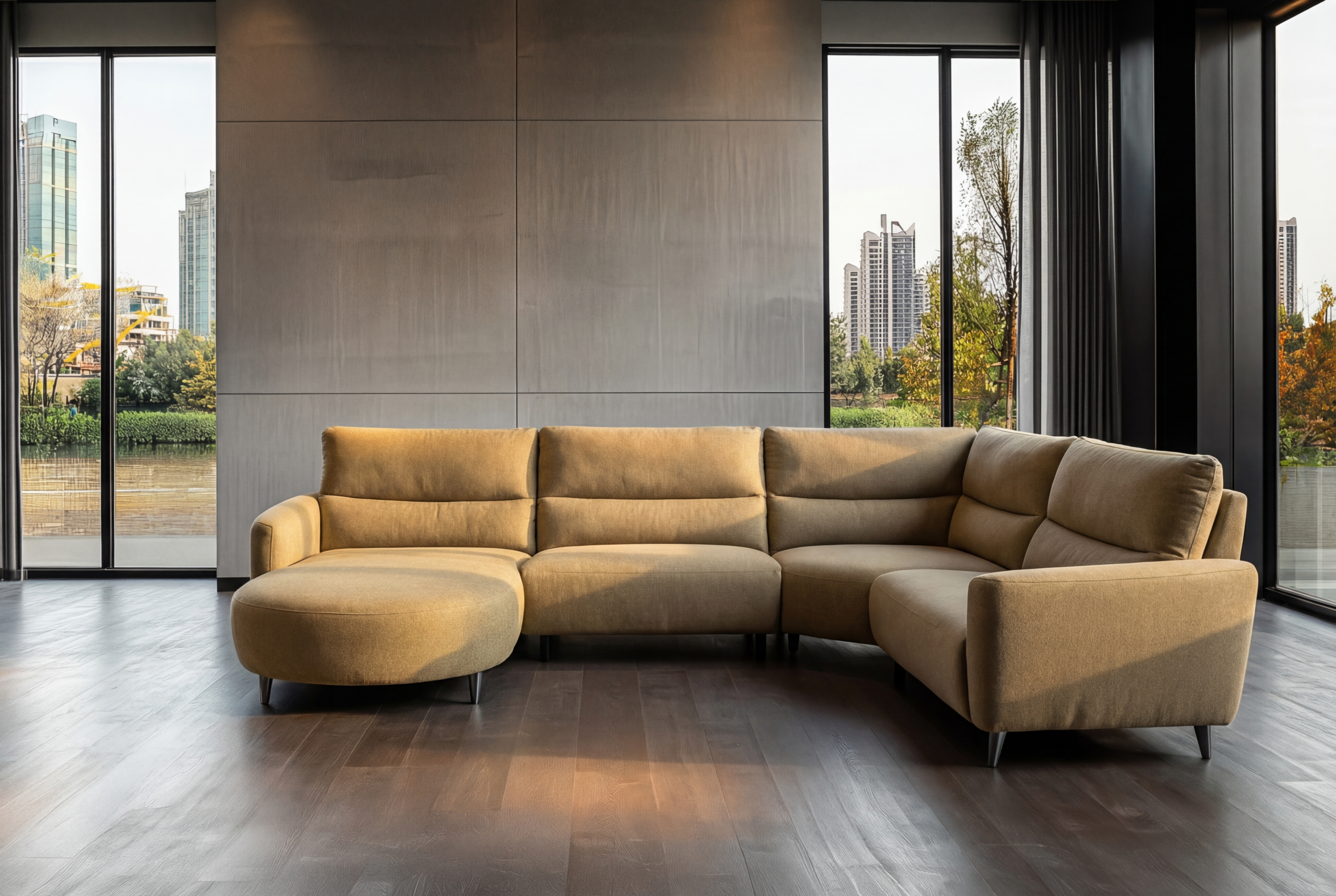
A low, broad or curved design from the sofa collection can establish a contemporary base, but it still has to pass comfort and access checks.
Balance curves and straight lines
Curved seating and oval tables soften rectilinear rooms; straight consoles and rugs can give a curved composition structure. Repeat a curve at least once—in a mirror, table or object—so it looks intentional rather than isolated.
Do not chase symmetry everywhere. Contemporary balance can be asymmetrical when visual weight is controlled across the room.
Layer texture within a restrained palette
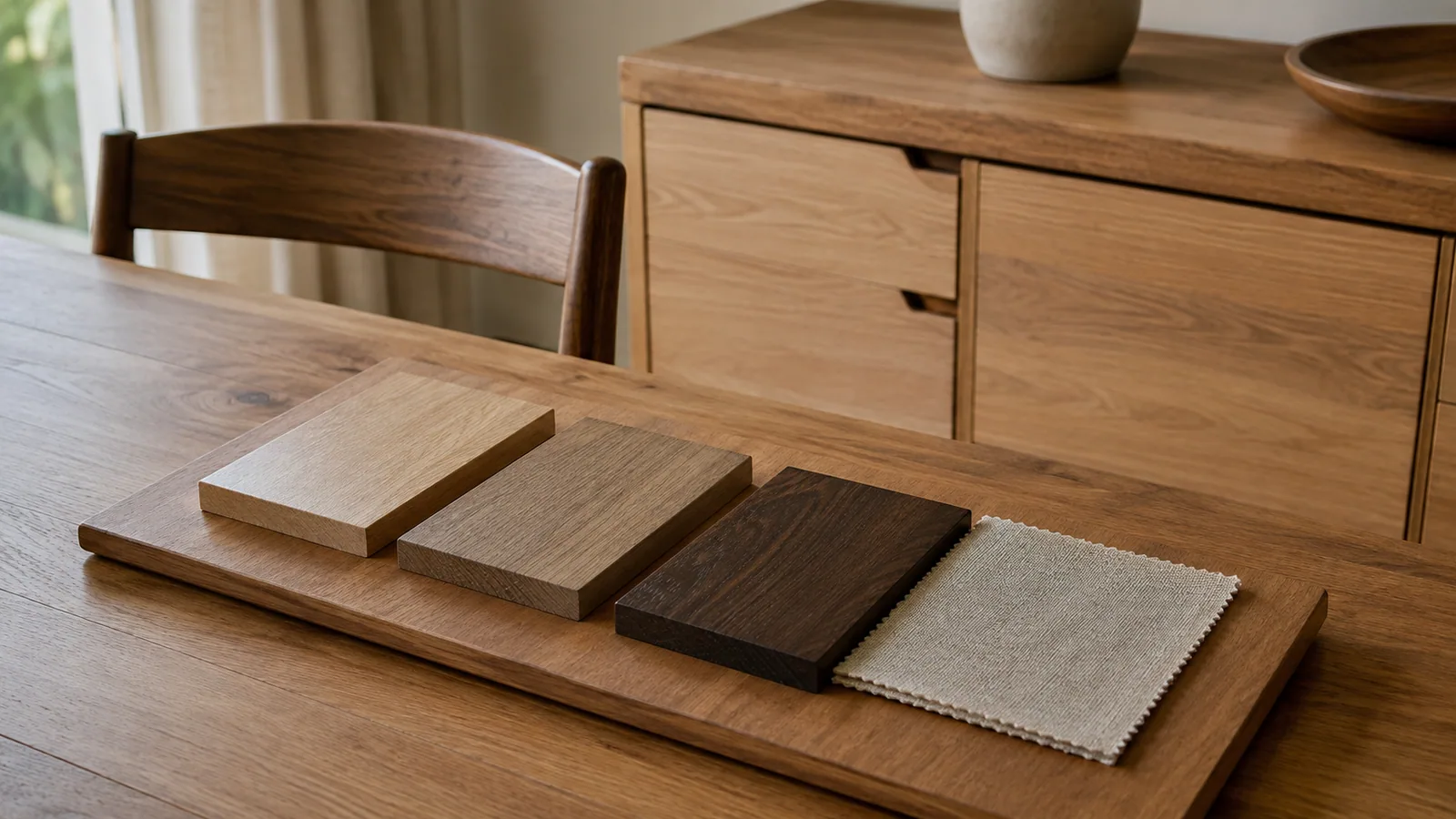
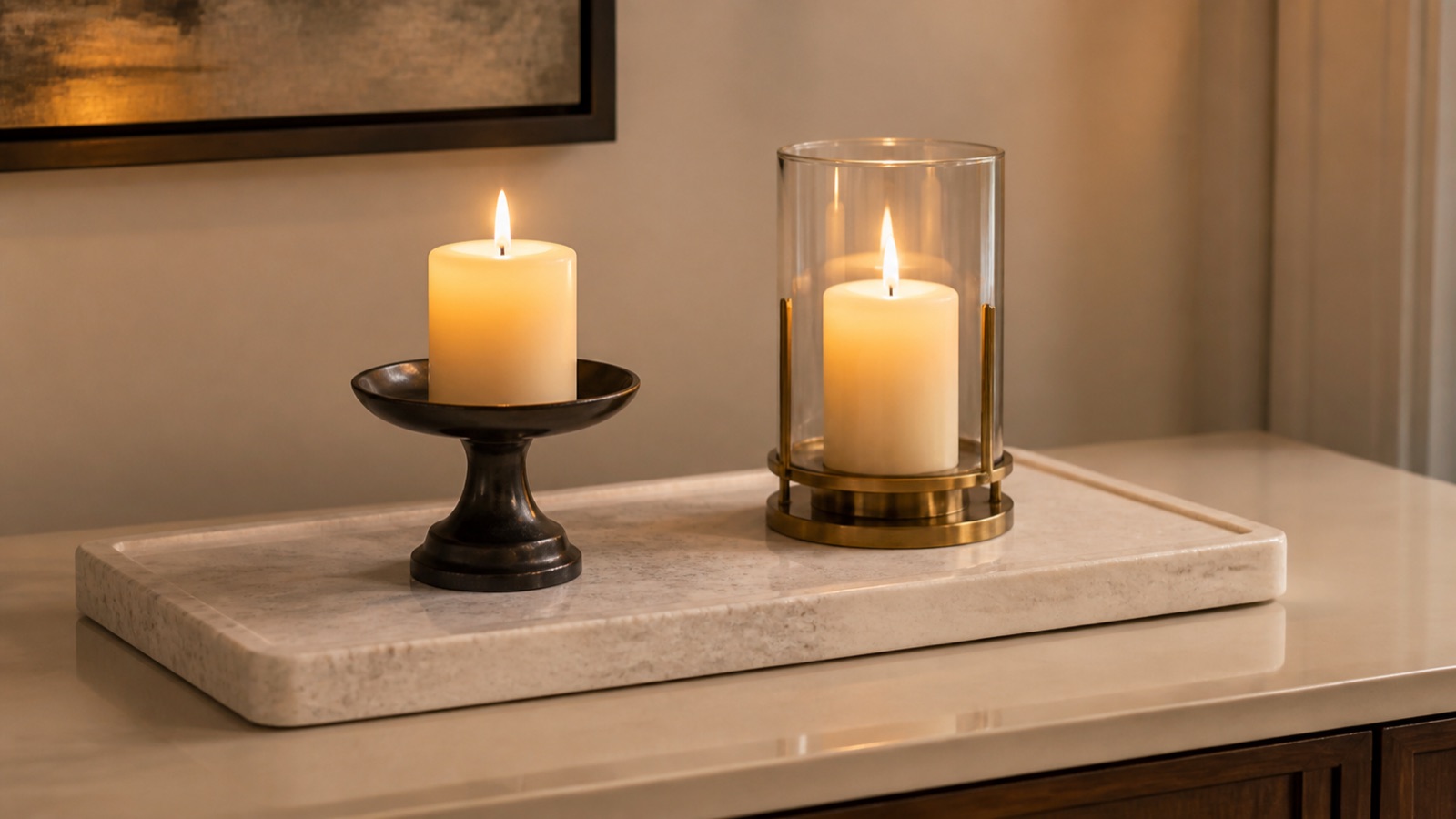
A neutral room becomes rich through pile, weave, stone-look surface, metal sheen and glass—not by adding many unrelated colours. Choose a base colour, one deeper tone and a small accent, then vary texture within them.
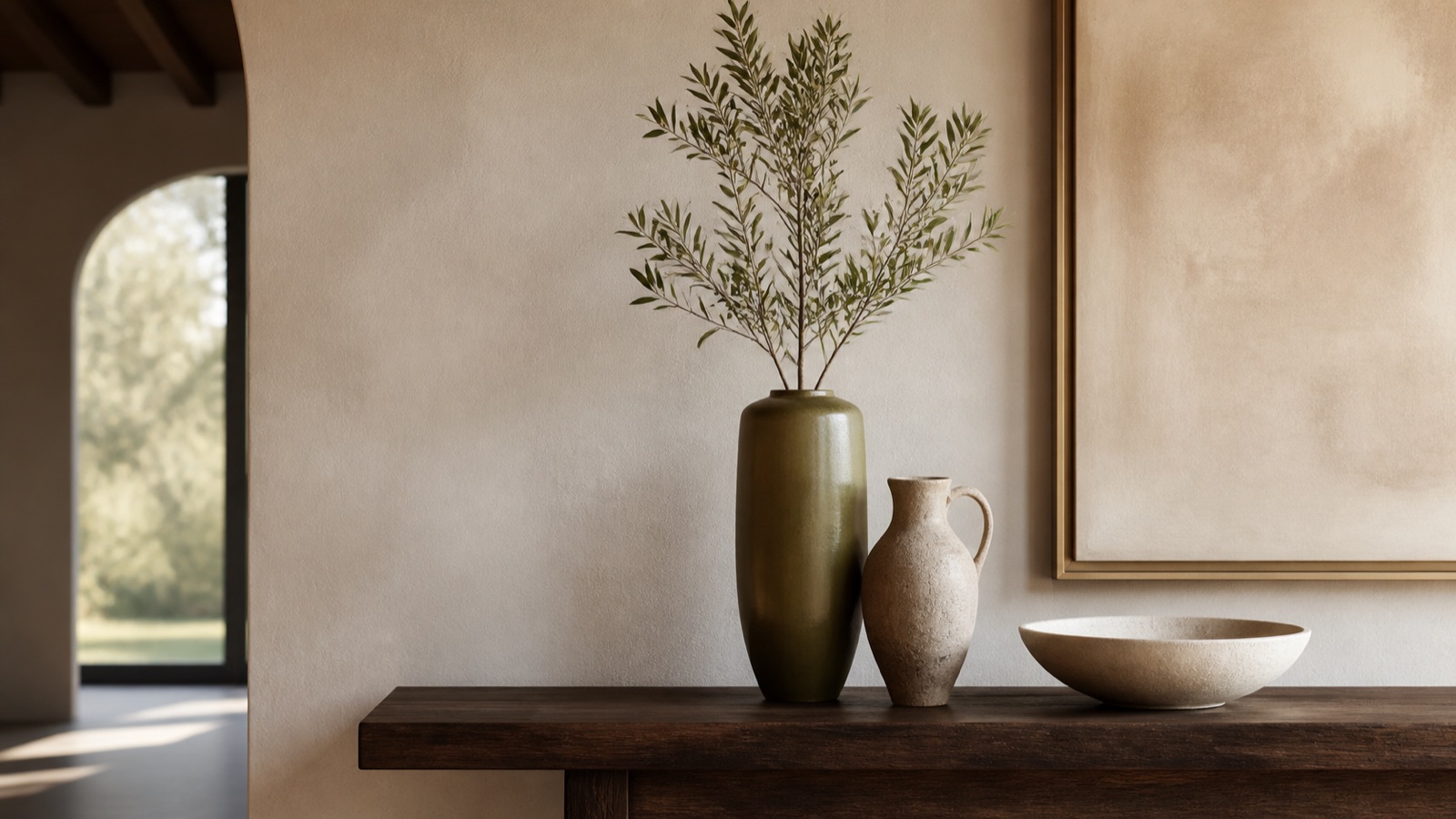
Use homewares and decorative objects to repeat the palette at smaller scale.
Edit the tables and storage
The coffee table should relate to the sofa and leave a practical route. Side and console tables should earn their footprint through lighting, storage or display. Closed storage can keep the contemporary composition calm, but doors and drawers need working space.
Read the coffee table sizing guide before choosing primarily for sculpture or finish.
Finish with scale, not clutter
One correctly scaled artwork or mirror often contributes more than many small pieces. Group objects in varied heights, leave empty surface around them and keep heavy or breakable items away from unstable edges.
Step back to the room entrance and photograph the composition. Remove one item at a time until the focal point is clear and the furniture, not the accessories, leads.
Before you buy: practical checklist
- Primary focal point chosen.
- Sofa size and comfort verified.
- Curves and straight lines deliberately balanced.
- Two or three finishes repeated across the room.
- Tables provide real function and clear movement.
- Accessories edited for scale and safe placement.
Products to compare
Use these live product pages to compare current dimensions, materials and features with the guidance above. Confirm stock, finish and delivery details before ordering.


Frequently asked questions
What makes furniture contemporary?
Contemporary describes current design language, often with edited silhouettes, considered materials and flexible forms. It evolves, so proportion and cohesion matter more than a checklist of trends.
Can contemporary furniture include ornate pieces?
Yes. Use an ornate piece as a deliberate focal accent and connect it through colour or finish while keeping surrounding forms quieter.
How do I stop a neutral living room looking flat?
Layer texture, material sheen, warm and cool neutrals, and varied shapes. Maintain a limited palette so those differences remain readable.
See the options in person
Explore Queen Style living-room furniture online, then compare scale and material in the Thomastown showroom. Bring room photos and samples of fixed finishes for a more accurate match.