Compare partial and full home staging for occupied and vacant Melbourne properties, including room priorities, logistics, timing and quote questions.
Home staging can range from refining an occupied home with selected hired pieces to furnishing a vacant property from the ground up. Those approaches are often called partial and full staging, but the right scope is not decided by property size alone.
Start with what buyers may struggle to understand: room purpose, furniture scale, circulation or the connection between living and dining zones. Then compare that need with the furniture already available, the campaign timetable and the practical burden of keeping an occupied home inspection-ready.
Quick answer: Partial staging suits a home that already has suitable core furniture but needs editing, replacement pieces or stronger presentation in priority rooms. Full staging suits a vacant property, an unsuitable existing scheme or a campaign that needs a consistent presentation throughout. Ask for a room-by-room scope rather than assuming every space needs the same treatment.
What partial home staging includes
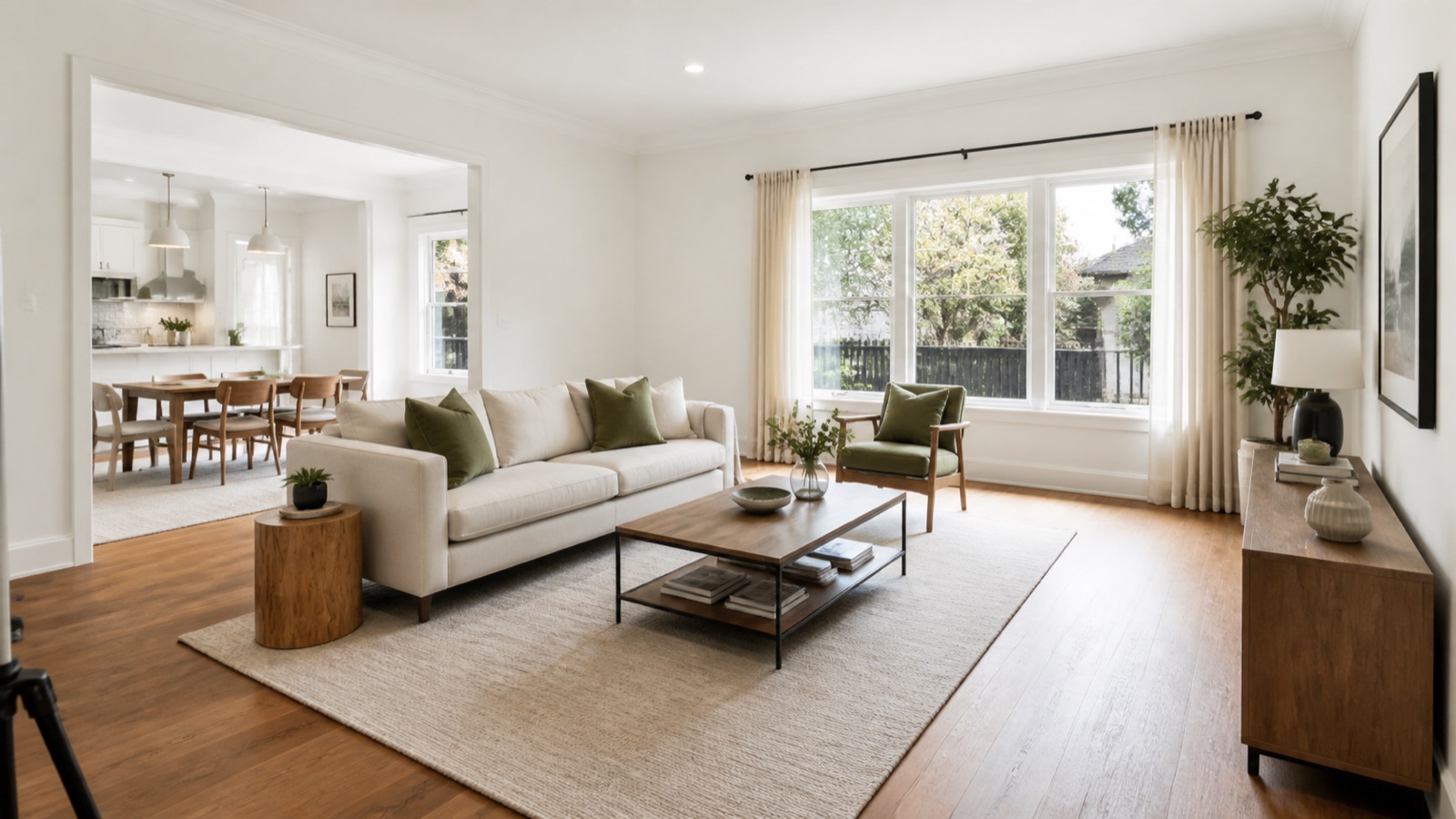
Partial staging works with some of the owner’s furniture. A stylist may recommend removing pieces that crowd the floor plan, repositioning what remains and hiring selected items such as a sofa, dining setting, bed, rug, artwork or decorative layer. The objective is not to disguise the existing home; it is to make the rooms read clearly in photography and during inspections.
This approach is often practical for an occupied property when the principal pieces are in good condition, appropriately scaled and visually compatible with a sale campaign. It can also focus investment on the entry, main living area, dining zone and primary bedroom instead of spreading small decorative changes across every room.
What full home staging includes
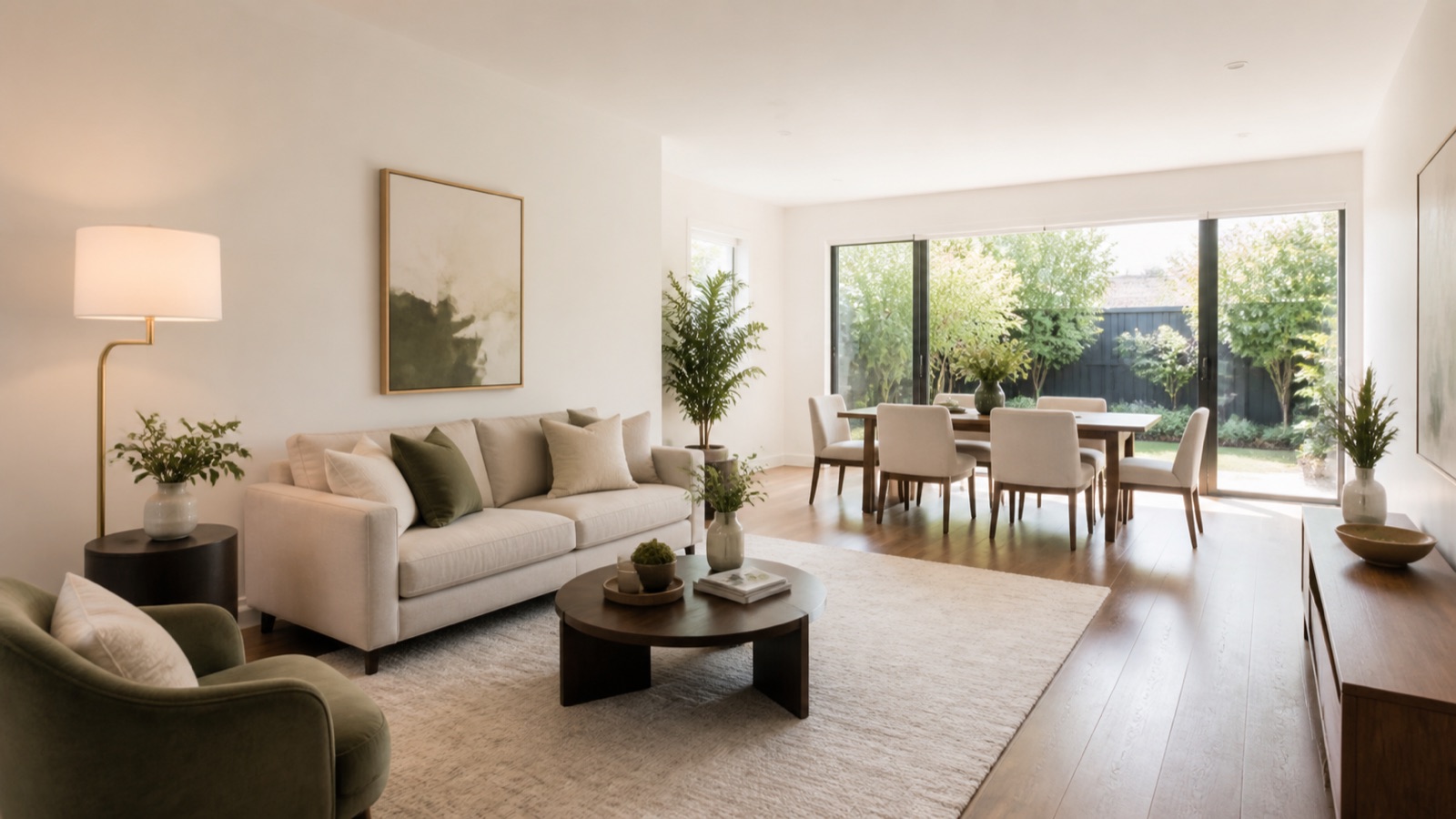
Full staging generally supplies the furniture and styling required for the agreed rooms. It is most relevant when a property is vacant, when the owner’s furniture has already moved or when existing pieces do not communicate the room’s intended use and scale.
A coordinated installation can give open-plan areas a clear structure and show how beds, seating and dining furniture fit without obstructing doors or main paths. Queen Style’s Melbourne home staging service currently presents a six-week styling model with furniture, rugs, artwork, installation, logistics and collection included in its indicative calculator. The final scope and price still need to be confirmed for the particular property.
Use a room-by-room decision test
Walk through the property with the selling agent and ask the same four questions in each room:
- Will a buyer immediately understand the room’s purpose?
- Does the current furniture demonstrate scale without crowding the floor?
- Are doors, windows, storage and the natural walking route easy to use?
- Will the room remain presentable through photography and every inspection?
If most rooms already pass, a partial plan may be sufficient. If several important rooms are empty, mismatched or difficult to understand, full staging may create a more coherent result. Do not let a package label replace this assessment.
Turn the room assessment into a scope worksheet
Use one row for each room, including rooms you expect to leave unchanged. Separate the furniture already available from the items that may need to be supplied. An “undecided” entry is useful when it identifies the specific question to resolve at the property assessment.
| Room | Furniture retained | Furniture needed | Presentation problem | Occupied-use constraint | Decision or question |
|---|---|---|---|---|---|
| Living room — illustrative | Existing sofa, subject to fit and condition | Possible occasional chair | Seating arrangement needs a clear purpose | Everyday seating must remain usable | Assess sofa before choosing supplied pieces |
| Study — illustrative | Existing desk | To be assessed | Room use is unclear in current layout | Work equipment used daily | Agree room purpose and storage arrangement |
| __________ | __________ | __________ | __________ | __________ | __________ |
| __________ | __________ | __________ | __________ | __________ | __________ |
The example rows are a way to record questions, not a prescribed package. Add dimensions and photograph references for large retained pieces where available. Mark the person who can confirm each outstanding decision, so a preference does not accidentally become an agreed scope.
Read the finished sheet across all rooms. If suitable core furniture remains and the gaps are selective, ask about a partial scope. If important rooms need their principal furniture supplied, ask how a fuller scope would address them. A property can need different levels of intervention in different rooms; the written room list should make that visible.
Bring the sheet to a home staging consultation, then compare any quote against the same rooms, retained items and unresolved decisions. Keep the agreed version with the campaign paperwork and update it when a retained item or daily-use requirement changes.
When partial staging is the stronger choice
Partial staging is worth considering when the home is occupied and daily life must continue during the campaign. Keeping the owner’s best pieces can reduce the volume of hired furniture, while removing oversized or highly personal items can improve photographs and circulation.
The key is honest editing. A small hired coffee table cannot fix a sofa that overwhelms the room, and extra cushions cannot correct a dining table that blocks the balcony route. Use the measurement principles in the sofa buying guide and dining-table layout guide to judge the existing furniture by its real footprint.
When full staging is easier to control
Full staging can be simpler when the property is already vacant because the entire layout, palette and installation timetable can be planned together. It may also help when an unusual room needs a clear use, a large open plan lacks zones or the current furniture belongs to another property style.
Vacancy does not mean every room must be furnished. Prioritise the spaces that establish first impression, daily function and buyer understanding. Secondary rooms can sometimes be left clean and empty when their purpose and dimensions are already obvious.
Plan occupied-home logistics before installation
Partial staging requires clear responsibility for the owner’s furniture and belongings. Confirm what will be removed, where it will be stored, whether anything must be moved before installation and which items remain available for daily use. Photograph the condition of the property and retained furniture before hired pieces arrive.
Set a simple inspection reset: make beds, clear kitchen and bathroom surfaces, open approved window coverings, manage pet equipment and return decorative objects to their agreed positions. Store valuables, medicines, personal documents and identifying information securely before public inspections.
Compare quotes on the same scope
A useful staging quote identifies the rooms, furniture groups, styling pieces, hire period, delivery, installation, collection, access assumptions and extension rates. Ask how changes to the auction or sale date are handled and what happens if the campaign runs longer than expected.
Also confirm building bookings, lift protection, parking, stairs, key access and who reports accidental damage. For apartments, provide lift dimensions and building rules early. For either staging type, the quote should make clear what is indicative and what becomes fixed after the property assessment.
Presentation must remain truthful
Staging is a marketing and layout tool, not a way to hide a defect. Consumer Affairs Victoria says sellers may present a property in a good light, but it is illegal to cover up, misrepresent or mislead buyers about its true condition. Discuss repairs, material facts and disclosure obligations with the selling agent and conveyancer before styling begins.
Keep access to visible building features that buyers should inspect. Do not position furniture or rugs to conceal known damage, and avoid claims that staging guarantees a sale price or a faster transaction. The result depends on the property, market, pricing and campaign as well as presentation.
Partial or full staging checklist
- Priority rooms and target buyer are agreed with the selling agent.
- Existing furniture is assessed for condition, scale and campaign suitability.
- Each room has a clear purpose and unobstructed walking route.
- Owner and hired items are listed separately with condition photographs.
- Hire period, extension costs, delivery, installation and collection are written down.
- Lift, parking, stairs, keys and building access are confirmed.
- Repairs and disclosure are handled independently of styling.
- No sale-price or campaign-time guarantee is assumed.
Frequently asked questions
Can you partially stage a home while living in it?
Yes. A partial plan can retain suitable owner furniture and introduce selected hired pieces. The household needs an agreed storage plan and a realistic routine for photography and inspections.
Does a vacant property always need full staging?
No. Some vacant rooms are already easy to understand. Prioritise spaces where furniture materially explains scale, purpose or flow, then compare the cost and campaign needs with the agent.
Which rooms should be staged first?
The entry, main living area, dining zone and primary bedroom commonly shape first impression and buyer understanding. The best priority still depends on the property, floor plan and intended buyer.
Is home staging guaranteed to increase the sale price?
No. Staging may improve presentation and help buyers read the space, but the result also depends on condition, location, pricing, marketing and buyer demand. Treat it as part of the campaign, not a guaranteed return.
Sources and further reading
- Consumer Affairs Victoria — preparing and presenting a property for sale
- House & Garden — current expert explanation of home staging as property marketing
Request a property-specific staging scope
Send Queen Style the property address, floor plan, current photos, campaign dates and a list of furniture that may remain. Use the home staging consultation form to request a scope for the actual rooms, access conditions and hire period rather than choosing partial or full staging from a label alone.