
Compare timber, glass, ceramic, stone and mixed-material dining tables by appearance, weight, cleaning, heat, impact and everyday use.
Dining-table material affects weight, light, sound, cleaning and the way ordinary marks appear. Broad descriptions can be misleading: natural stone, ceramic and stone-look coatings are not interchangeable, and “timber” may mean solid wood, veneer or another construction.
Ask what the exact surface is, how it is finished and what care applies. Then choose the material whose maintenance fits the way your household eats, works and entertains.
Quick answer: Timber brings warmth and natural variation; glass looks visually light but shows marks; ceramic can offer a refined, practical surface with product-specific edge limits; natural or engineered stone creates mass and needs exact care information. Verify construction, finish and delivery weight.
Timber and veneer
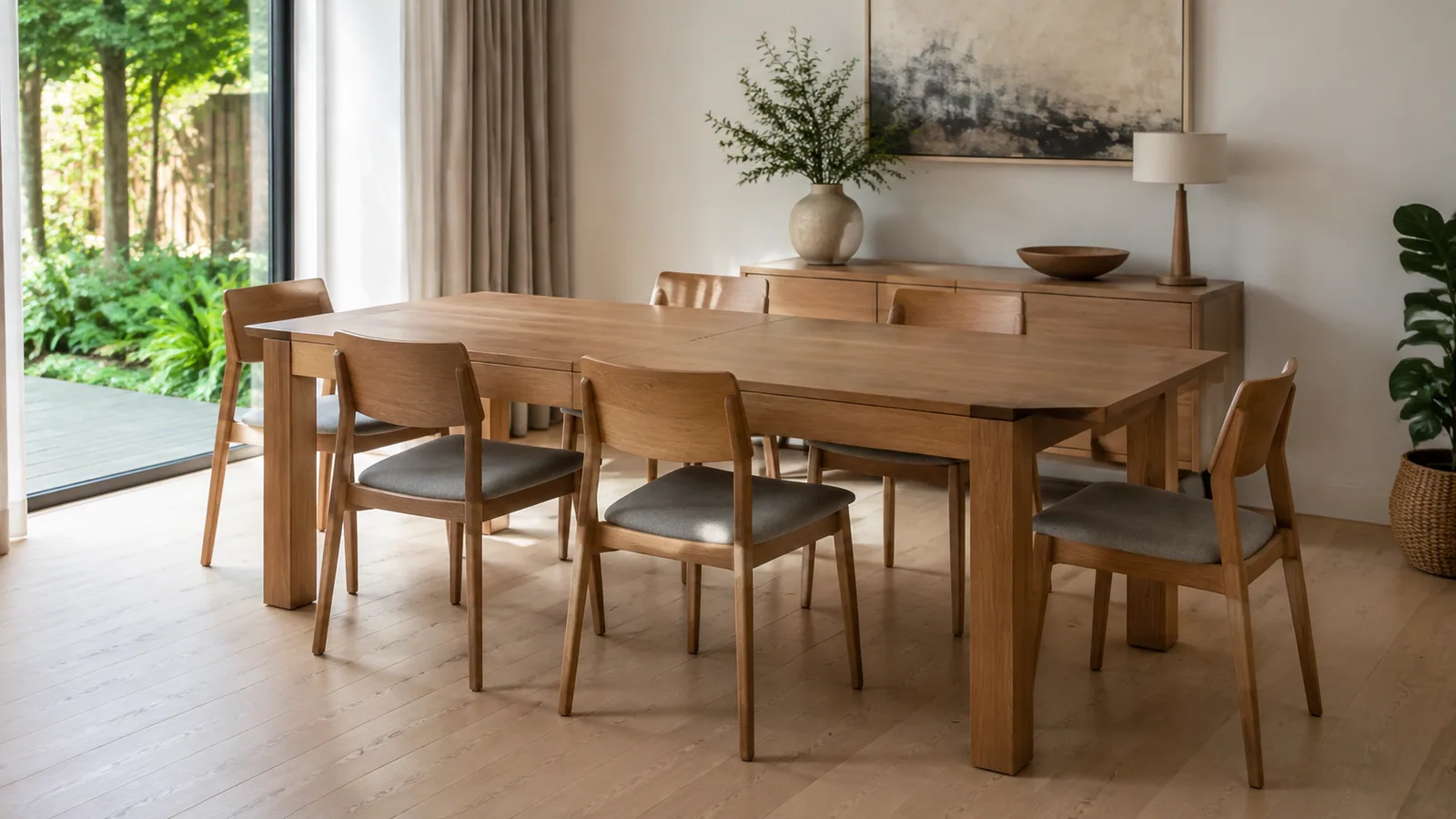
Solid timber and veneer both use real wood but behave differently. Grain and colour variation are expected; finishes influence stain and moisture resistance. Ask about the coating, heat protection, cleaning and whether movement or checking is normal for the design.
Wipe spills promptly and avoid saturating seams. Use mats or trivets as instructed rather than placing hot or wet items directly on an unknown finish.
Glass
A glass top can keep a dining zone visually open and show a sculptural base. It also reveals fingerprints and may amplify the sound of tableware. Confirm glass type, thickness, edge treatment, maximum load and approved cleaning.
Protect edges from impacts and do not place extremely hot objects on the surface unless the instructions expressly allow it.
Ceramic and sintered surfaces
Ceramic and related sintered tops can be thin, patterned and resistant to many everyday marks, but edge impacts, supports and care still vary by product. Ask whether the printed pattern repeats, how joins are finished and what cleaners are prohibited.
A high-performance claim should be specific. Keep the product sheet instead of assuming every ceramic top handles heat, impact and chemicals the same way.
Natural, engineered and stone-look options
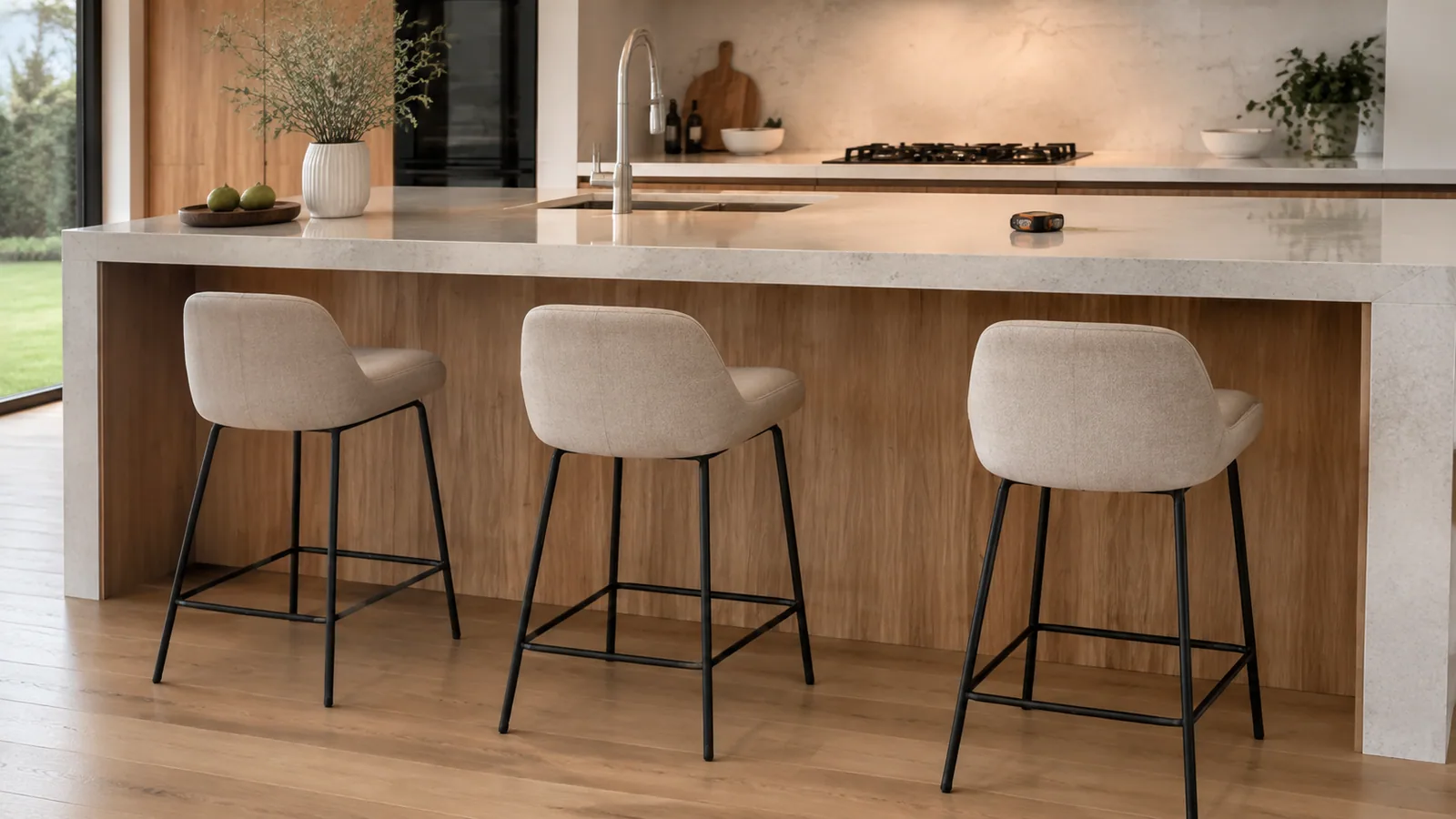
Natural stone may have pores, fissures and pattern variation. Engineered and stone-look products have different composition and care. Ask the seller to name the exact material, whether sealing is required and how acidic spills are handled.
Weight affects delivery and floor planning. Confirm the top and base arrive as separate pieces and whether specialist handling or assembly is included.
Match material to the room and use
Compare the table with upholstered dining chairs, flooring and light. A reflective surface can brighten the zone but increase glare; a warm timber can soften a hard open-plan interior.
Once the material shortlist is clear, use the dining table size and shape guide and browse the dining collection by actual dimensions.
Before you buy: practical checklist
- Exact top and base materials named.
- Finish, sealer and approved cleaning recorded.
- Heat, impact, scratch and stain limits understood.
- Material viewed with flooring and chairs in real light.
- Table weight, component sizes and assembly confirmed.
- Size and chair clearance checked independently.
Products to compare
Use these live product pages to compare current dimensions, materials and features with the guidance above. Confirm stock, finish and delivery details before ordering.


Frequently asked questions
What is the easiest dining table material to clean?
No broad material wins in every finish. A smooth, non-porous product may wipe easily, but seams, coatings, edges and cleaner restrictions matter. Check the exact care guide.
Is ceramic the same as stone?
No. Ceramic, sintered surfaces, natural stone, engineered stone and printed stone-look products differ in composition and care. Ask for the precise material description.
Does a glass table make a room look larger?
Transparent glass can reduce visual mass by keeping the floor visible, but the table occupies the same physical footprint and still needs chair and walking clearance.
See the options in person
Compare dining-table surfaces in the Queen Style dining collection and at the Thomastown showroom. Ask for the exact material, finish, care and delivery specification before choosing by appearance alone.