Place mirrors by checking what they reflect, proportional size, natural light, eye level, hanging hardware, wall type and safe installation.
A mirror repeats whatever is opposite it. Before choosing the frame, stand at the intended position and inspect the reflection from the room entrance, sofa, dining chair and normal walking path. A mirror can multiply daylight or multiply clutter.
Size and installation matter because mirrors are heavy and fragile. Use hardware, fixings and professional installation appropriate to the product and wall; styling guidance never overrides mounting instructions.
Quick answer: Place a mirror where it reflects a useful view or light without creating glare. Size it in relation to the furniture below, test the outline on the wall, then install it with product-approved hardware and fixings suited to the wall construction.
Choose the reflection before the frame
Move a temporary reflective object or phone camera around the wall and check what appears from key positions. Good candidates include daylight, artwork, a considered dining setting or garden view. Avoid reflecting a busy work surface, direct screen glare or a door where movement feels distracting.
At night, test ceiling and lamp reflections. A mirror opposite a strong bare light can create uncomfortable glare even if the daytime view is pleasant.
Size it to the zone below
Above a console, sideboard or sofa, a mirror often feels balanced when visibly narrower than the furniture while still substantial enough to connect. Around two-thirds of the furniture width is a useful visual starting point, not a structural rule.
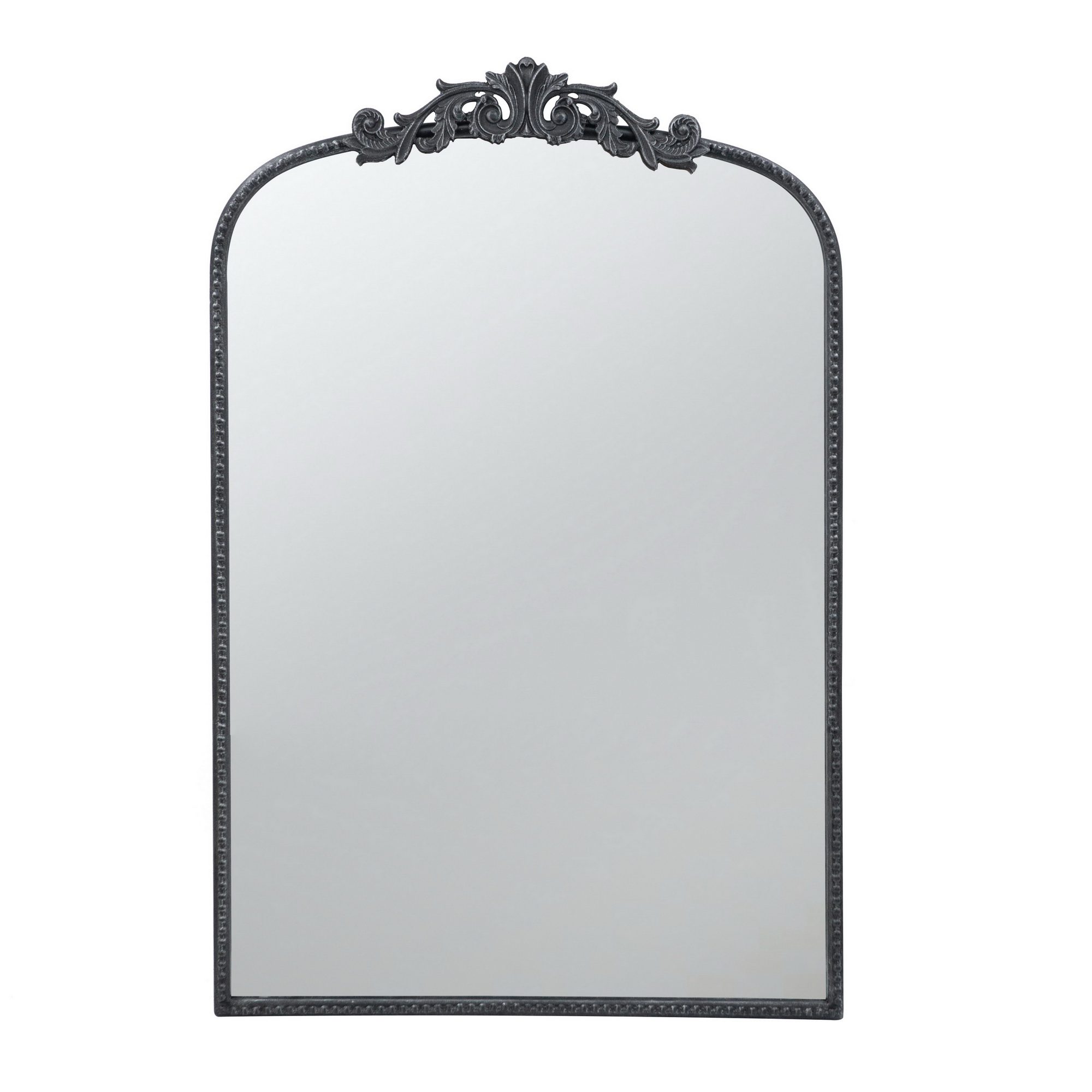
Compare measured frames in the mirror collection and use paper templates for the outer frame, not only the reflective glass.
Set height for the context
Eye level varies between standing entries, seated dining areas and bedroom dressing zones. Position the mirror for the primary use and relate it to the furniture below. A narrow arbitrary gap can look cramped; a large gap can disconnect the composition.
Mark the top, bottom and centre, then inspect from across the room. Allow for any console styling so objects do not collide visually with the frame.
Use light without false promises
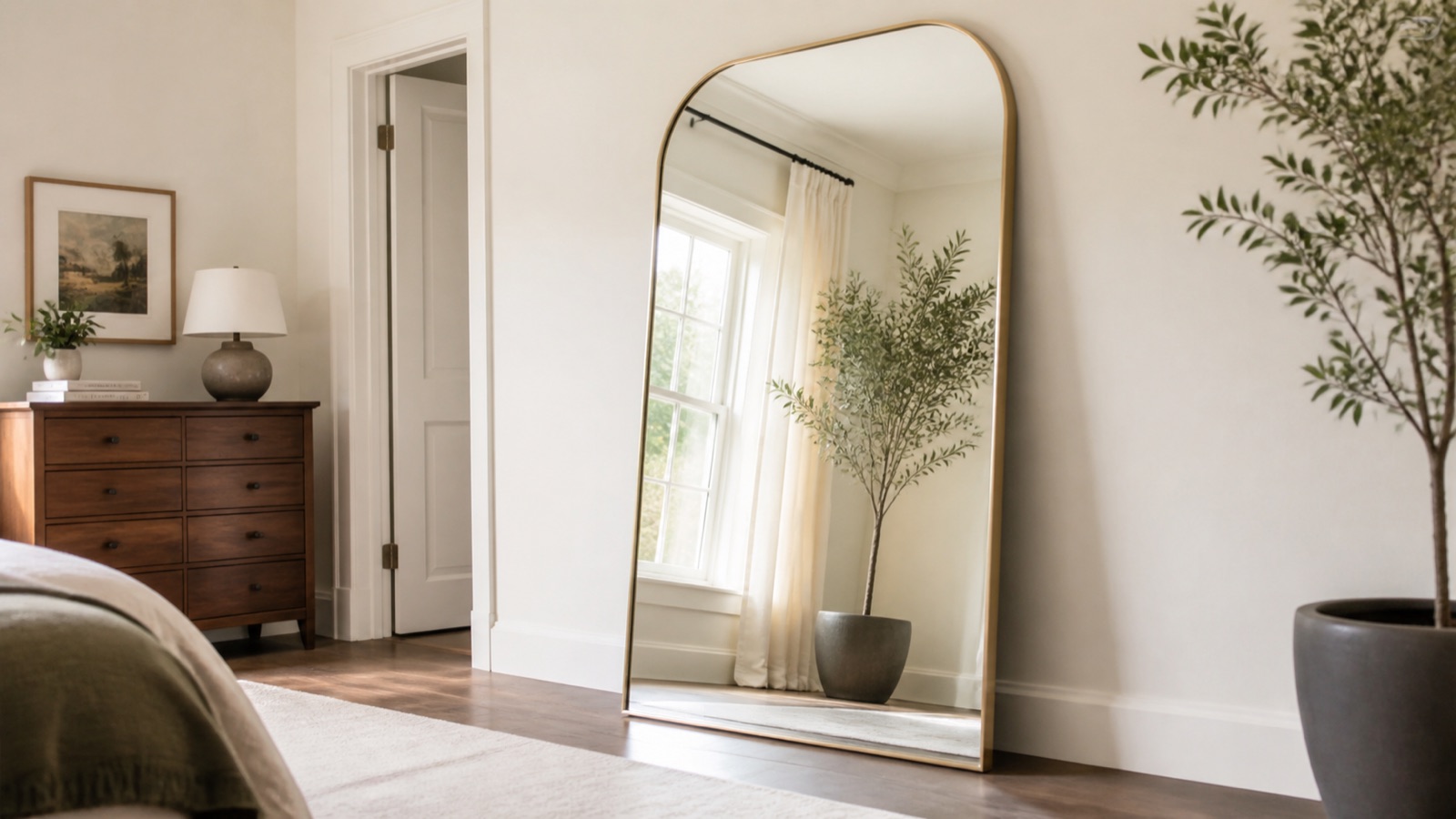
Mirrors redirect views and light; they do not add floor area. A mirror near or opposite a window can make a darker zone feel brighter when it reflects useful daylight. Angles determine the effect, so test rather than assuming.
In a small room, combine the mirror with measured furniture choices from the small living room guide.
Install and clean safely
Follow the supplied orientation, hanging-point and weight instructions. Identify wall construction, pipes and wiring, and use appropriately rated fixings. Large leaning mirrors should not be left unsecured where they can tip.
For cleaning, protect the backing and frame from excess moisture. Apply an approved cleaner to a cloth rather than flooding edges, and avoid acidic or alkaline products when the instructions prohibit them.
Before you buy: practical checklist
- Reflection checked from entrances and seats.
- Day and evening glare tested.
- Outer frame templated against furniture below.
- Primary standing or seated eye level considered.
- Wall type, mirror weight and hanging points confirmed.
- Product-approved hardware and cleaning followed.
Products to compare
Use these live product pages to compare current dimensions, materials and features with the guidance above. Confirm stock, finish and delivery details before ordering.
Frequently asked questions
Should a mirror face a window?
It can reflect useful light and a view, but the exact angle may also create glare or expose an unwanted view. Test from normal positions in day and evening.
How wide should a mirror be above a console?
A mirror around two-thirds of the furniture width is a useful visual starting point, but frame shape, ceiling, objects and wall width may justify a different proportion.
Can a large mirror safely lean against a wall?
Only if the manufacturer provides for that use and it is restrained as instructed. Heavy mirrors can tip; secure installation is essential, especially around children.
Sources and further reading
Use these references alongside the care, assembly and safety instructions supplied with your specific product.
See the options in person
Compare frame scale and reflections using Queen Style mirrors. Bring a wall photo and dimensions, then use suitable professional installation for the specific mirror and wall.