Size a dining rug by measuring the table and fully pulled-out chairs, then check room boundaries, pile, cleaning, stability and shape.
A dining rug should support the table and chairs as one zone. The common failure is sizing it to the tabletop only; when a diner pulls back, rear chair legs catch the rug edge or land unevenly on the floor.
Measure the real chair movement on every side, then compare that footprint with walls, kitchen joinery and walkways. A rug that cannot accommodate the working layout is better omitted than forced.
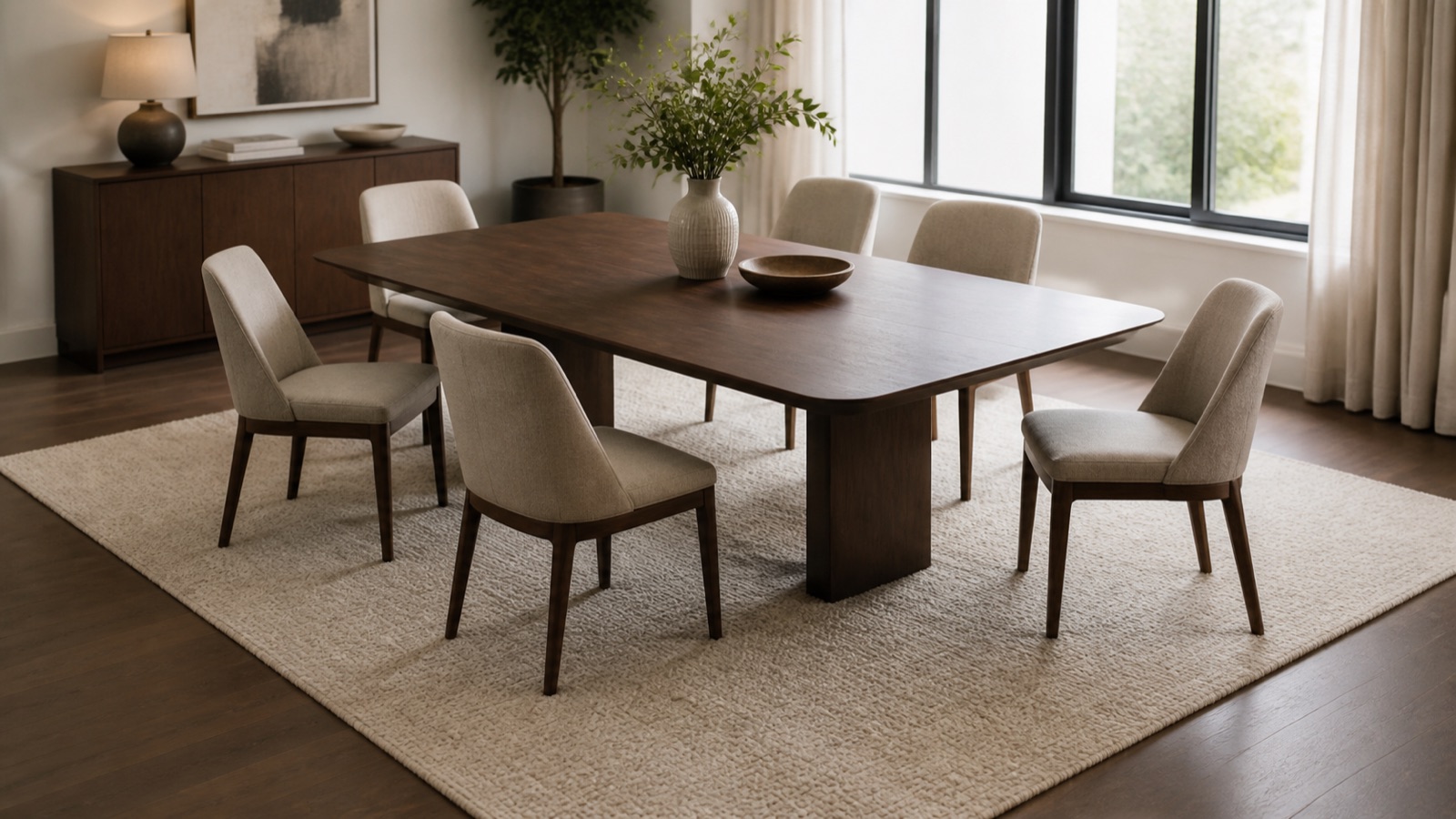
Quick answer: Measure the table, pull each chair back to a comfortable exit position and make sure the proposed rug extends beneath all chair legs in that position. A starting allowance is often about 60 cm or more beyond the table on each seated side, but test the actual chairs and room.
Perform the chair test
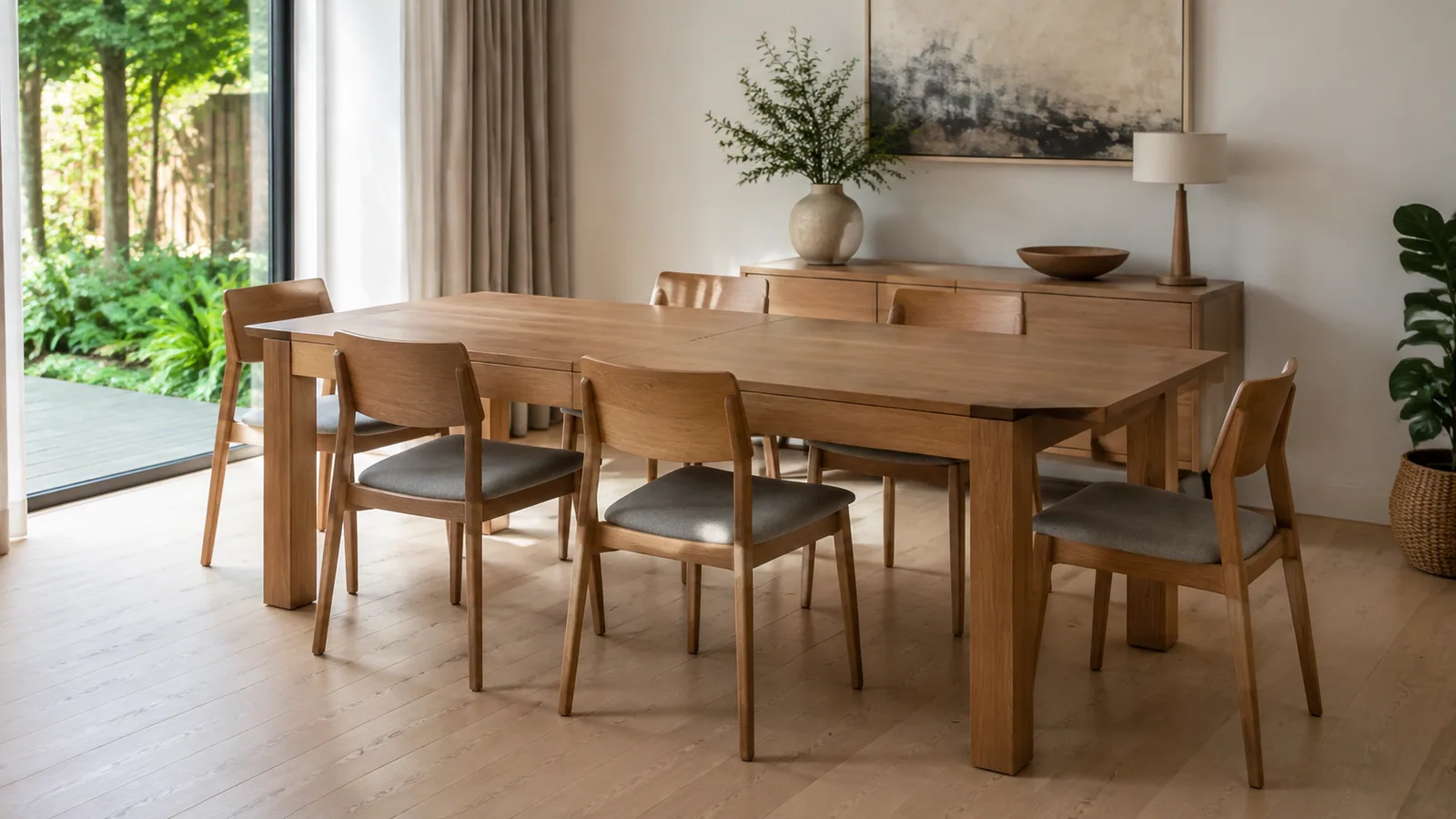
Place the table where it will live and pull each chair back as a diner normally would. Mark the outer rear-leg position. The rug should extend beyond that point so the chair does not catch the edge during use.
Different chairs travel differently. Use the exact models from the dining-chair collection, including rear-leg angle and any arms.
Match rug and table shape deliberately
A rectangular rug naturally frames most rectangular tables. Round rugs can echo round tables, while a square or rectangular rug can create contrast if the margins are even. The room and chair movement are more important than a rule that shapes must match.
Centre the rug under the working table position, not automatically in the whole room. In open plan, that centre may intentionally belong to the dining zone.
Check the room boundary
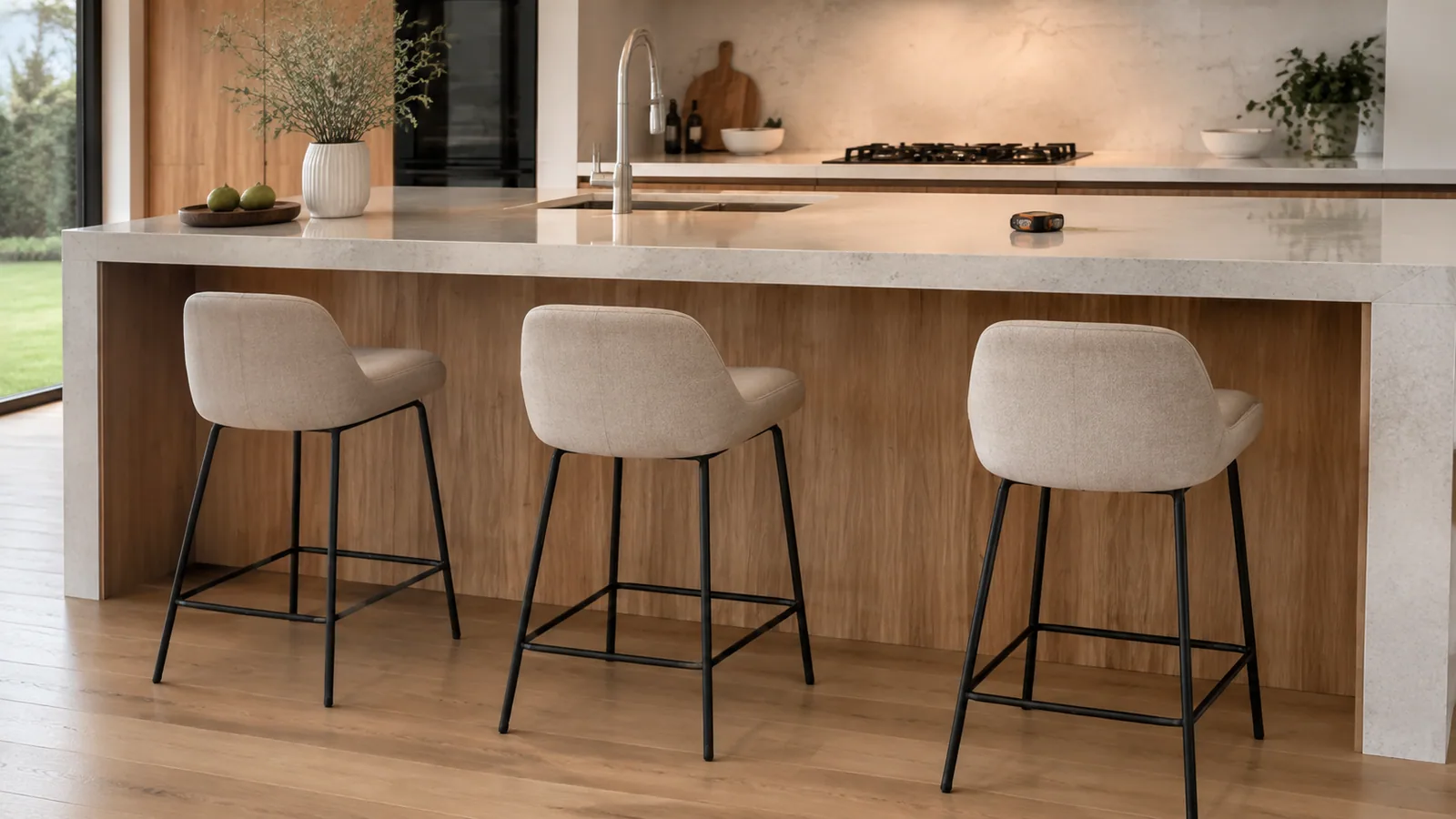
Map the rug edge against walls, island benches, sliding doors and adjacent living rugs. Leave a deliberate border of floor rather than a narrow accidental strip. Make sure the rug does not enter a wet or high-spill kitchen work area.
Confirm the table position using the dining table size and layout guide before ordering the rug.
Choose pile and construction for chairs
Dining chairs need to move without excessive resistance. Very deep or loose pile can catch legs and hold crumbs, while a flat, stable surface is often easier to manage. Check the rug maker’s suitability, care and underlay recommendations.
Avoid unstable layering. Use an appropriate underlay where recommended and address curled edges promptly to reduce trip risk.
Plan cleaning before colour
Dining spills are predictable. Check whether the rug can be spot cleaned, professionally cleaned or washed, and how quickly liquids need attention. Pattern and mid-tone colour can disguise minor marks, but they do not replace maintenance.
Coordinate the rug with the dining table and chairs by repeating one tone rather than matching every colour exactly.
Before you buy: practical checklist
- Table and fully pulled-out chair footprint measured.
- All chair legs stay on the rug during normal use.
- Rug edge clears walls, joinery and adjacent zones.
- Shape creates even, deliberate margins.
- Pile and underlay allow stable chair movement.
- Cleaning method suits normal dining spills.
Products to compare
Use these live product pages to compare current dimensions, materials and features with the guidance above. Confirm stock, finish and delivery details before ordering.


Frequently asked questions
How far should a rug extend beyond a dining table?
About 60 cm or more on seated sides is a useful starting point, but chair depth and user movement vary. Pull the exact chair out and measure its rear-leg position.
Can I use a round rug under a rectangular table?
Yes, if the rug is large enough for every chair and the shape relates intentionally to the room. Uneven, tight margins are the bigger problem.
Is it better to have no rug than a small rug?
If chairs repeatedly catch the edge or sit half on and half off, omitting the rug is usually more functional than using an undersized one.
Sources and further reading
Use these references alongside the care, assembly and safety instructions supplied with your specific product.
- Temple & Webster — choosing a rug for a dining space
- Livingetc — dining rug proportion and chair movement
See the options in person
Choose the dining table and chairs first, then take their exact measurements when shopping for a rug. The Queen Style showroom team can help confirm the furniture footprint.